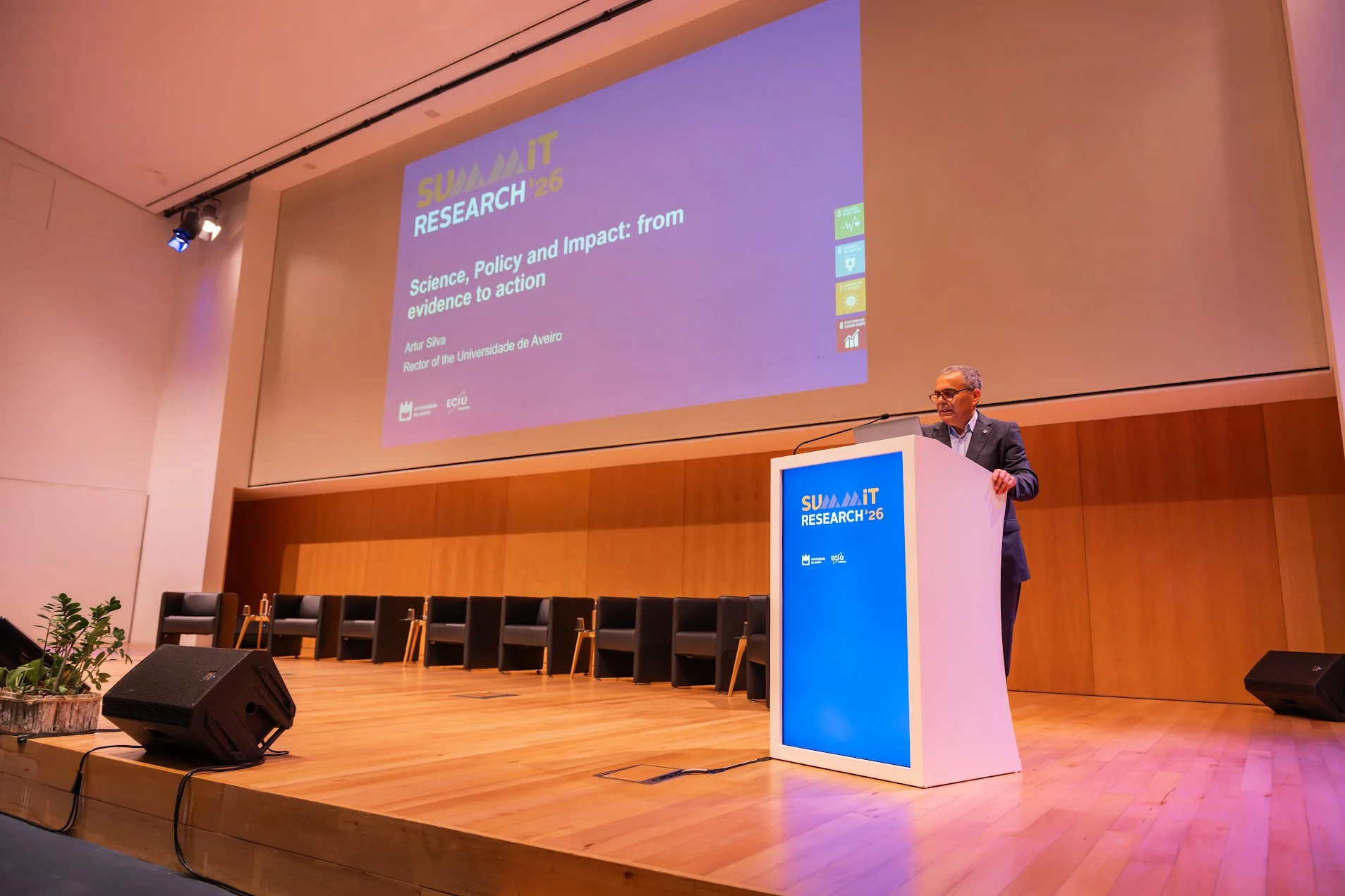
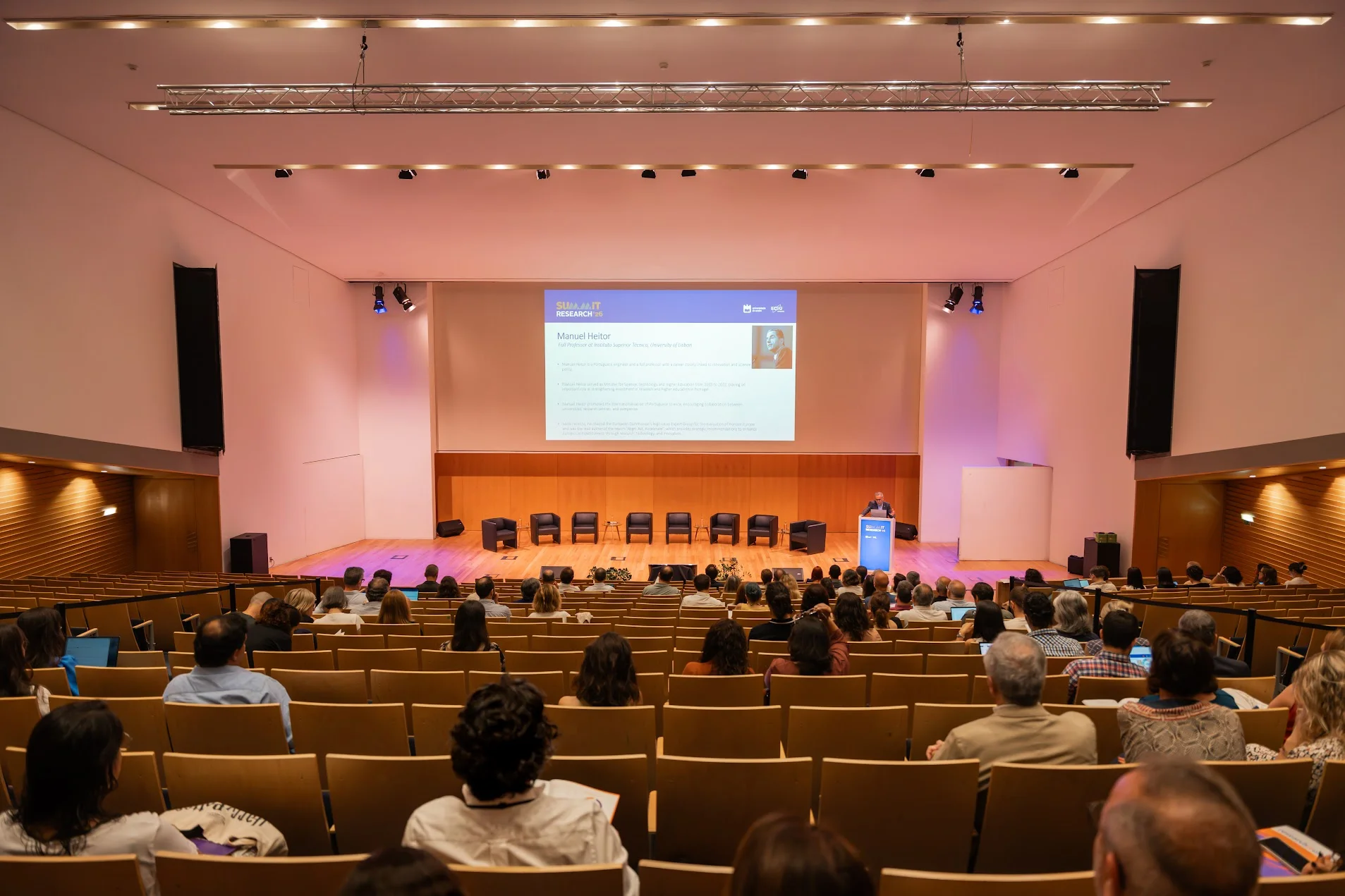
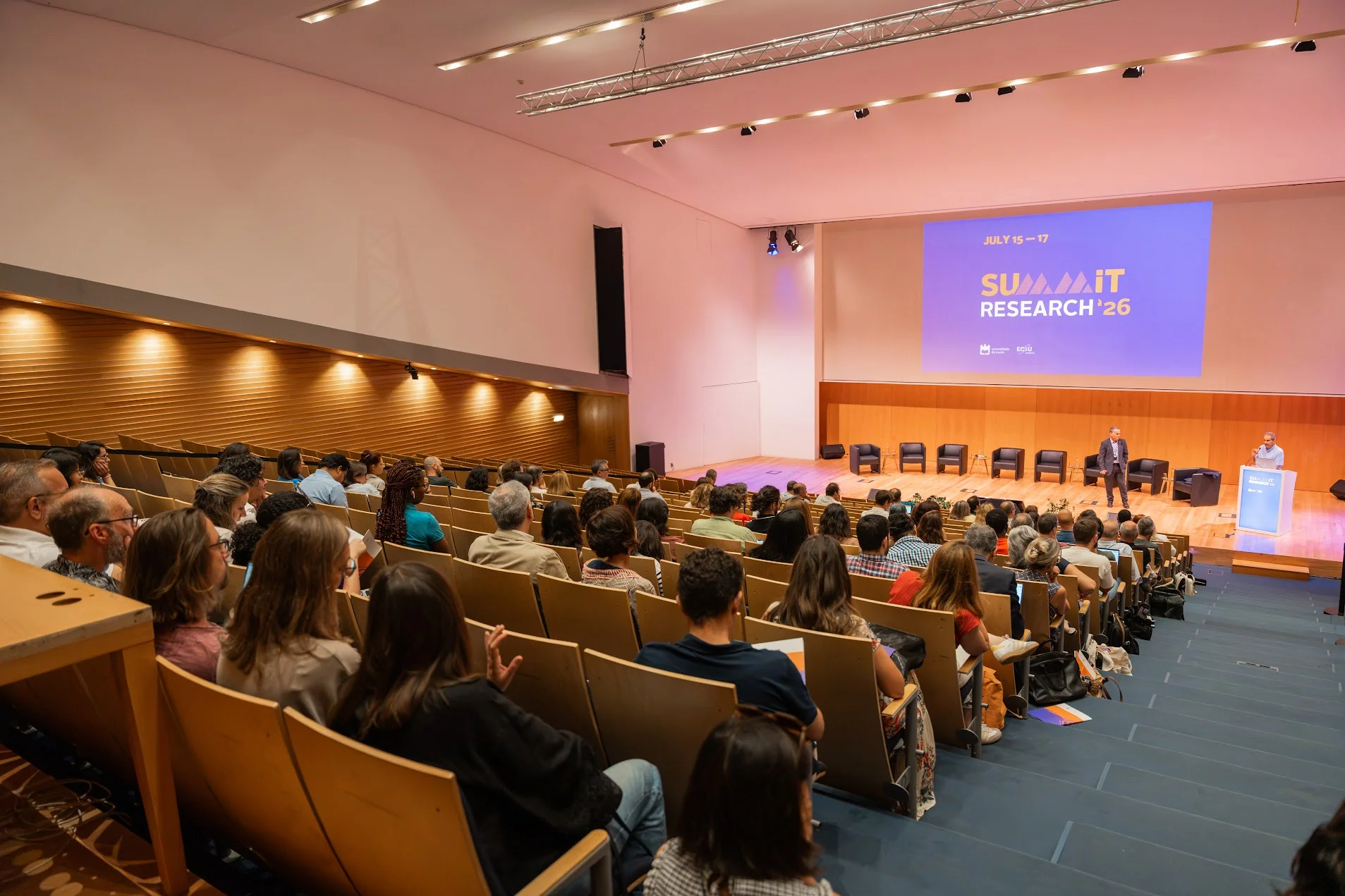
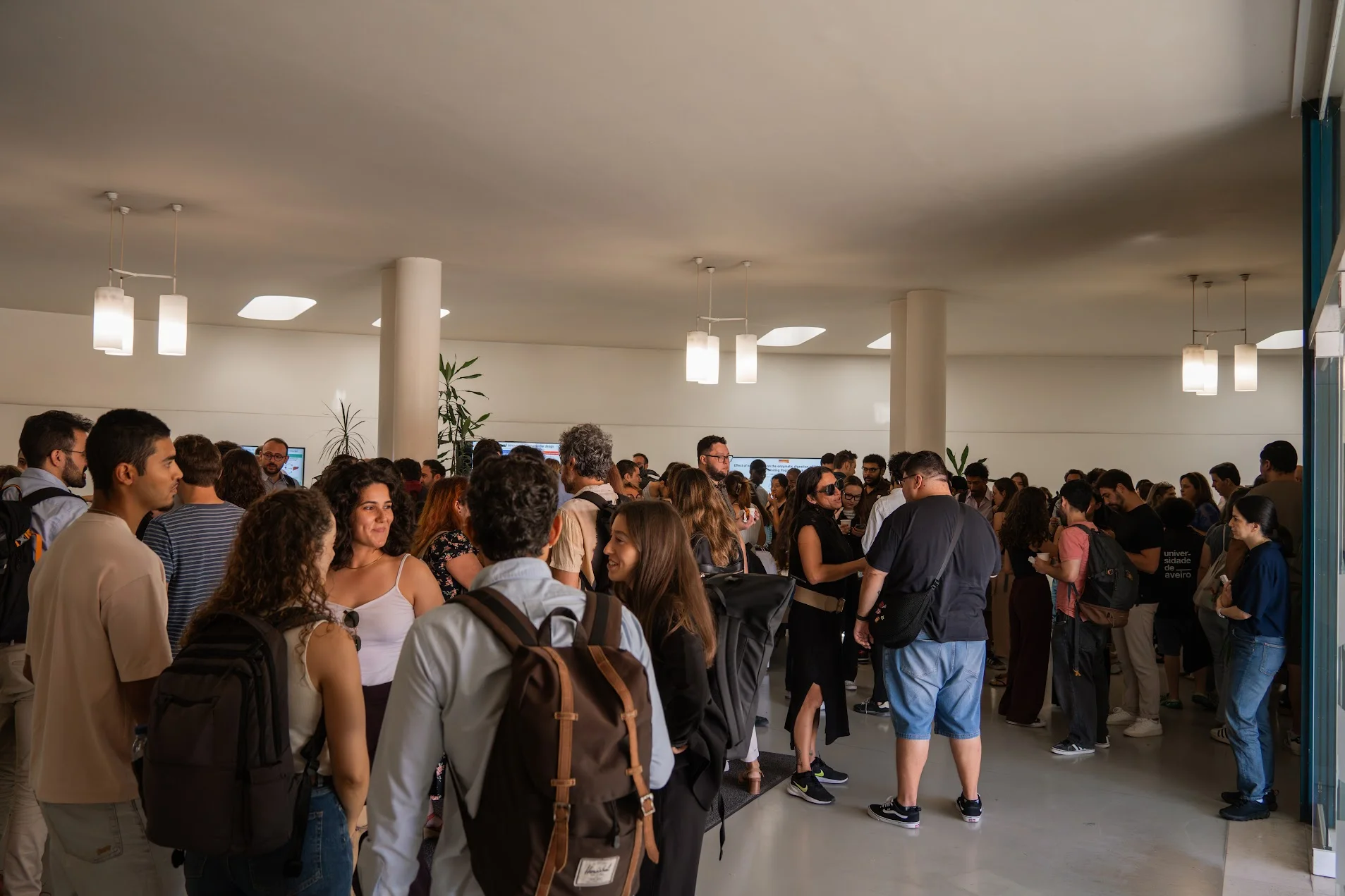
The University of Aveiro Research Summit 2026 brought together researchers from different scientific fields to showcase how science can inform decisions, inspire innovation, and contribute to addressing societal challenges.
Researchers from CERIS Aveiro – Civil Engineering Research and Innovation for Sustainability actively participated in the event, highlighting the role of Civil Engineering research in developing sustainable, resilient, and innovative solutions for society.
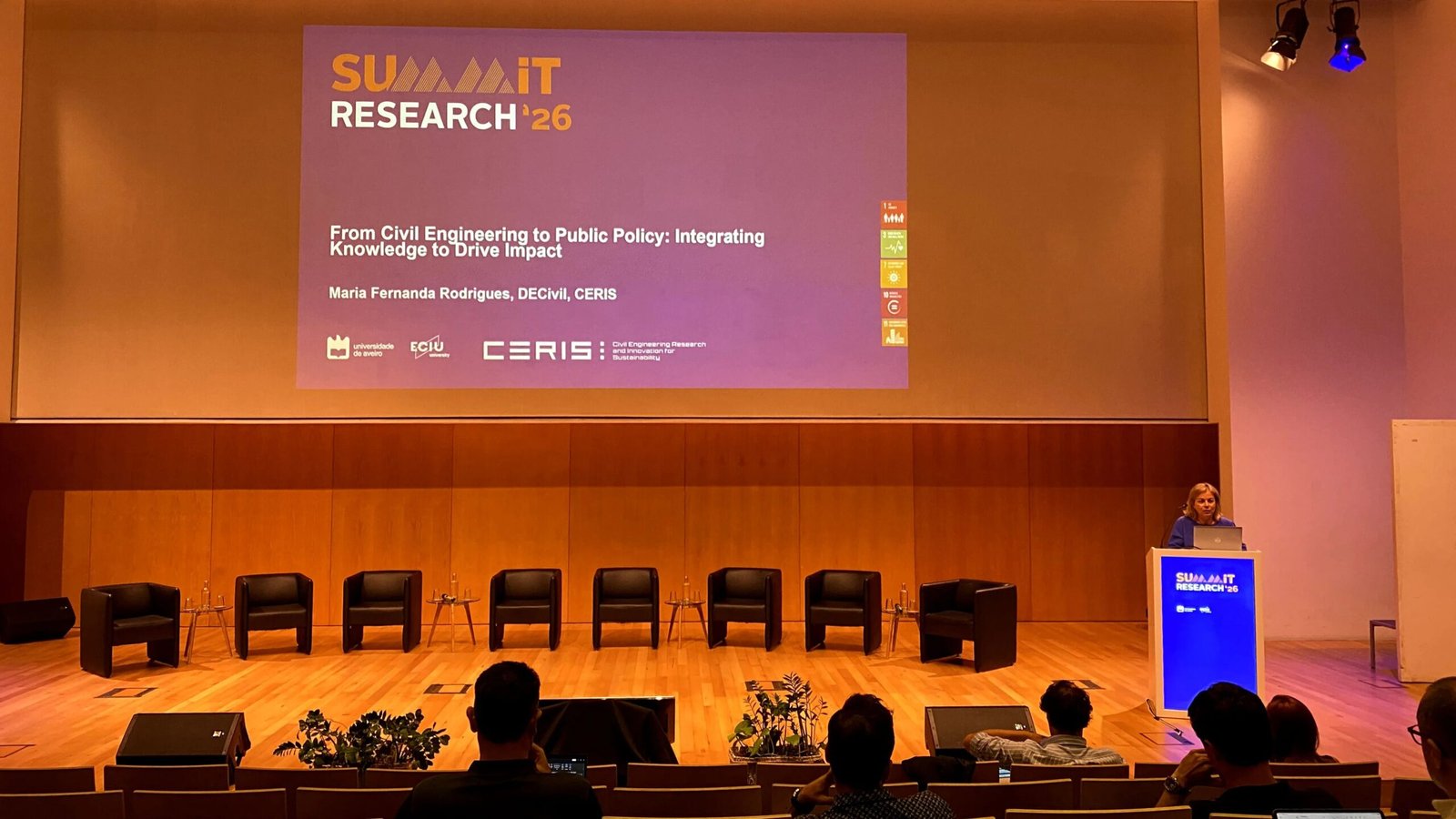
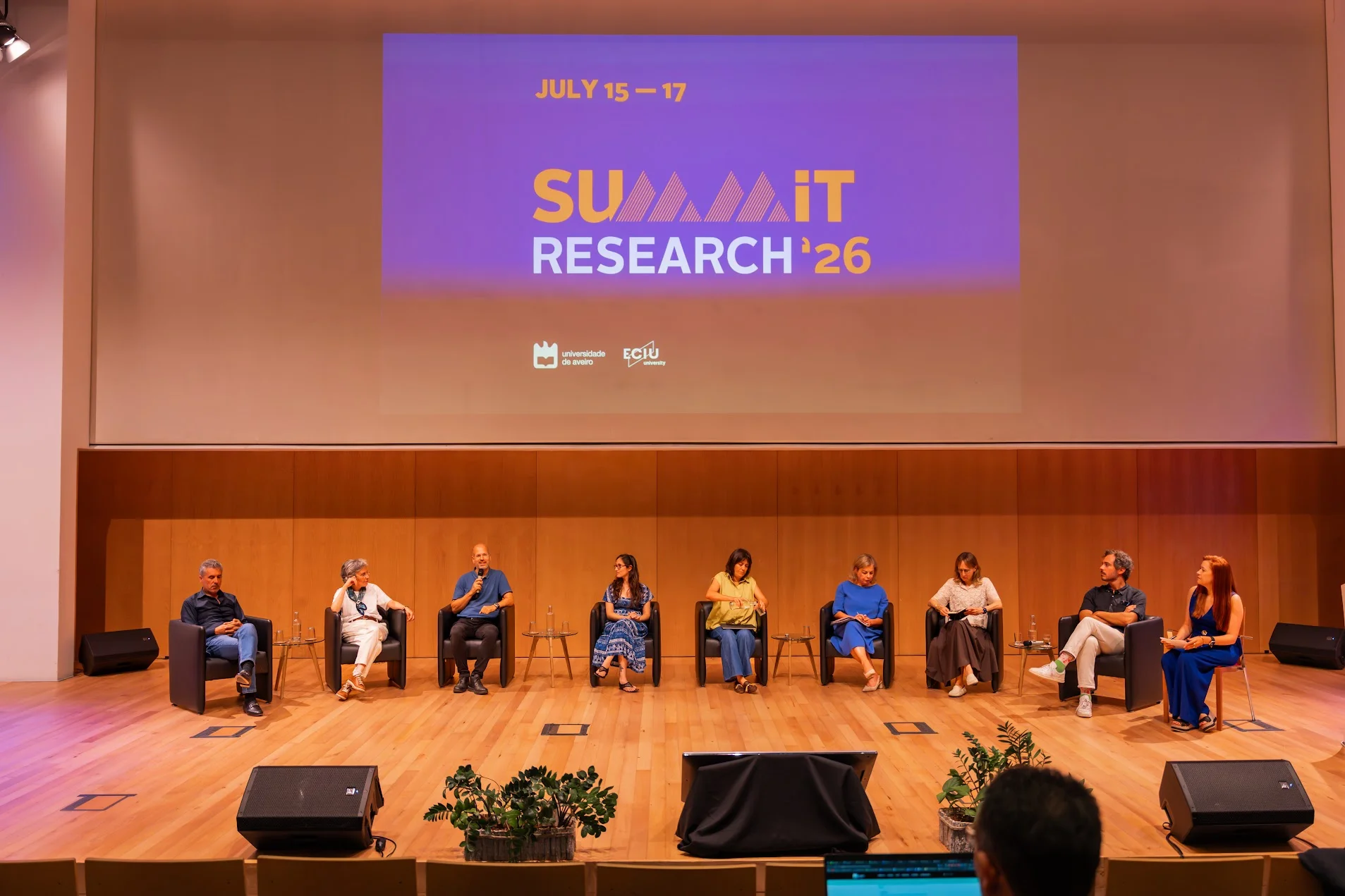
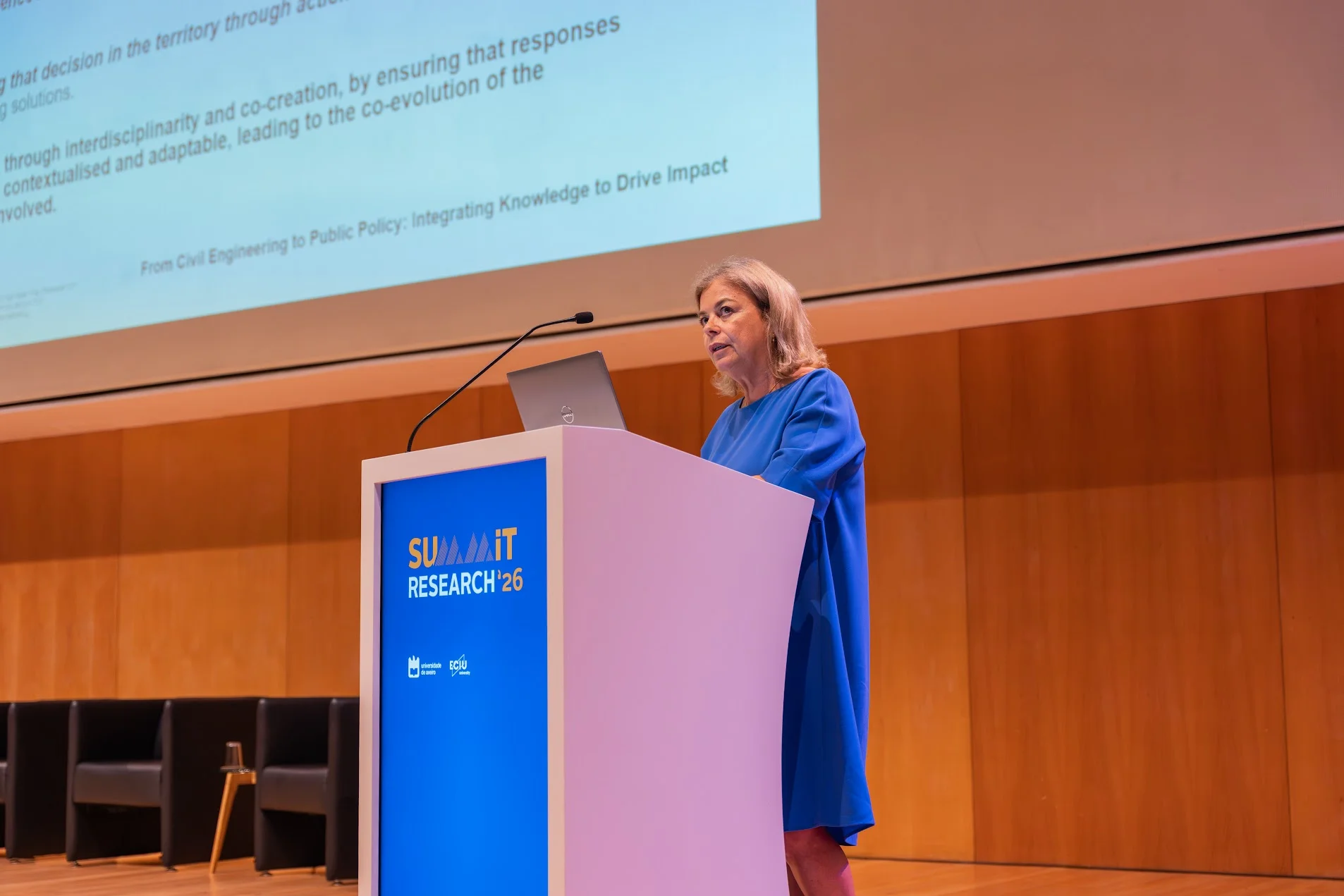
During the first day of the Summit, Maria Fernanda Rodrigues, CERIS Aveiro researcher and faculty member at the Department of Civil Engineering (DECivil), participated in the round table "From Civil Engineering to Public Policy: Integrating Knowledge to Drive Impact", contributing to the discussion on how scientific knowledge can support decision-making and help bridge the gap between research and public policy.
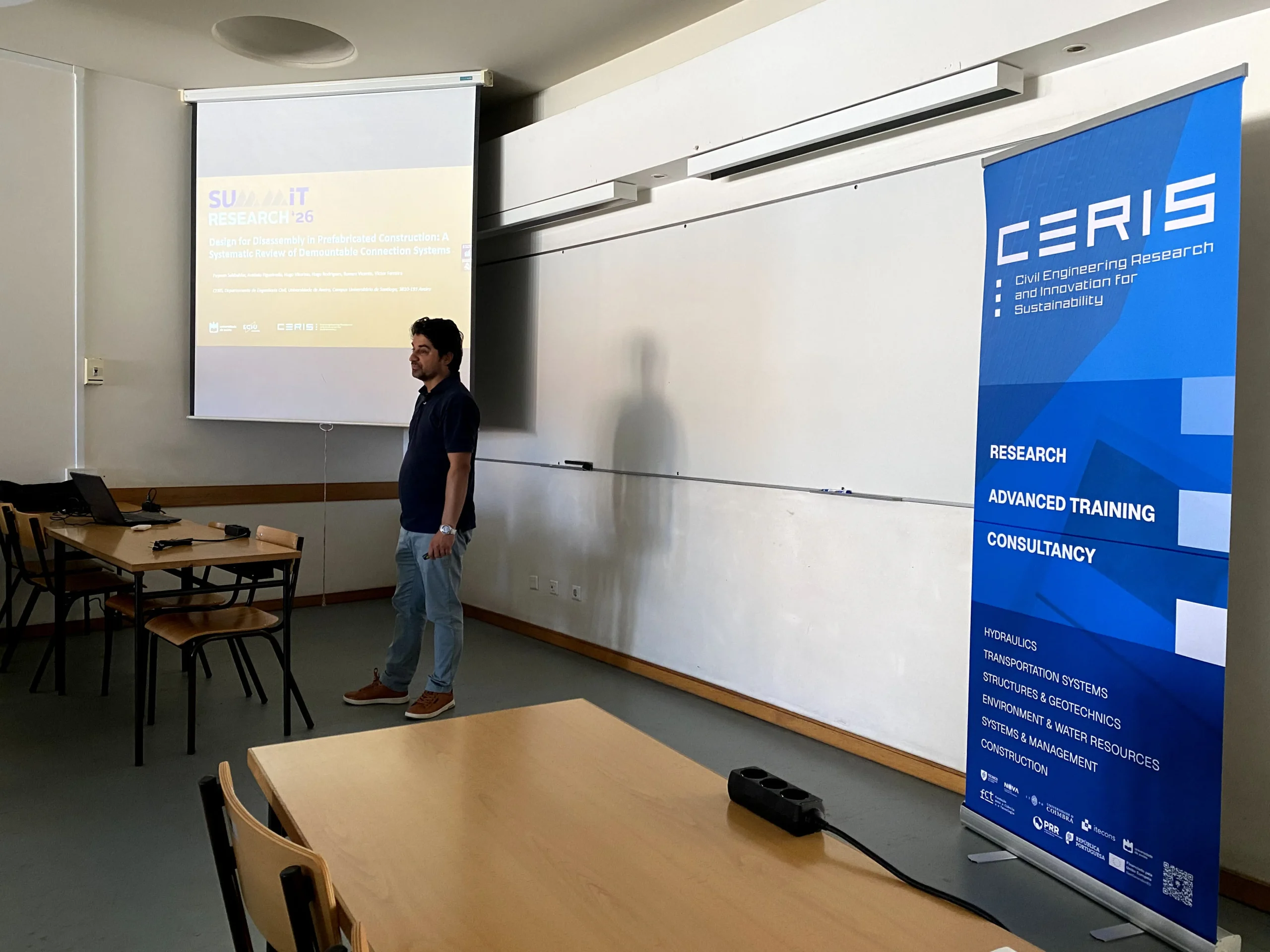
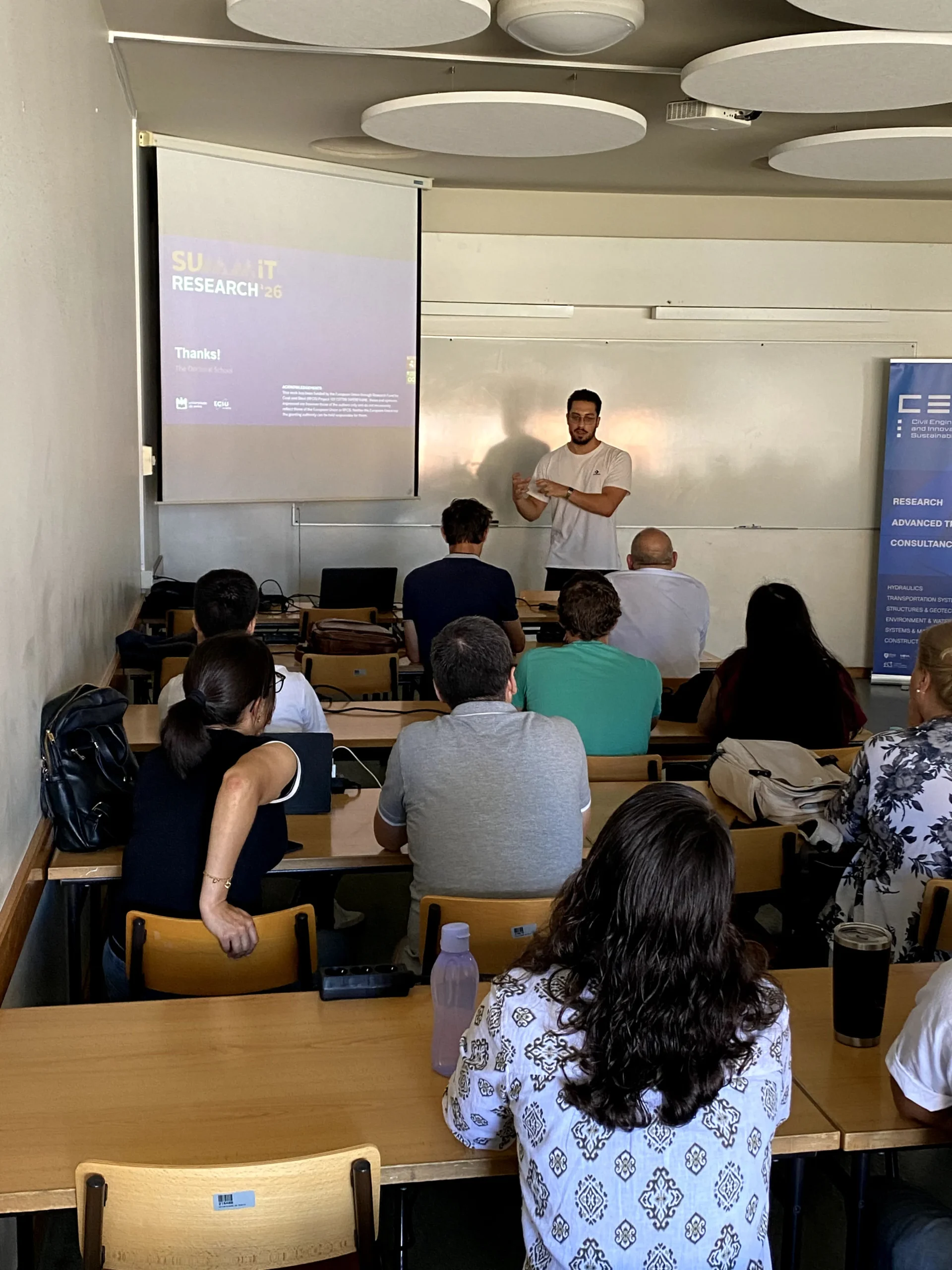
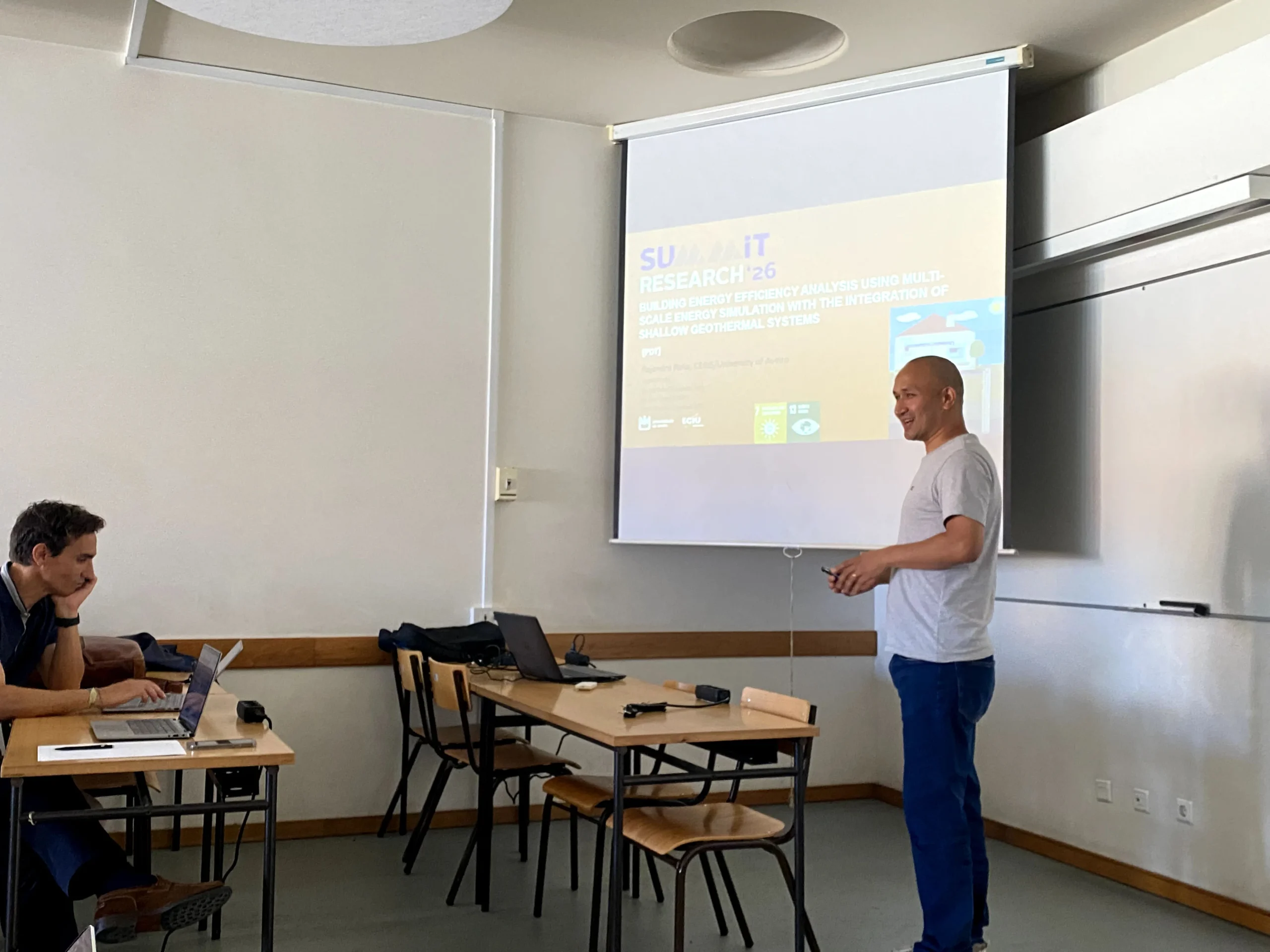
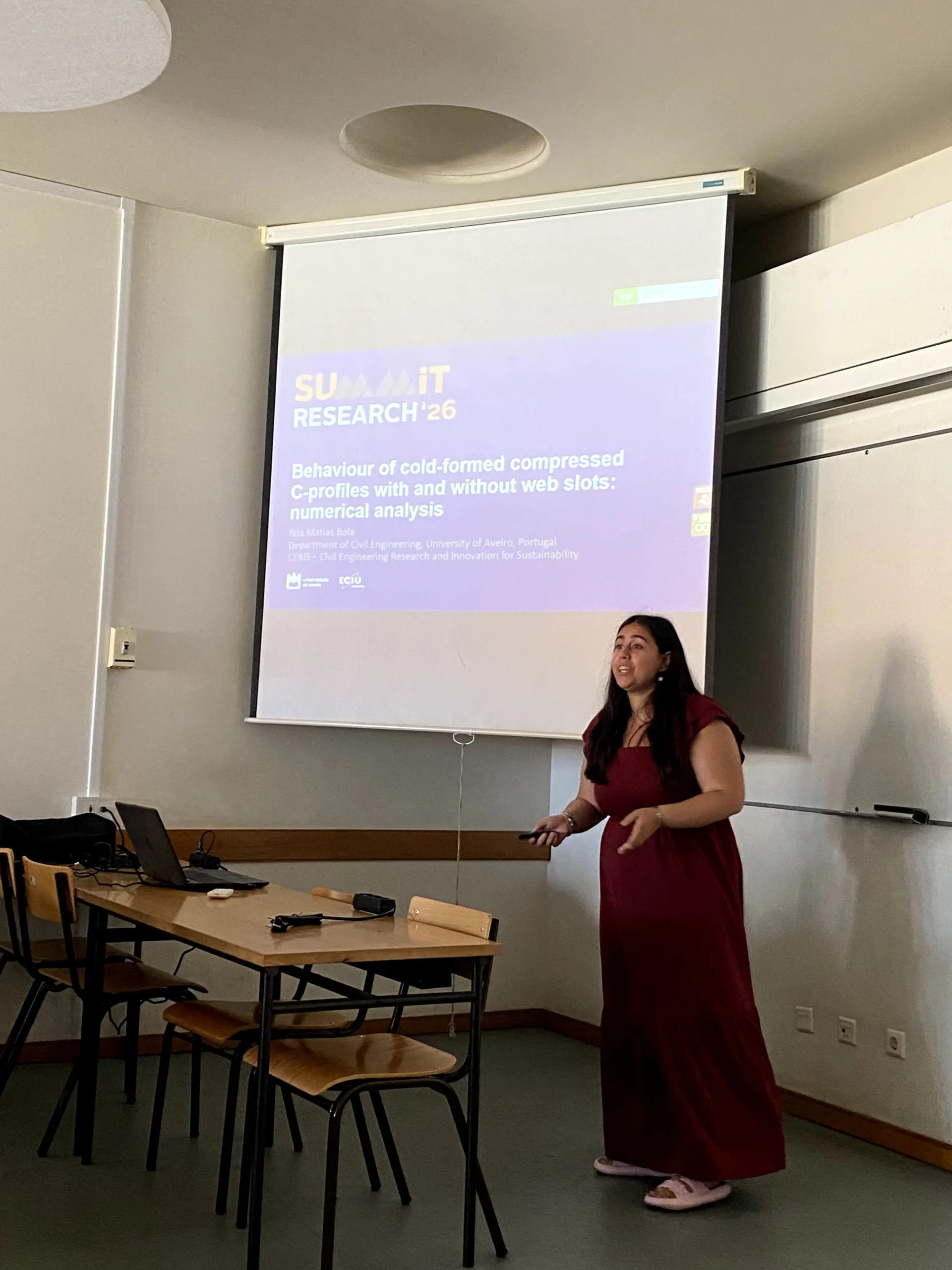
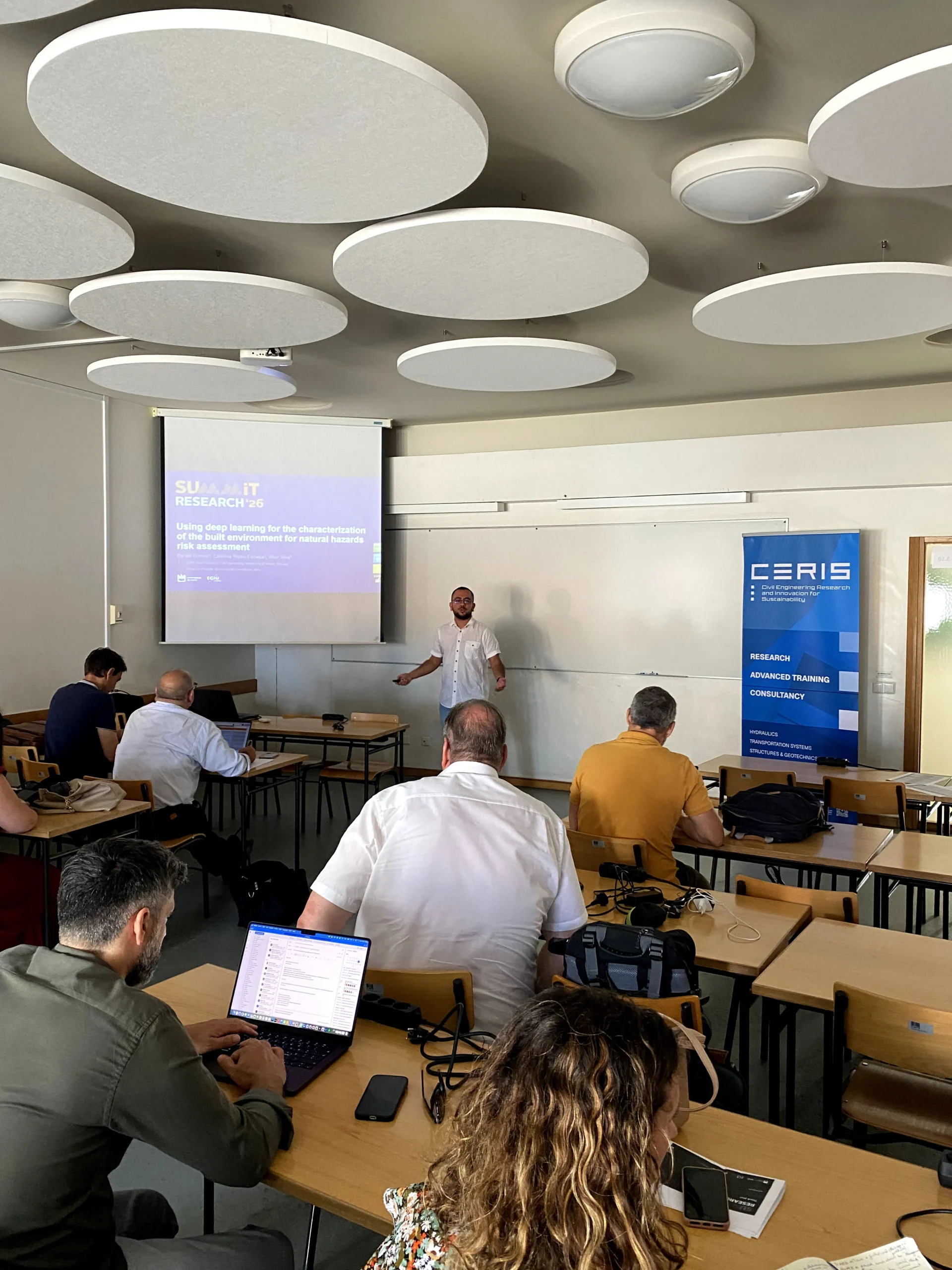
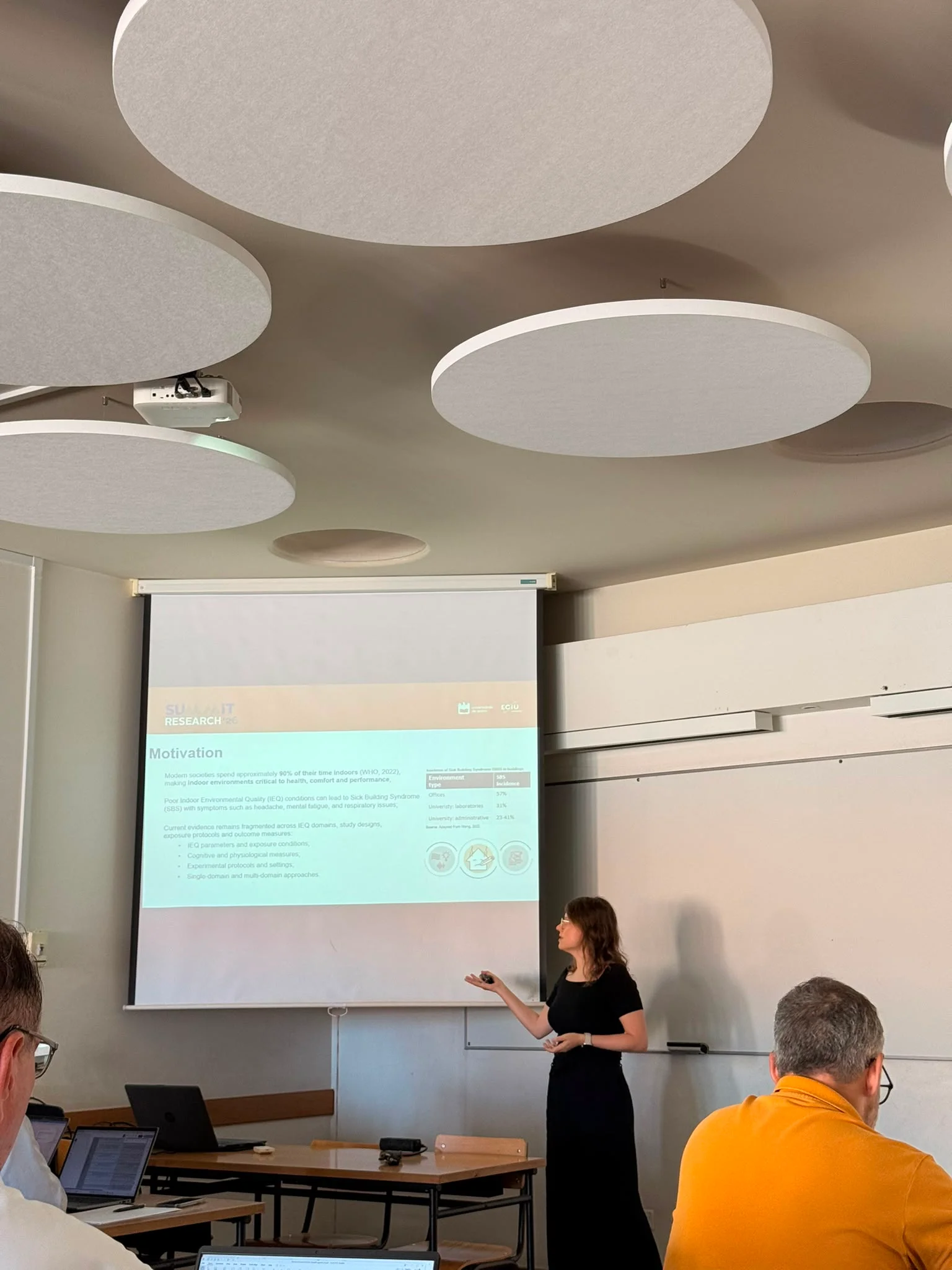
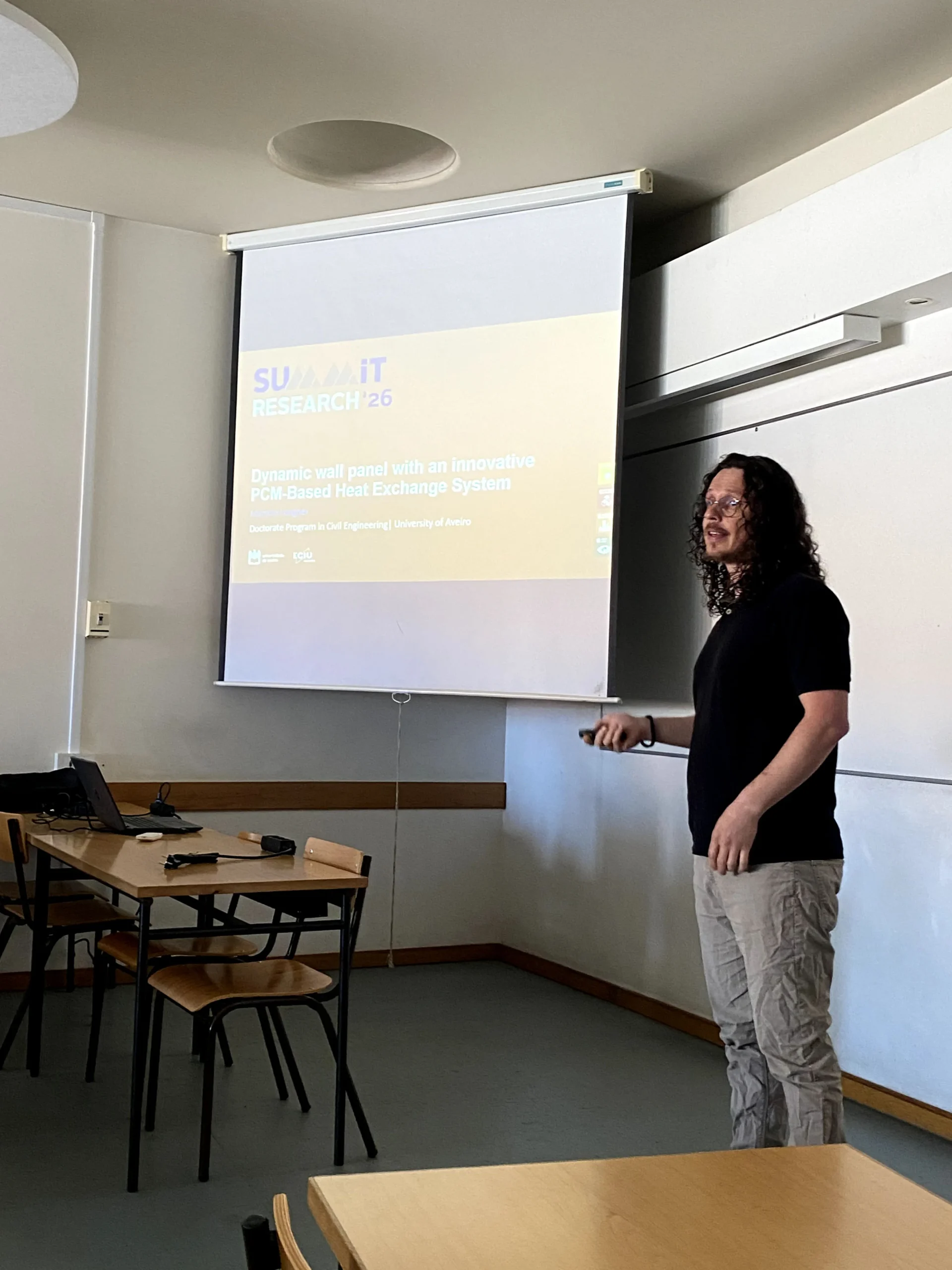
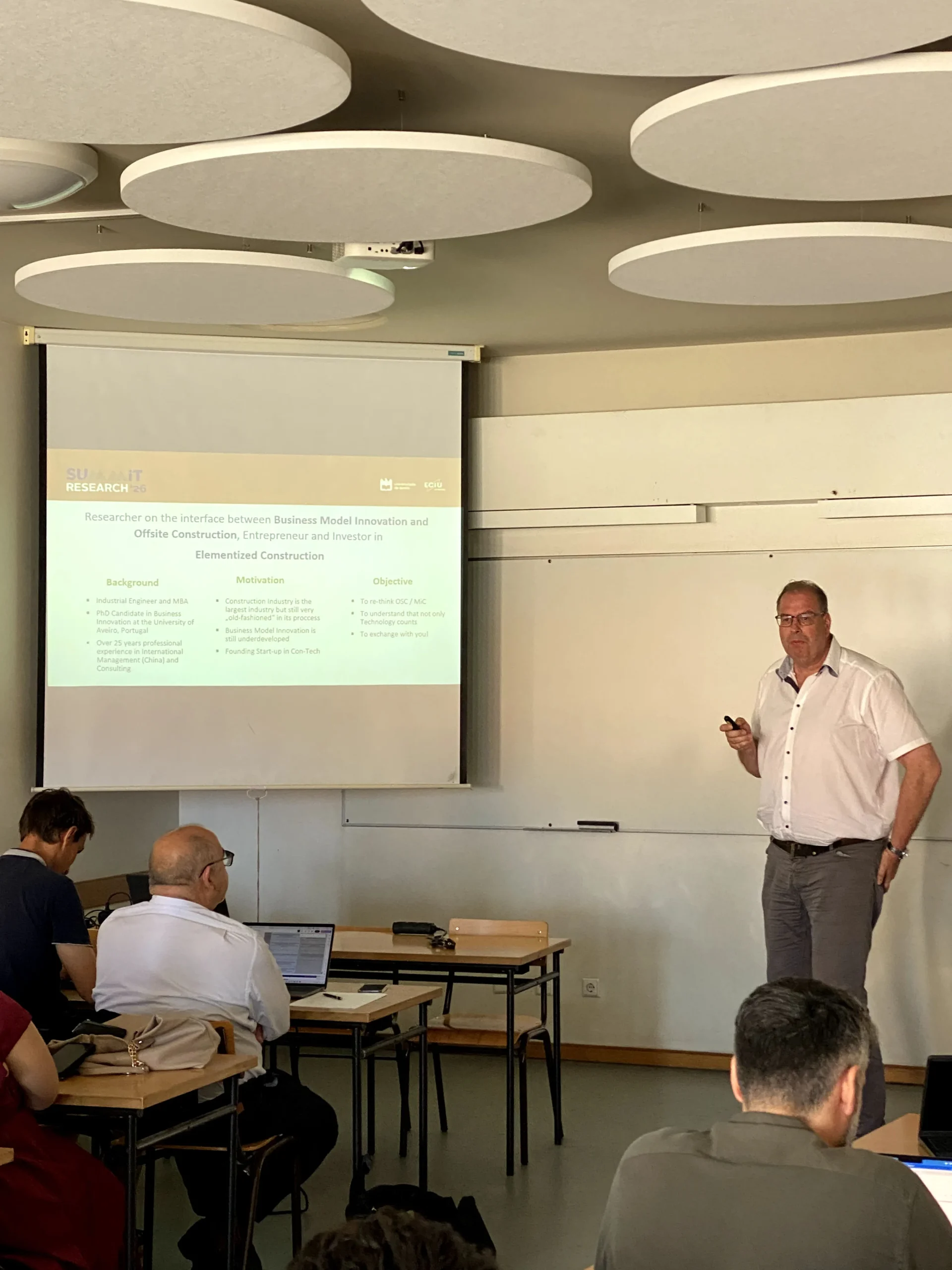
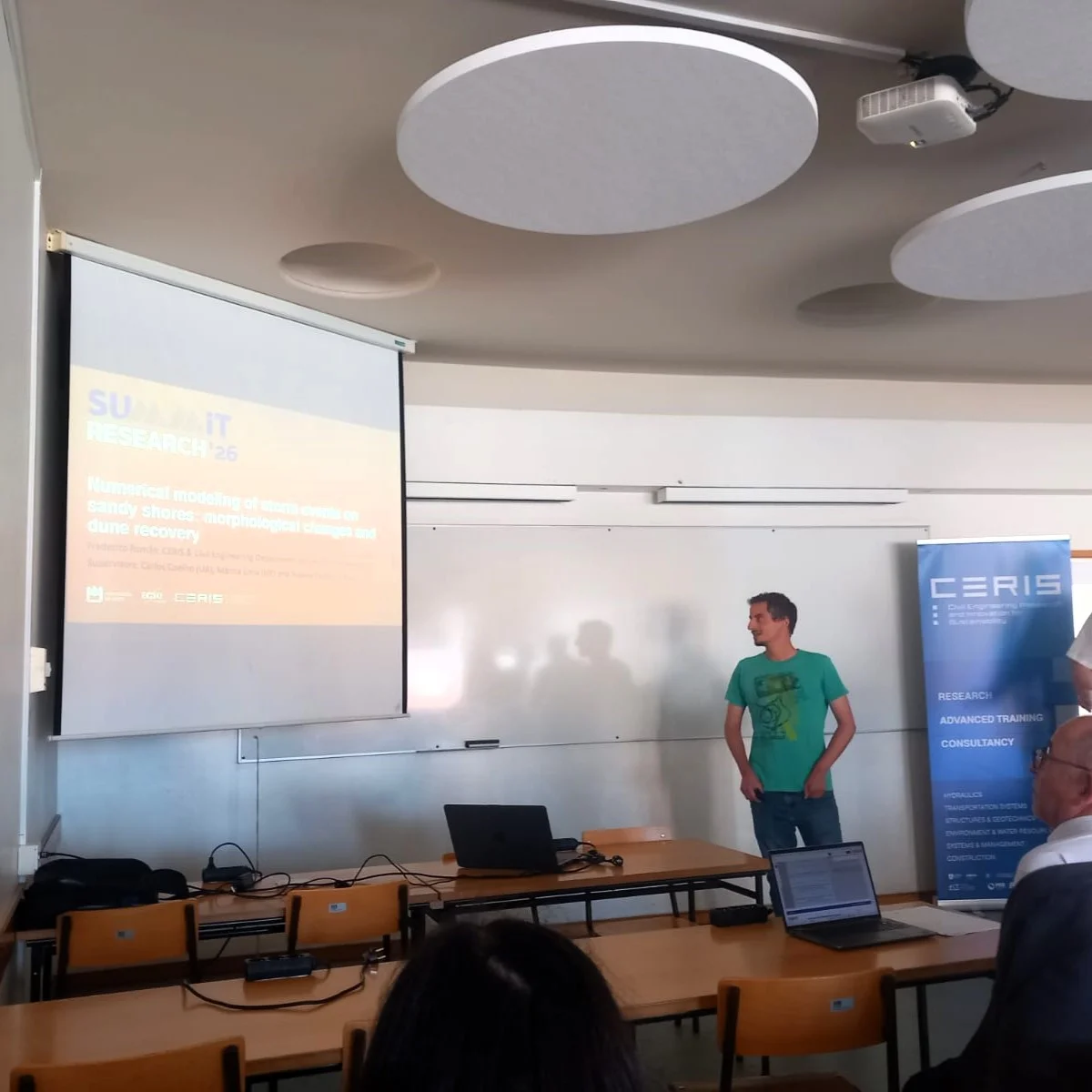
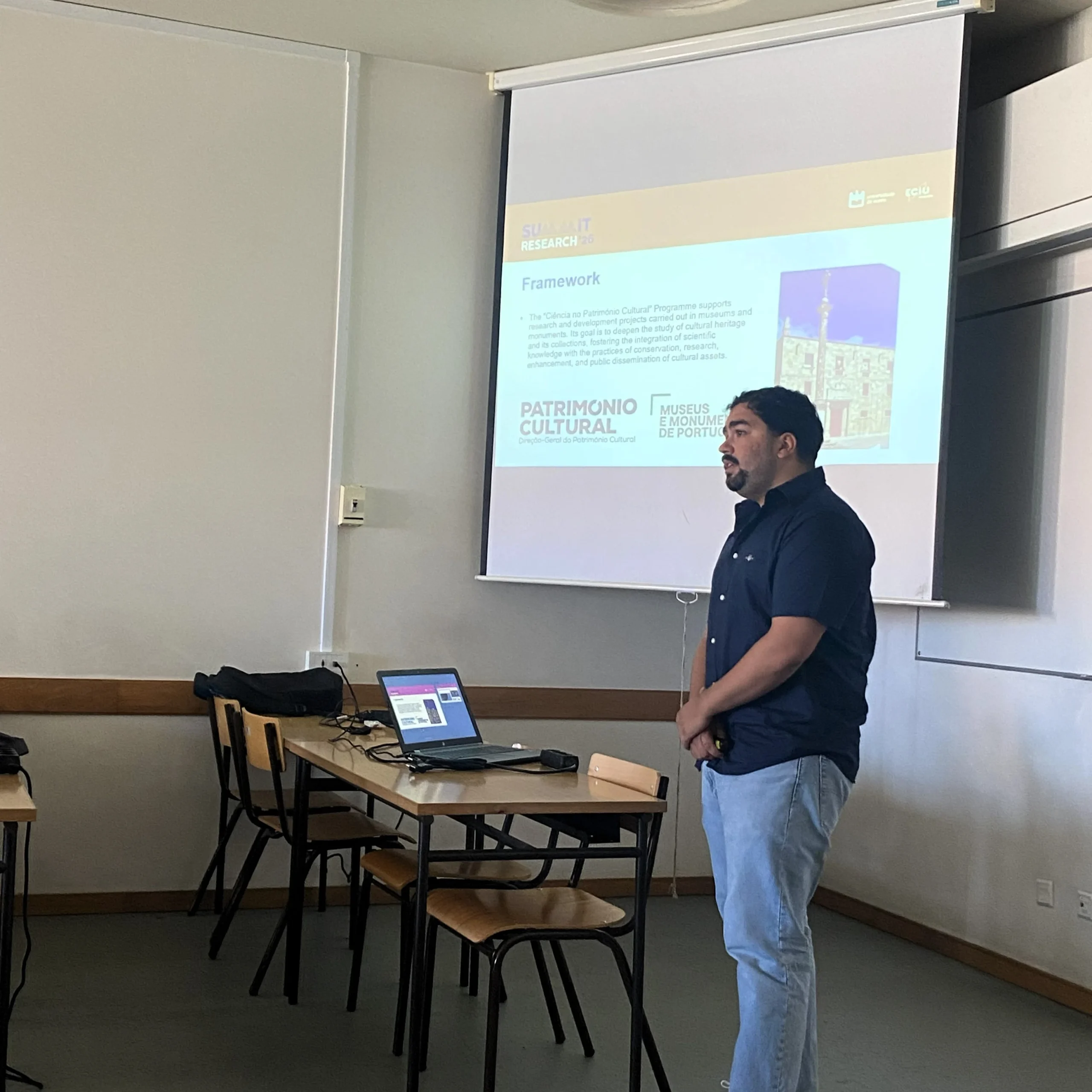
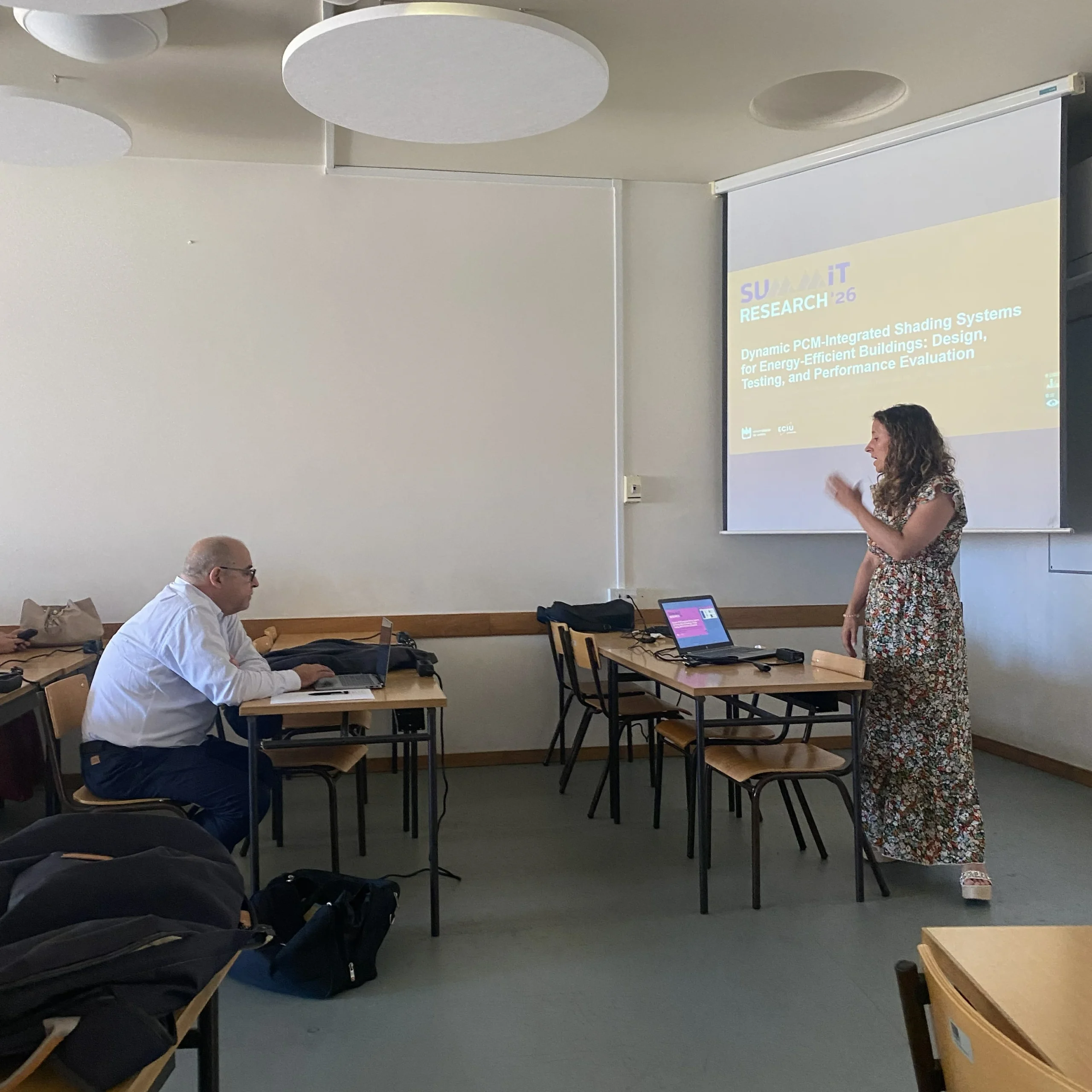
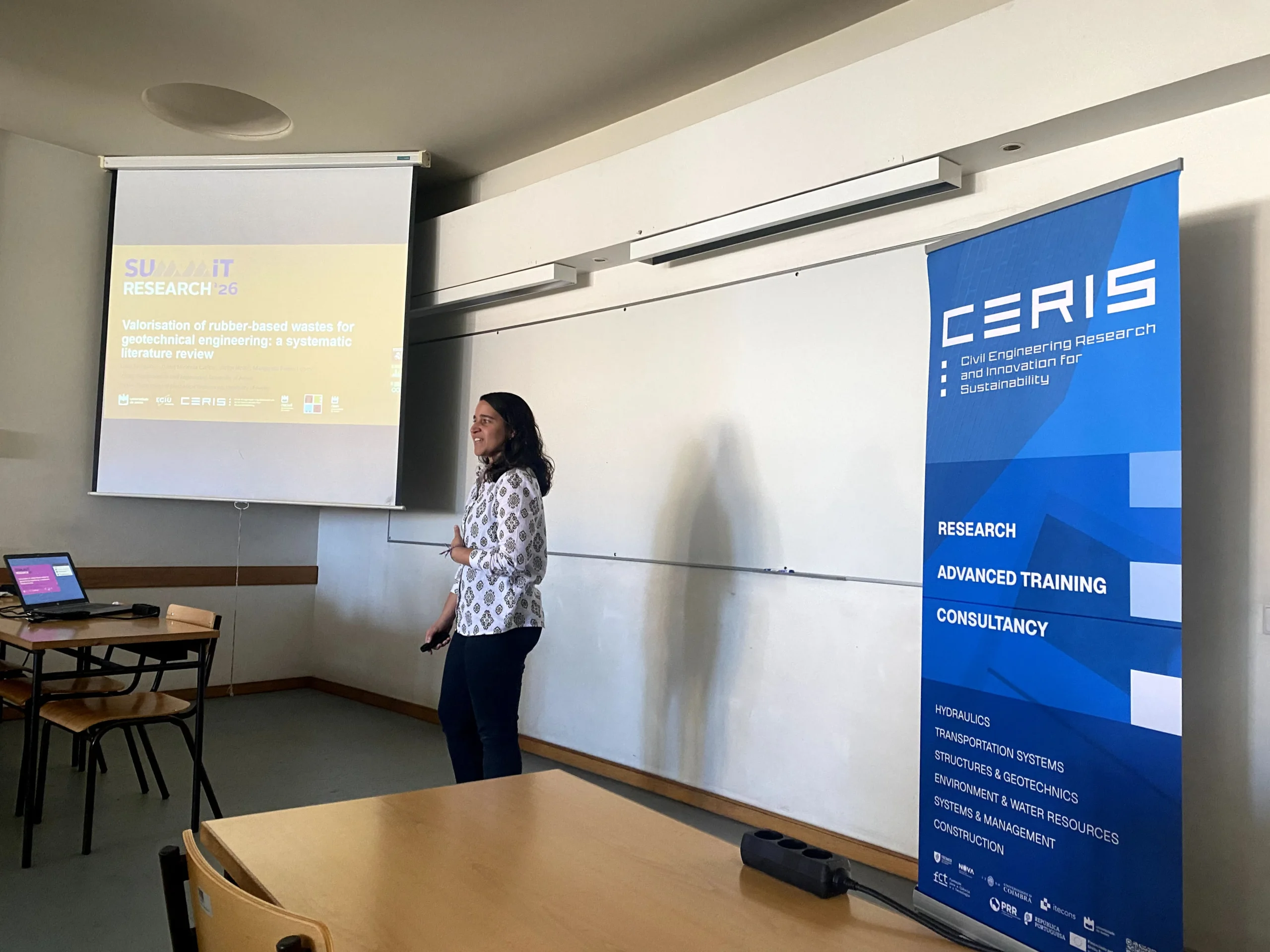
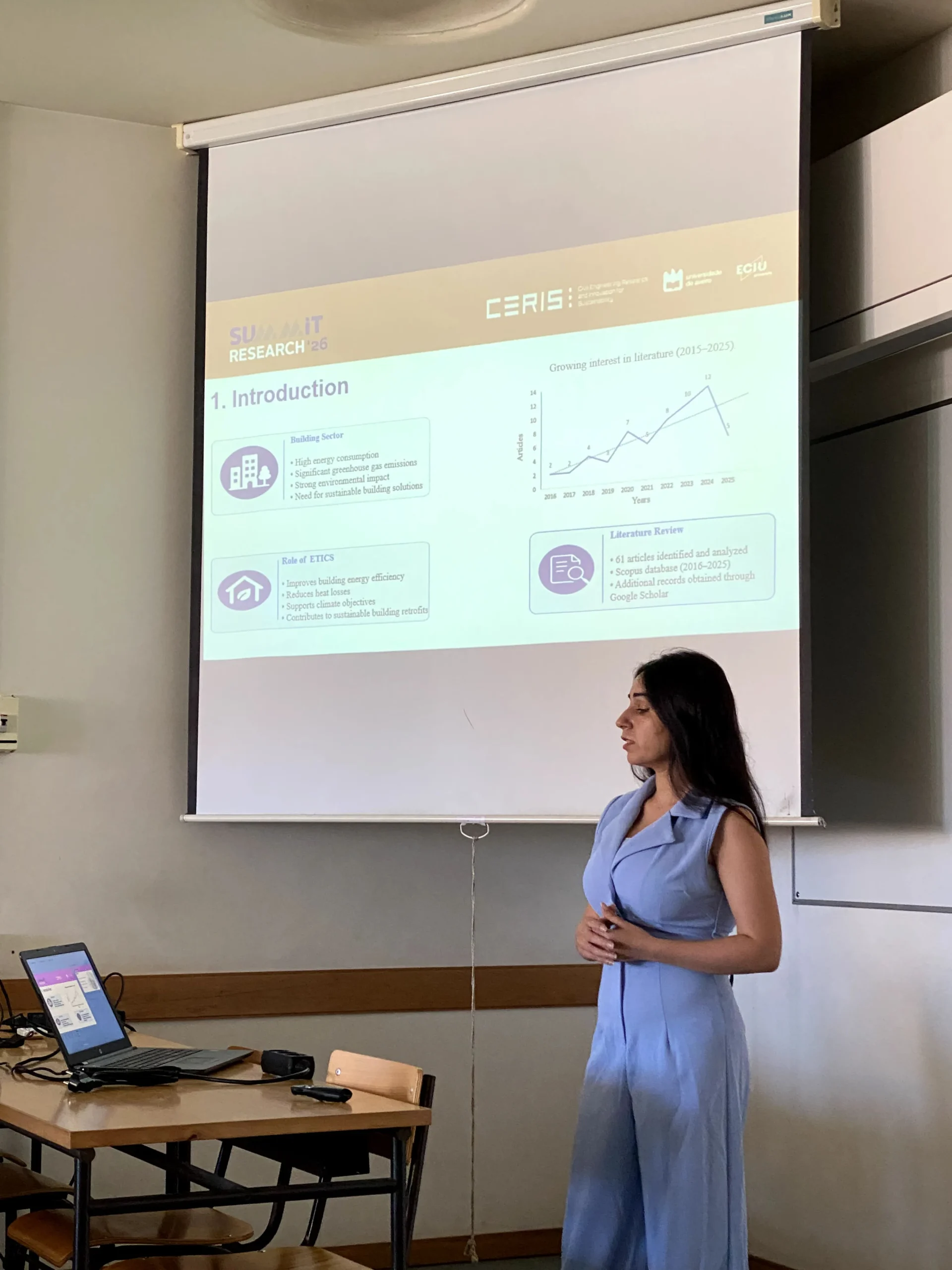
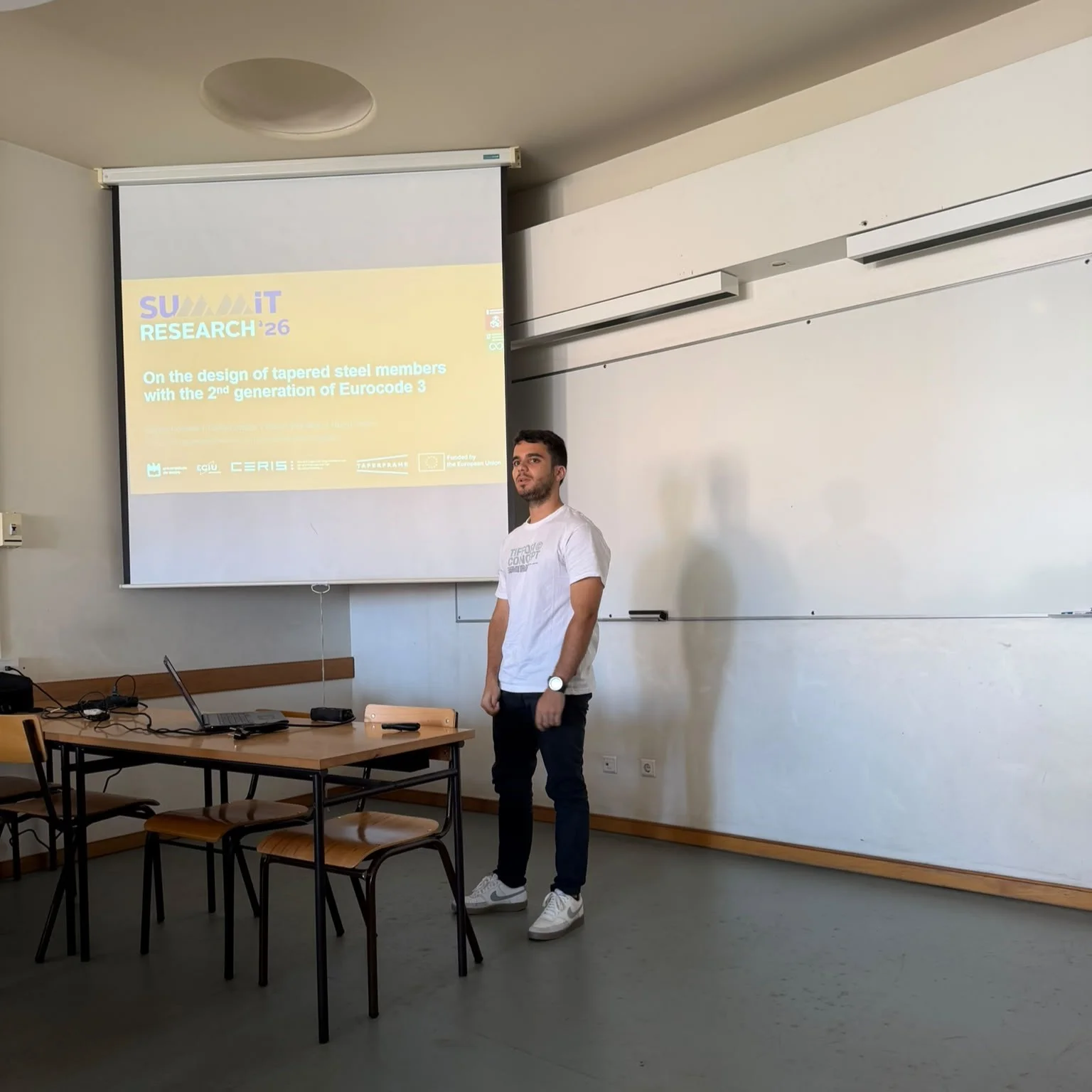
As part of the Summit programme, CERIS Aveiro researchers contributed to the parallel session "Risk Assessment, Sustainability and Rehabilitation of the Built Environment", coordinated by Romeu Vicente, Paulo Vila Real, and Hugo Rodrigues. The session provided a platform for CERIS Aveiro PhD researchers to present their ongoing work and showcase the contribution of the next generation of Civil Engineering researchers.
A total of 14 research presentations were delivered by CERIS Aveiro PhD researchers, covering a broad range of topics within Civil Engineering, including sustainable construction, structural safety, artificial intelligence, energy efficiency, climate adaptation, coastal processes, geotechnical engineering, and the rehabilitation and monitoring of the built environment..
The presented research highlighted innovative approaches to some of the most pressing challenges faced by the built environment. Contributions addressed sustainable construction solutions, including design for disassembly in prefabricated systems, new approaches for improving building energy performance, and the development of advanced materials and technologies.
Digital transformation and artificial intelligence also emerged as important research themes, with studies exploring new methodologies for structural design optimisation, natural hazard risk assessment, and the application of AI-based solutions in Civil Engineering.
Other contributions focused on structural behaviour and safety, including the analysis and design of construction elements, monitoring of built heritage, indoor environmental quality, coastal dynamics, and the valorisation of waste materials for engineering applications.
The diversity of the research presented reflects the multidisciplinary nature of CERIS Aveiro and its commitment to advancing knowledge capable of supporting safer, more sustainable, and more resilient communities.
Through its participation in the Research Summit 2026, CERIS Aveiro reinforced the importance of scientific collaboration, knowledge exchange, and the involvement of early-career researchers in addressing current and future societal challenges.
The participation of CERIS Aveiro PhD researchers also highlights the importance of providing opportunities for young scientists to communicate their work, establish collaborations, and contribute to the continuous development of Civil Engineering research.
CERIS Aveiro PhD researchers who presented their work:
Peyman Sabbahfar, Rúben Santo, Rajendra Babu Roka, Rita Bola, Daniel Gomez, Thais Aline Soares, Marcelo Langner, Joachim Zwicky, Frederico Romão, David Pereira, Margarida Gonçalves, Luiza Margalho, Fardous Ajeeb, and Carlos Correia.