

News
CERIS Researcher Maria Manuela Portela Joins EASAC Working Group on Water Scarcity and Retention in European Landscapes

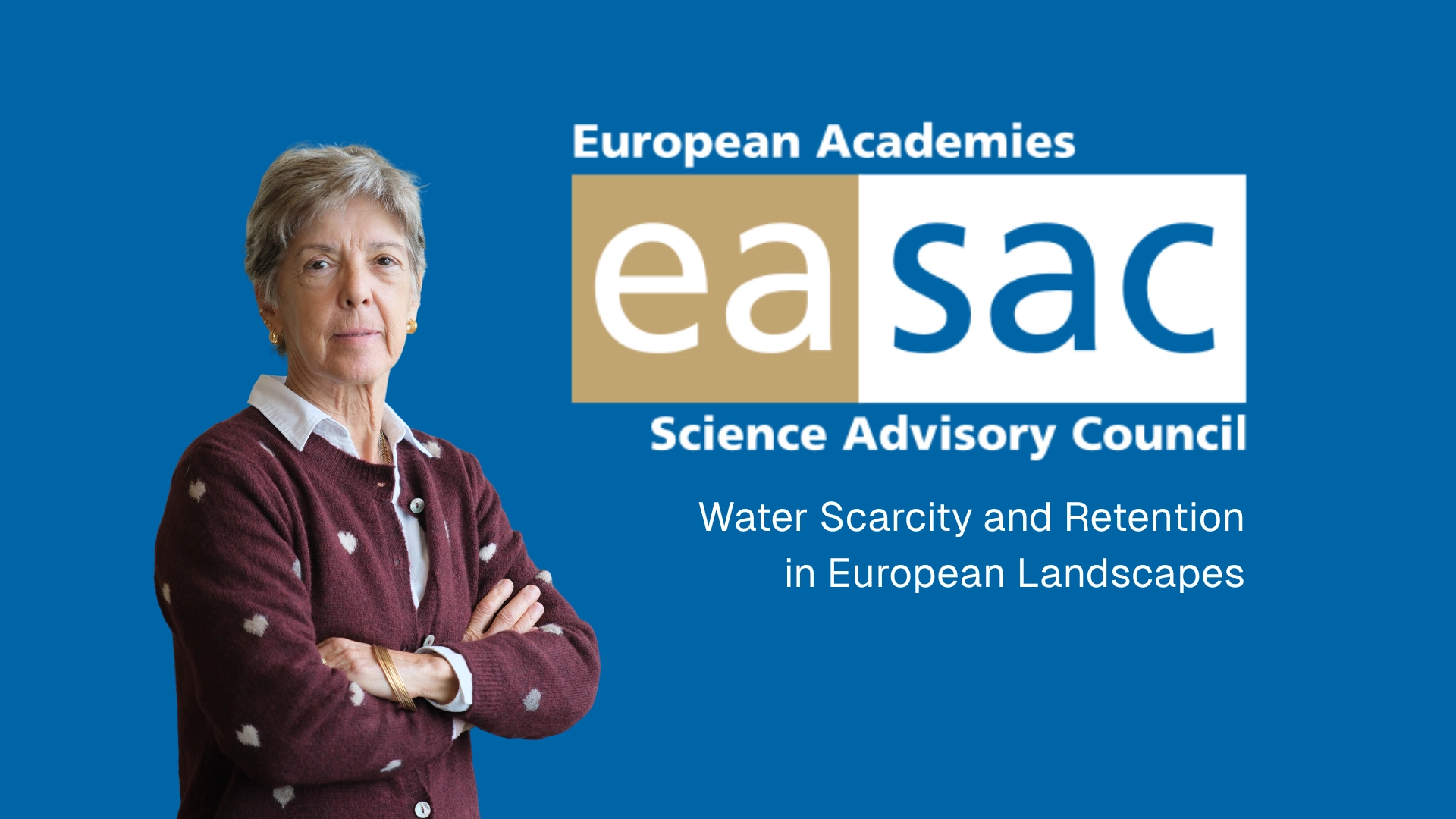
Maria Manuela Portela, Professor at Instituto Superior Técnico and researcher at CERIS, was selected in July 2026 to join the European Academies Science Advisory Council (EASAC) Working Group on Water Scarcity and Retention in European Landscapes, following her nomination by the Academy of Sciences of Lisbon.
EASAC brings together Europe’s national science academies to provide independent, evidence-based scientific advice to European policymakers on major societal challenges. The newly established Working Group aims to assess water scarcity and landscape water retention across Europe, identify scientific evidence, and propose strategies to strengthen resilience to climate change. Its final report, accompanied by a Summary for Policymakers, is expected in autumn 2027.
Reflecting on her selection, Professor Maria Manuela Portela highlighted its personal and professional significance: "The invitation was particularly gratifying, as it suggests that the research I have been involved in has earned a vote of confidence from the Academy of Sciences of Lisbon."
Within the international group of experts, Professor Maria Manuela Portela will contribute her expertise in extreme hydrological events, particularly droughts, heatwaves, water scarcity and hydrological variability, including their magnitude and frequency under climate change scenarios.
Drawing on research developed at CERIS, she emphasises the growing challenges facing Portugal, where water availability is becoming increasingly irregular, both between and within years. Her research indicates that changes in the frequency of extreme events, rather than necessarily their magnitude, are among the most significant emerging trends. "The most noticeable changes in extreme hydrological events concern not so much their magnitude, but the increasing frequency of their occurrence," she explains.
These trends are particularly concerning in southern and inland Portugal, where rising temperatures, increasingly irregular precipitation and growing water scarcity may significantly affect water resource availability and the reliability of water supply infrastructure.
Professor Maria Manuela Portela also highlights the HH-DD paradigm "hotter becomes hotter, drier becomes drier" as a particularly relevant challenge for these regions. Her research has helped identify areas more vulnerable to hydrological changes, including through the development of severity heatmaps to characterise the spatial distribution of extreme hydrological events.
Regarding the significance of her appointment for CERIS, Professor Maria Manuela Portela considers that her participation reflects the quality and relevance of the research conducted at the centre:
"Above all, I believe my participation in this Working Group represents recognition of the relevance, consistency and timeliness of the research developed at CERIS."
Although it is still too early to assess opportunities for future scientific collaborations, her involvement provides an opportunity to contribute CERIS expertise to European scientific assessments and policy discussions on water scarcity, climate resilience and sustainable water resources management.
CERIS warmly congratulates Professor Maria Manuela Portela on this distinguished appointment and wishes her every success in this important contribution to European scientific research and policymaking.