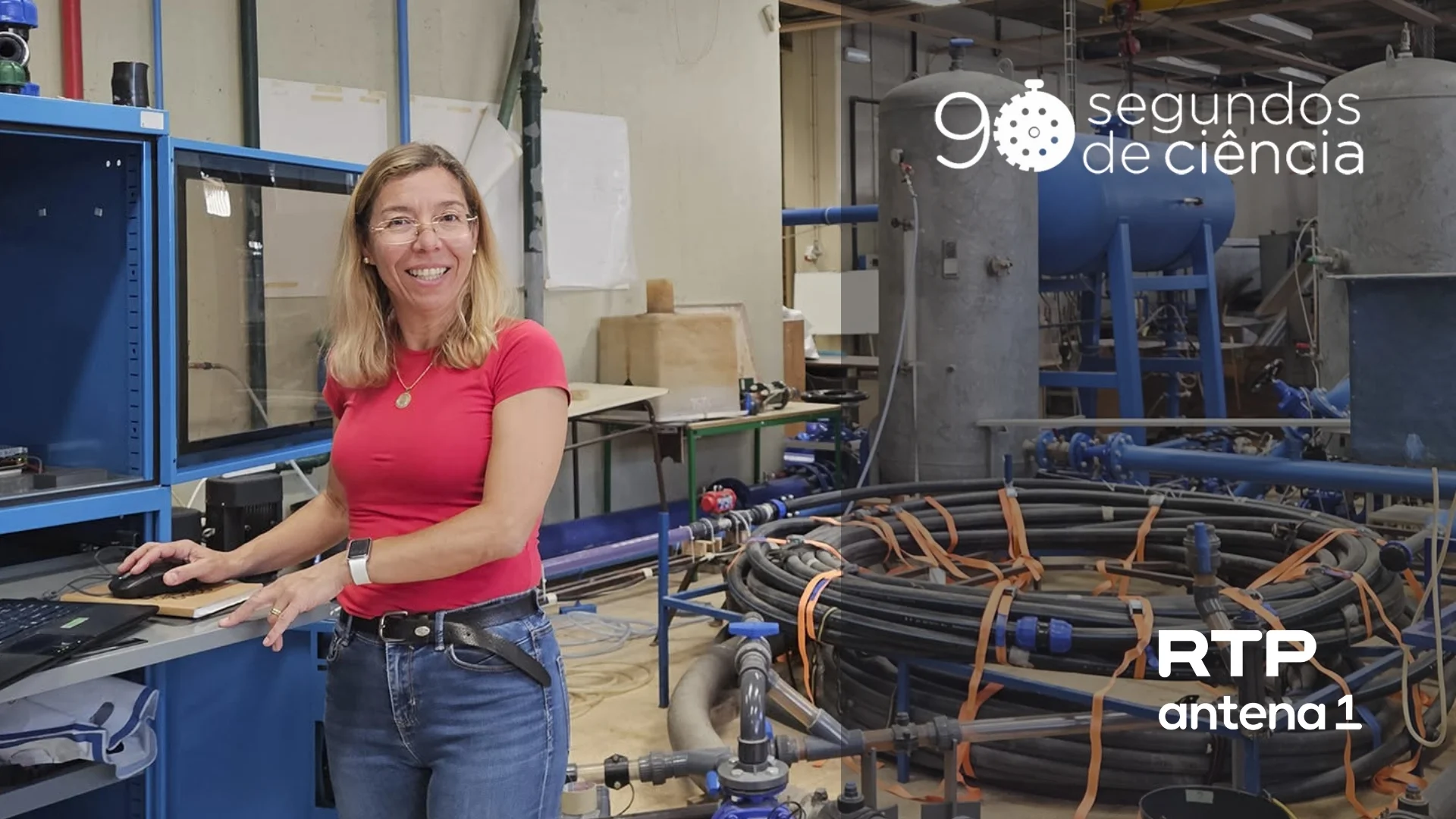
Dídia Covas, CERIS researcher and Full Professor at the Department of Civil Engineering, Architecture and Georesources of Instituto Superior Técnico, was recently featured on the RTP Antena 1 science communication programme 90 Segundos de Ciência, where she presented the AQUALEARN project and its innovative approach to improving the management of drinking water distribution systems through artificial intelligence.
The AQUALEARN project aims to support water utilities in the early detection of anomalies within water supply networks by combining machine learning techniques with digital twins. Modern water distribution systems are equipped with numerous flow and pressure sensors that continuously generate large volumes of data, typically at intervals of five to ten minutes. However, interpreting this information efficiently remains a significant challenge for water utilities.
To address this issue, the project is developing machine learning algorithms capable of automatically analysing sensor data and identifying anomalies such as pipe bursts, water theft, or sensor measurement errors. By detecting these events in real time and estimating their location, the system enables maintenance teams to intervene more quickly and accurately, avoiding time-consuming field inspections and reducing operational costs.
Beyond improving operational efficiency, the project contributes to reducing water losses, increasing the resilience of water supply systems, and supporting more sustainable management of one of the world's most valuable natural resources.
The AQUALEARN – Real-time anomaly detection in water supply systems using machine learning-based digital twins project is funded by the Foundation for Science and Technology (FCT).
90 Segundos de Ciência is a science outreach initiative produced by RTP Antena 1 in collaboration with the Master's Programme in Science Communication at NOVA University Lisbon. Through short, accessible episodes, the programme gives researchers from Portuguese institutions the opportunity to present their work directly to the public, helping to bring scientific knowledge closer to society.
CERIS congratulates Professor Dídia Covas on this opportunity to share her research with a wider audience and for contributing to the dissemination of innovative solutions that promote more efficient, resilient and sustainable water management.
Listen to the episode (in Portuguese):