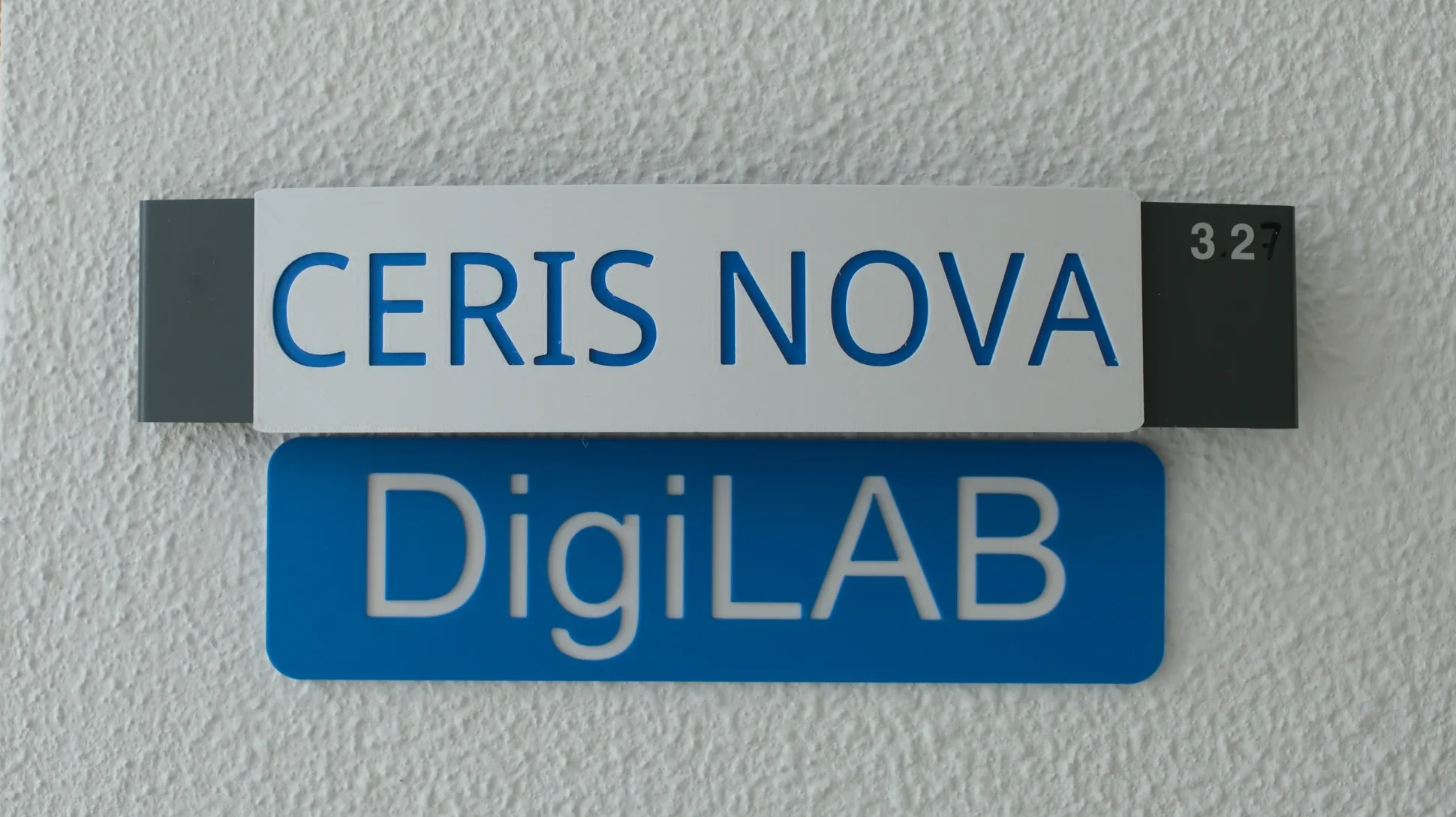
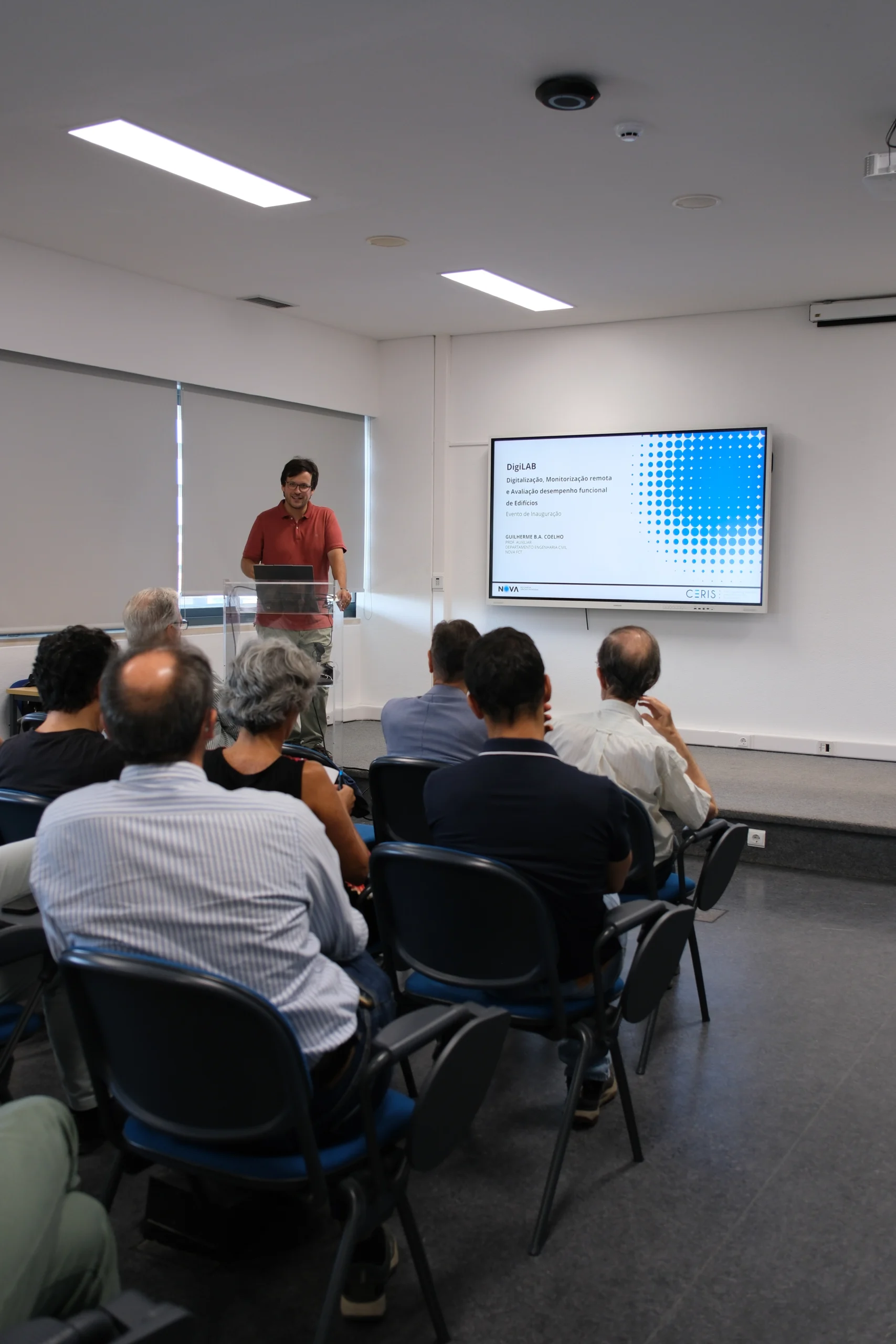
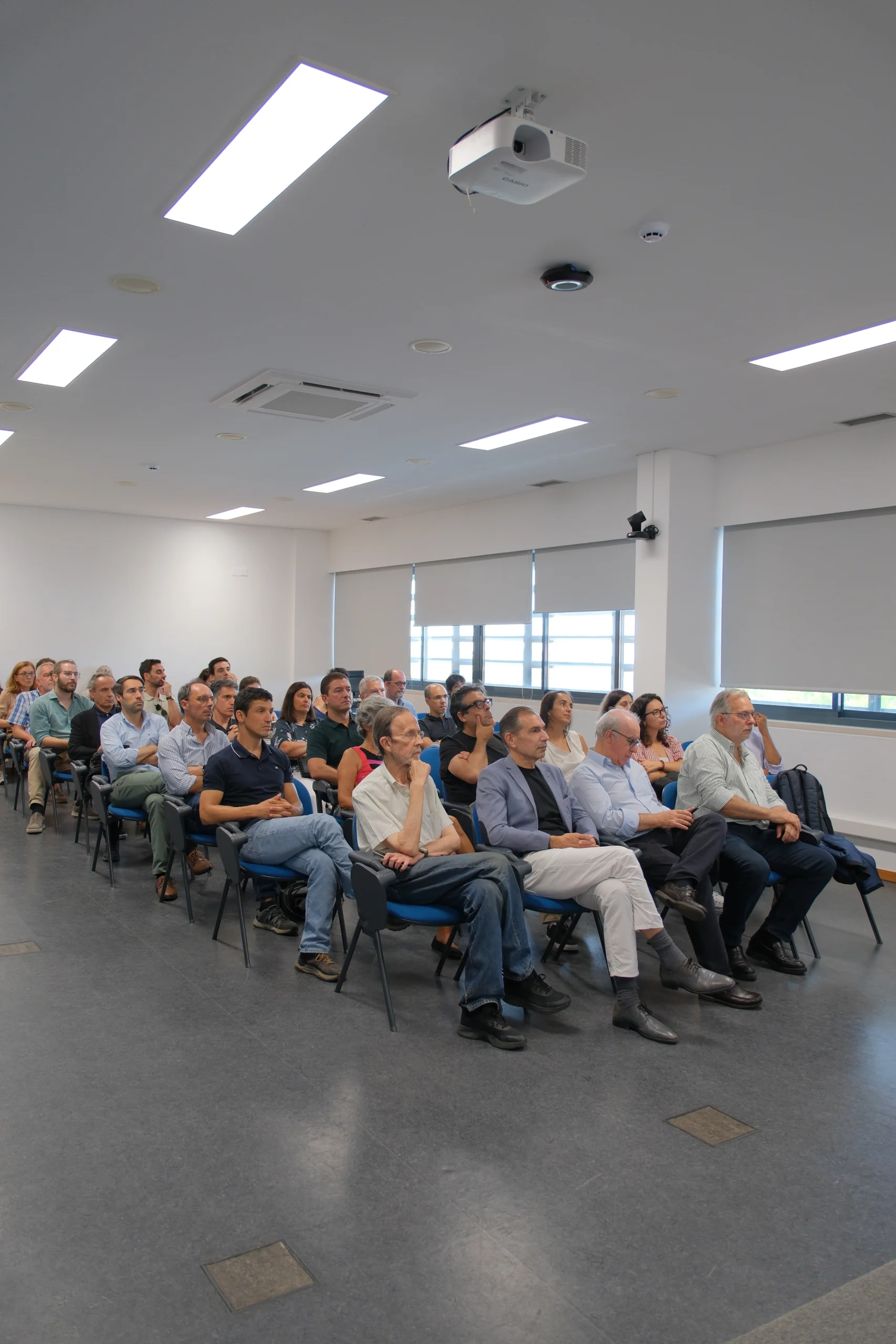
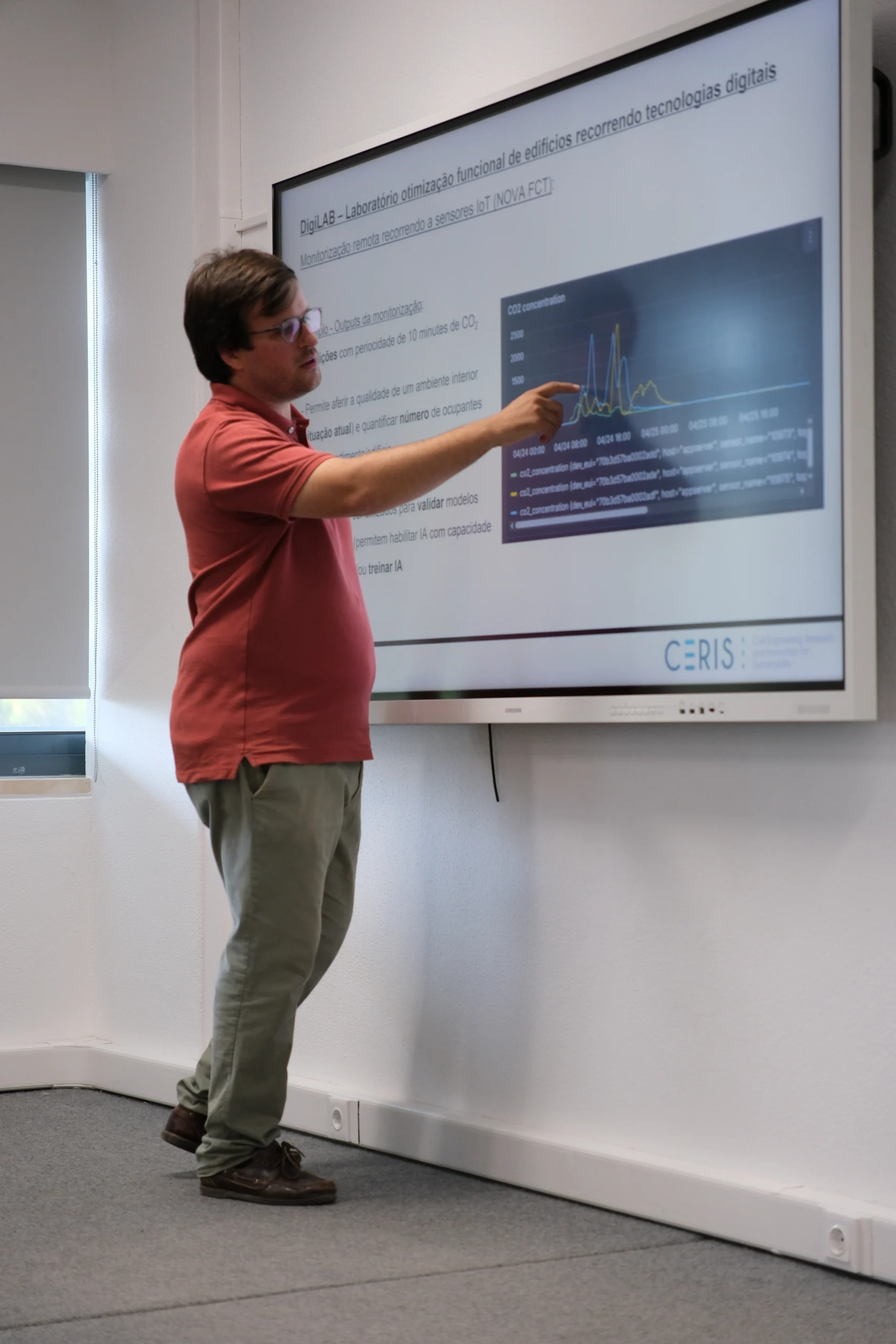
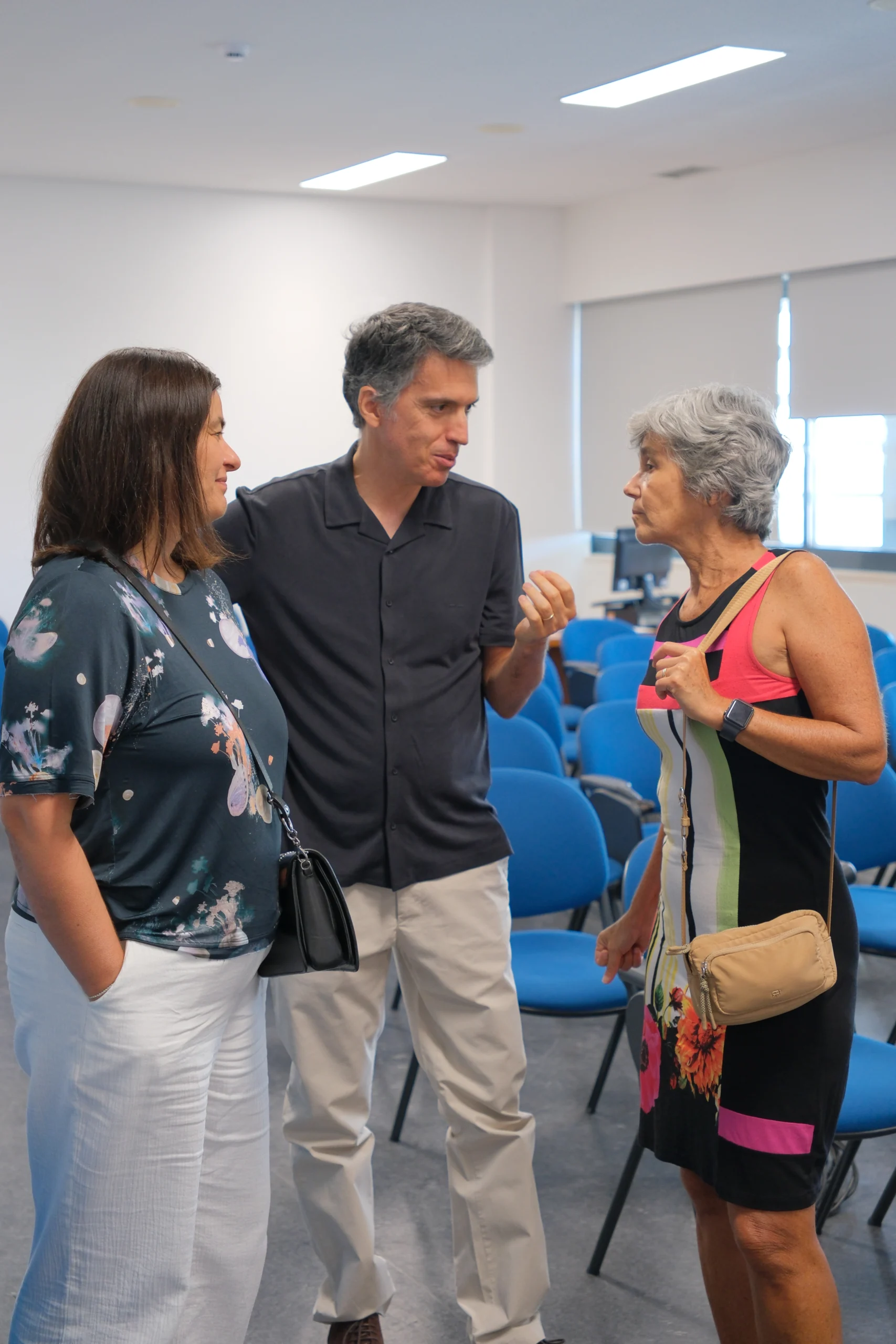
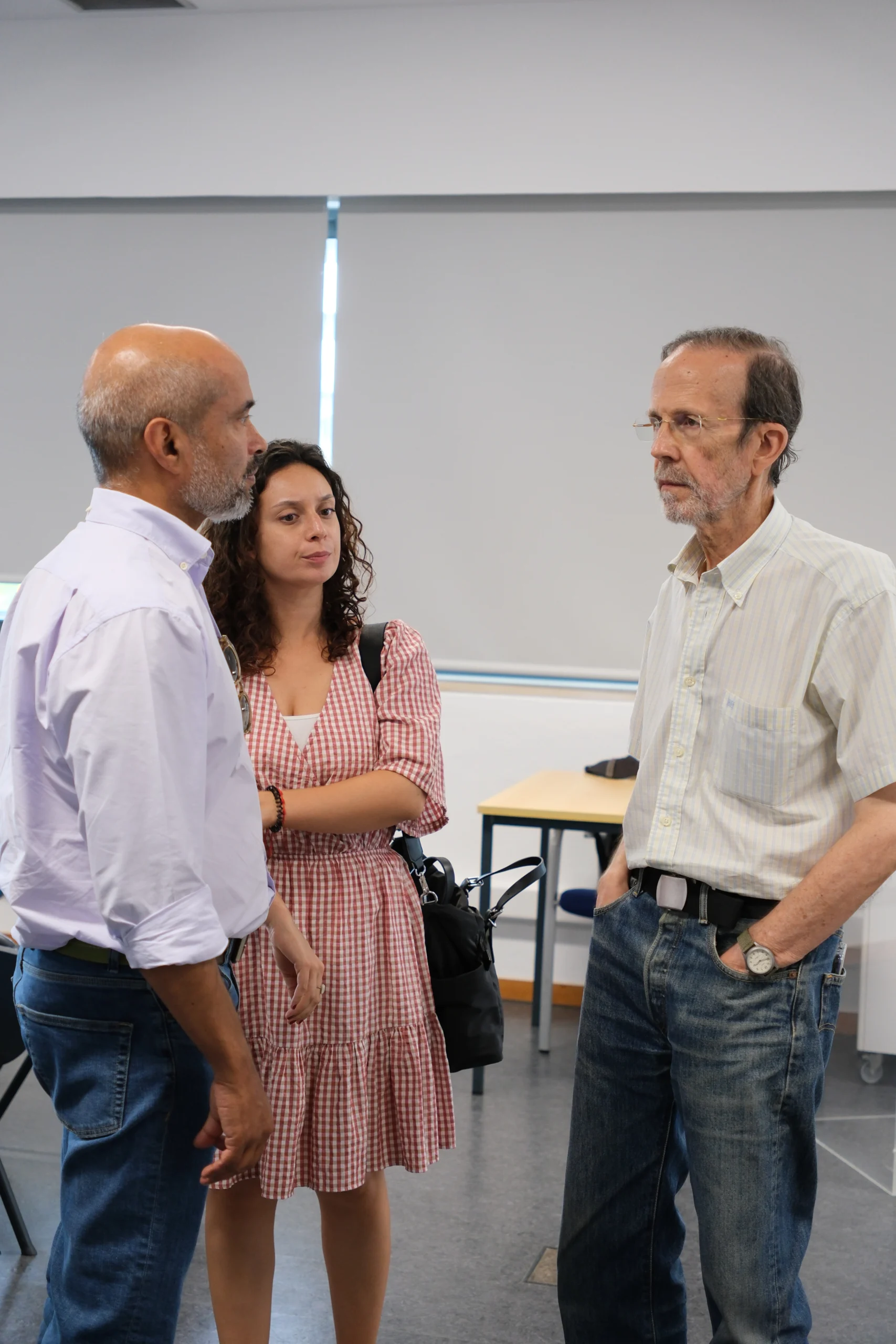
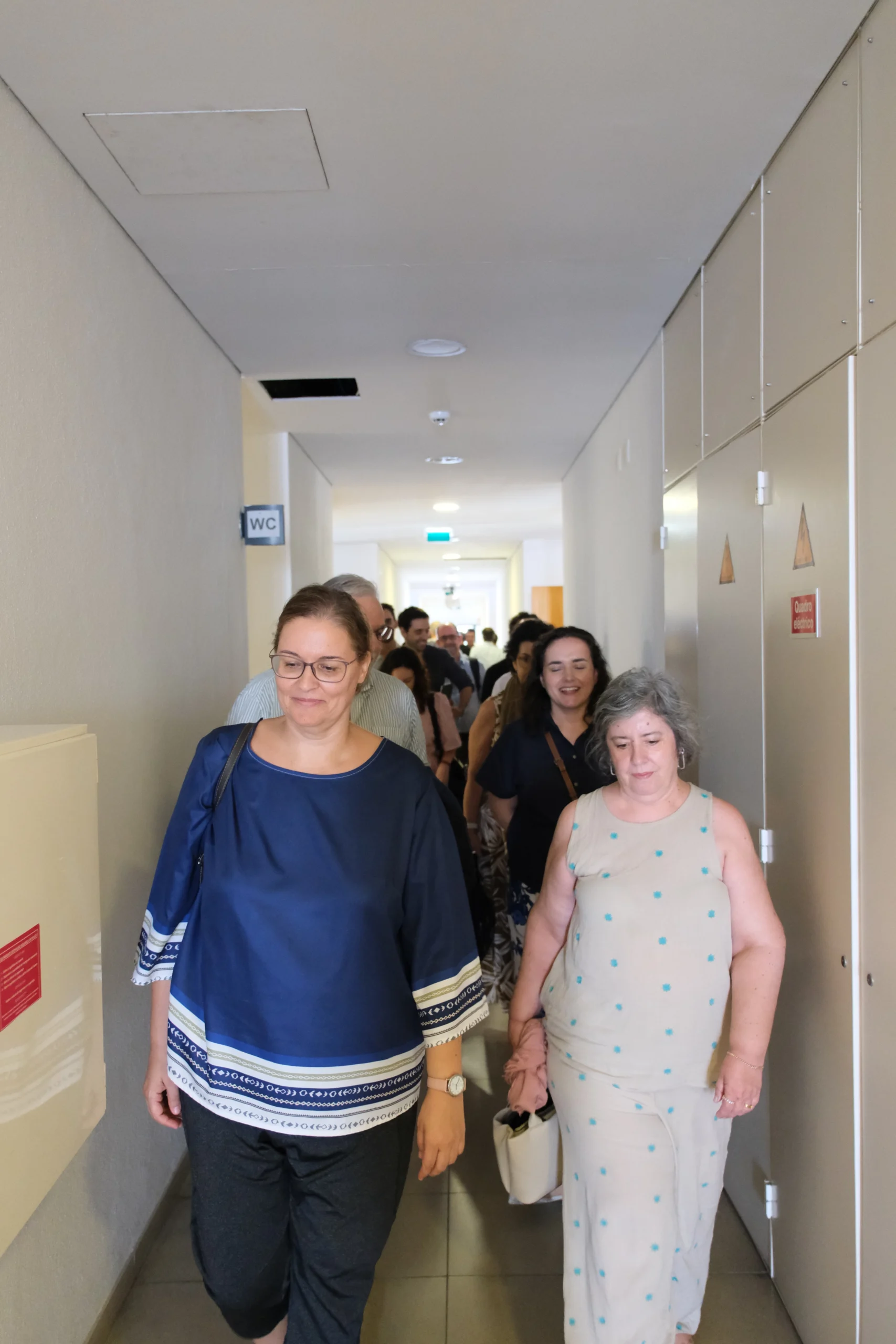
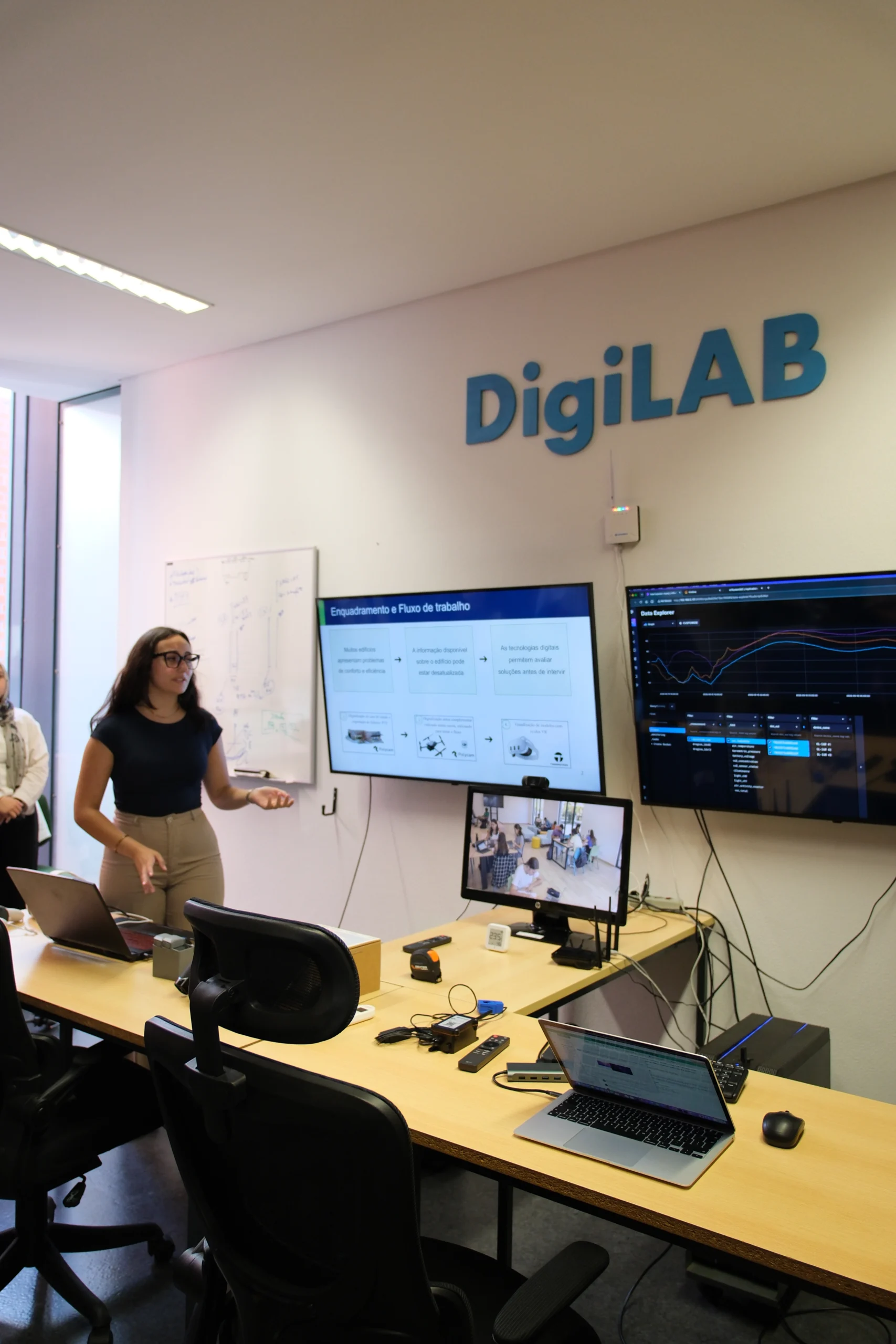
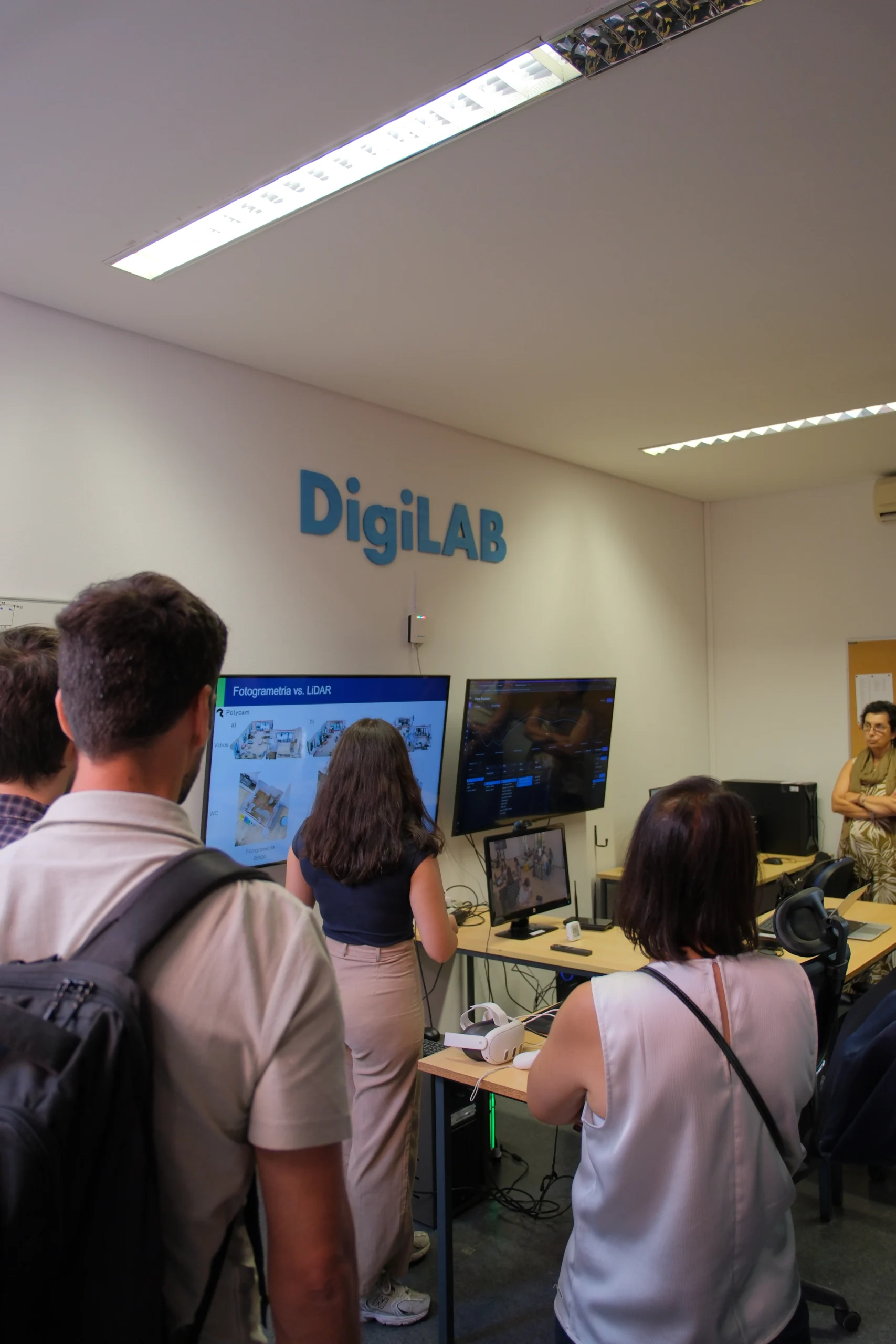
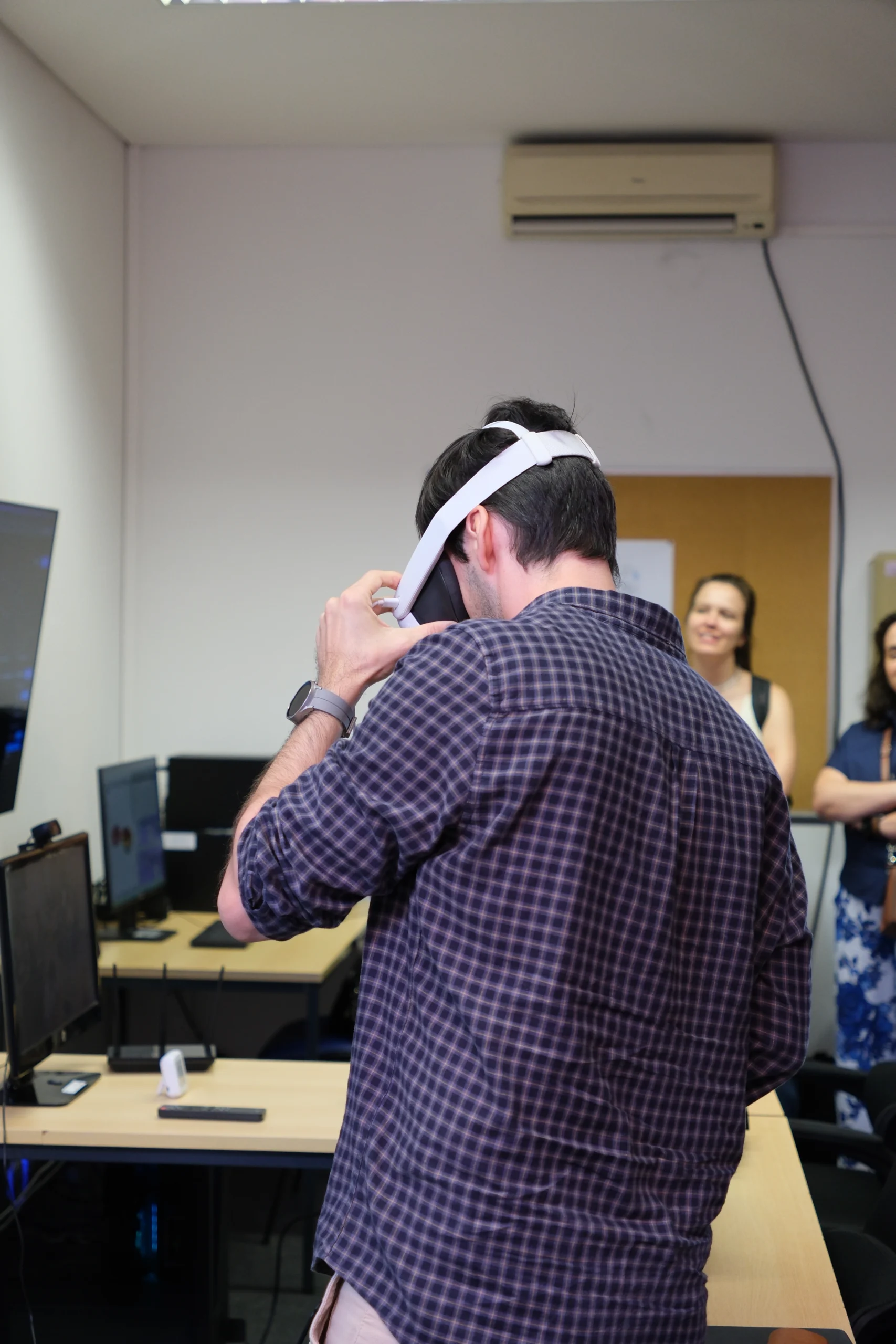
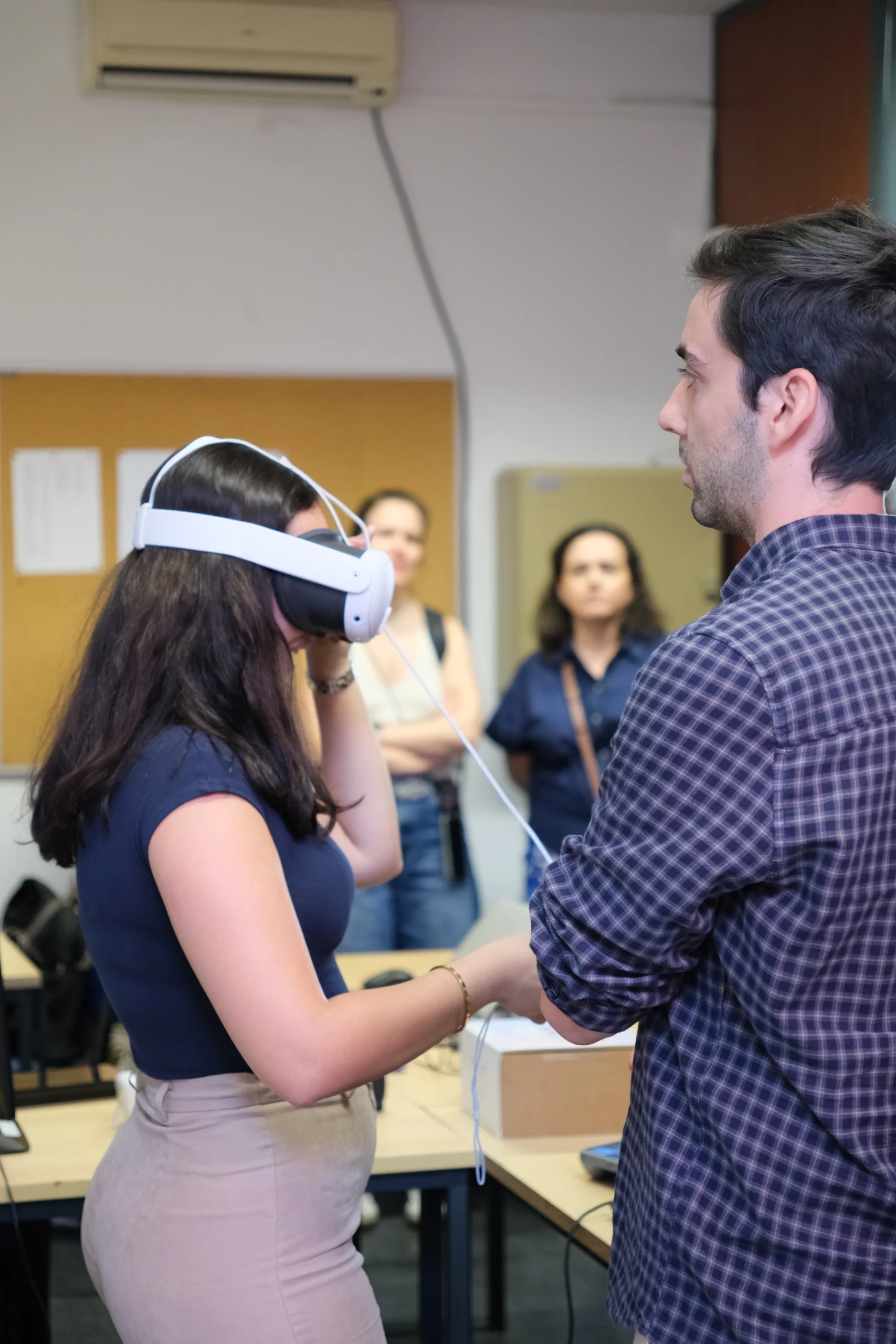
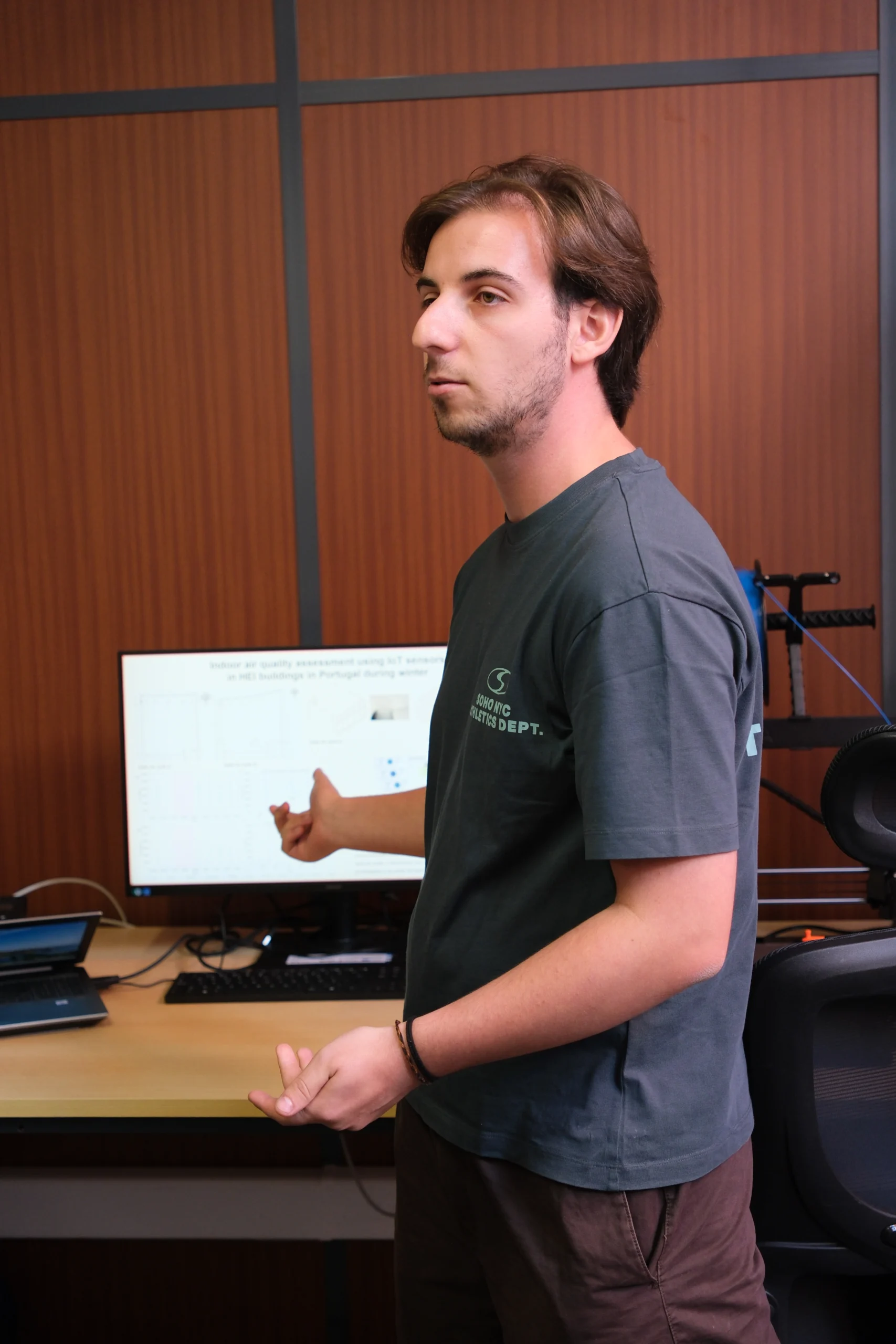
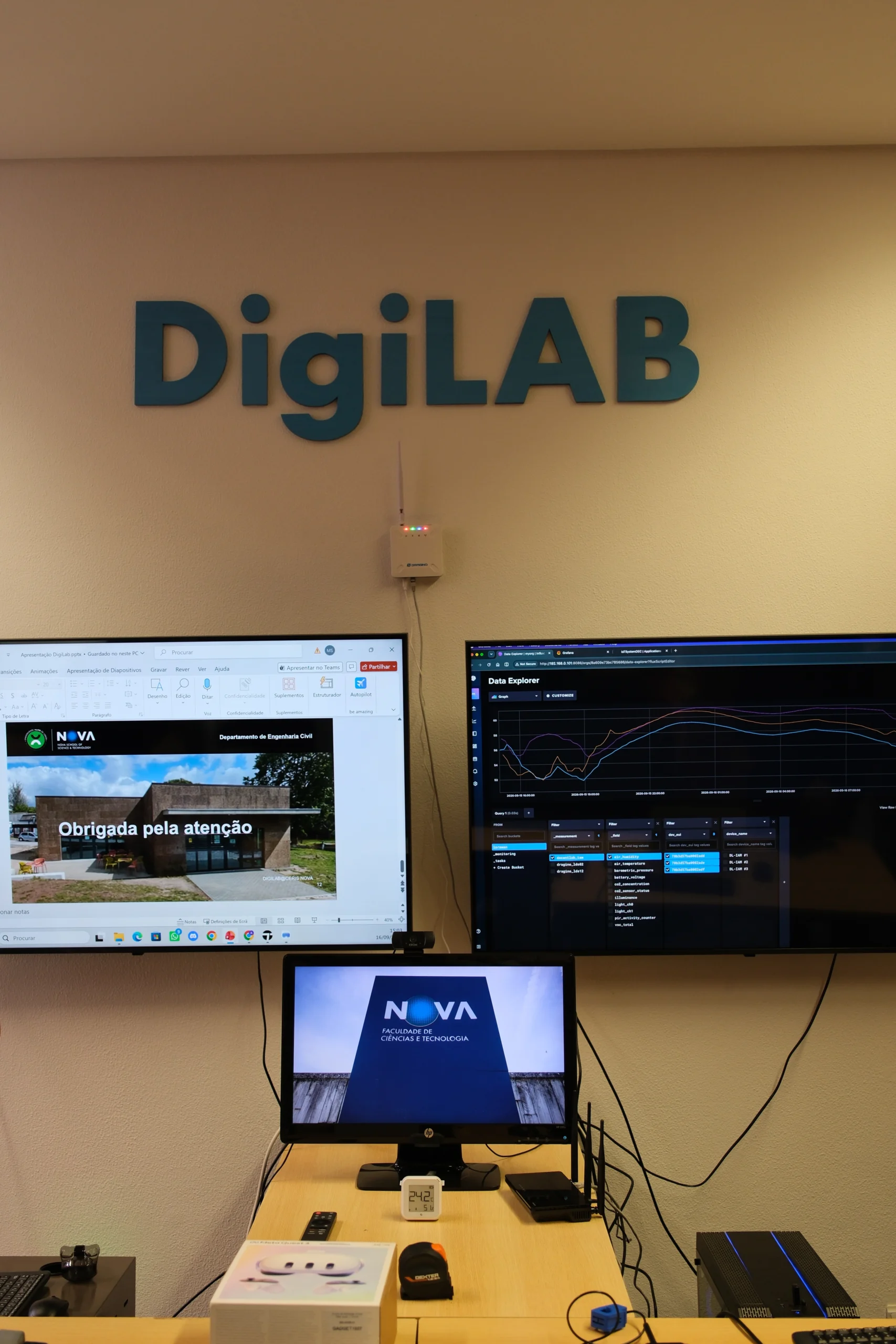
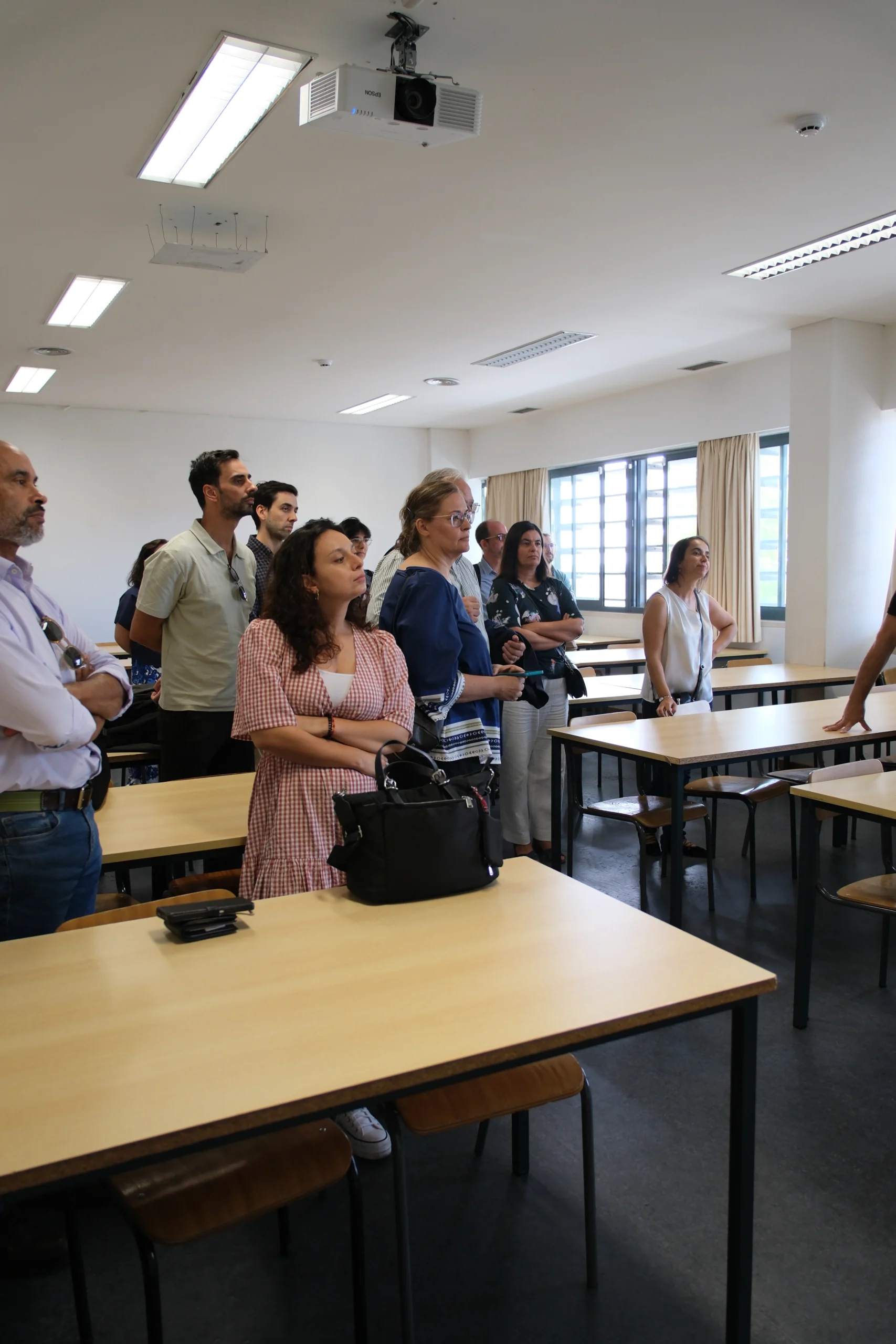
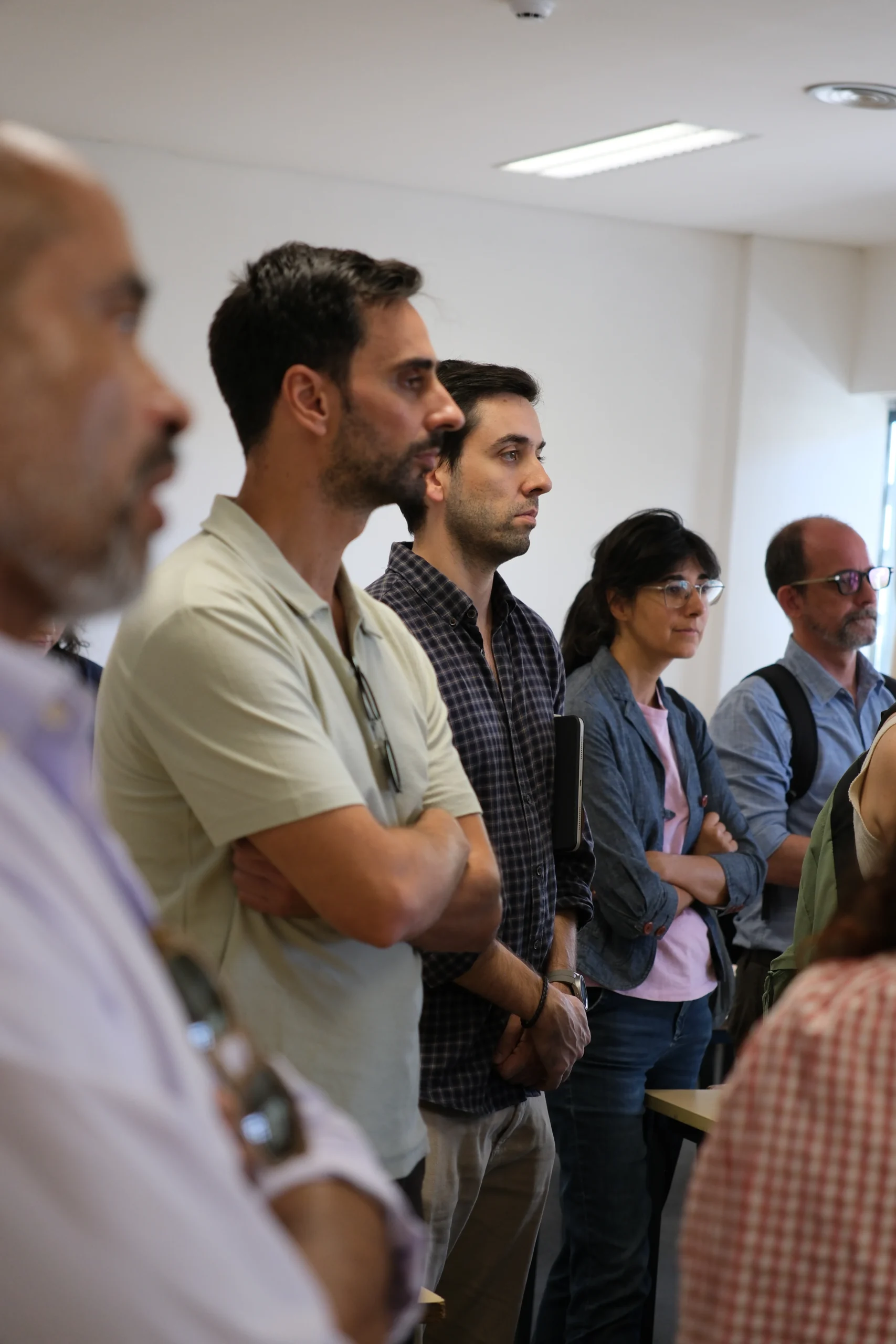
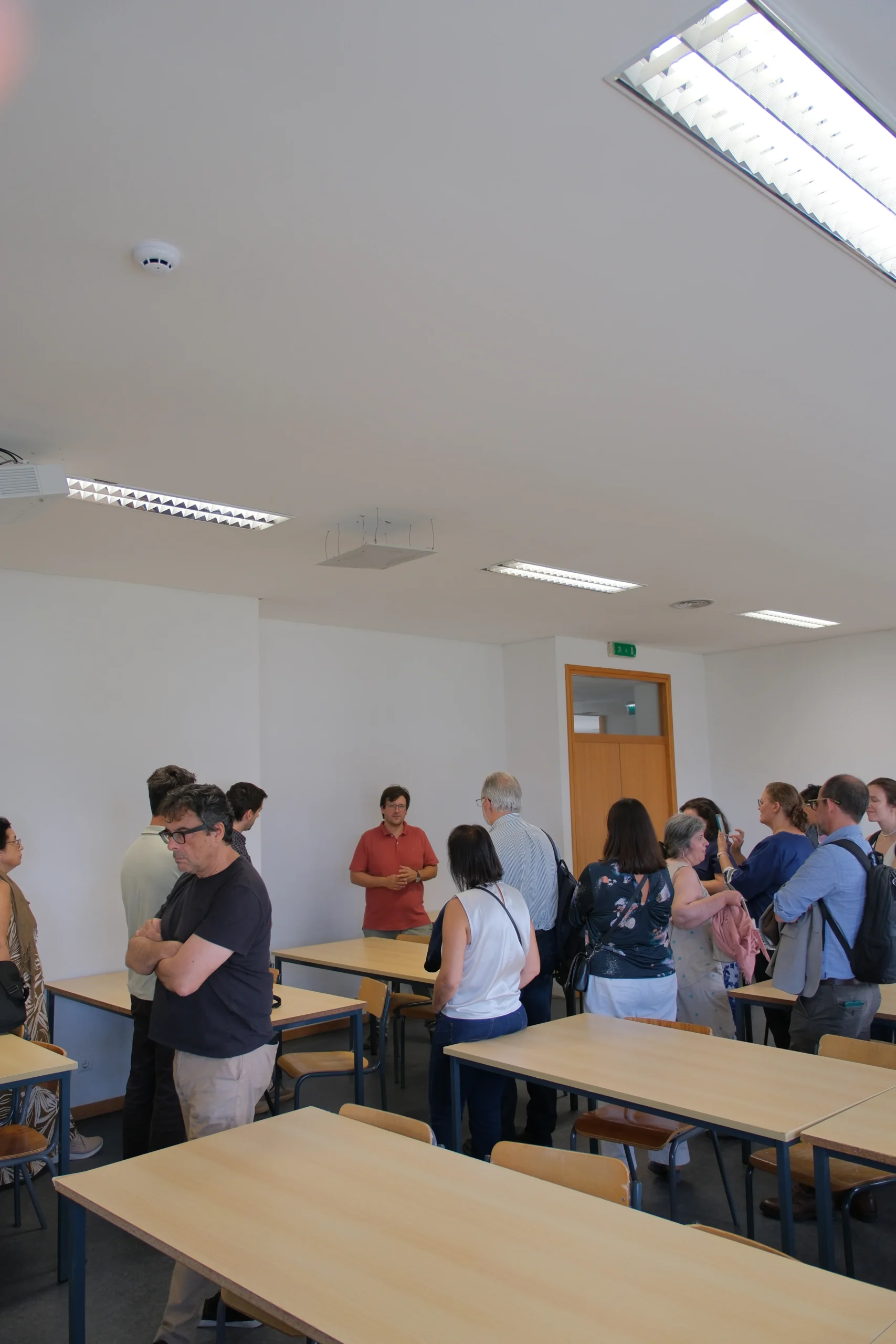
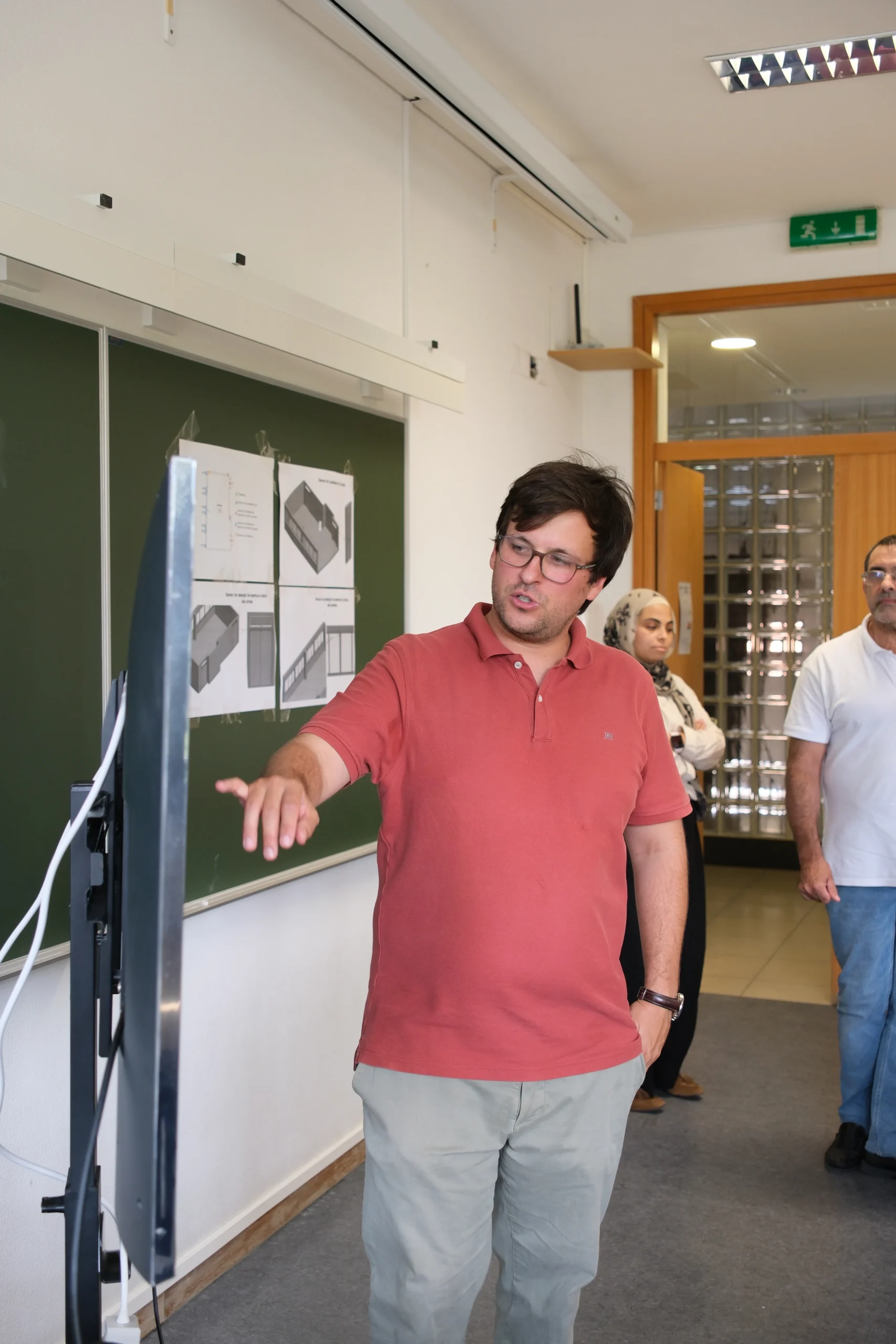
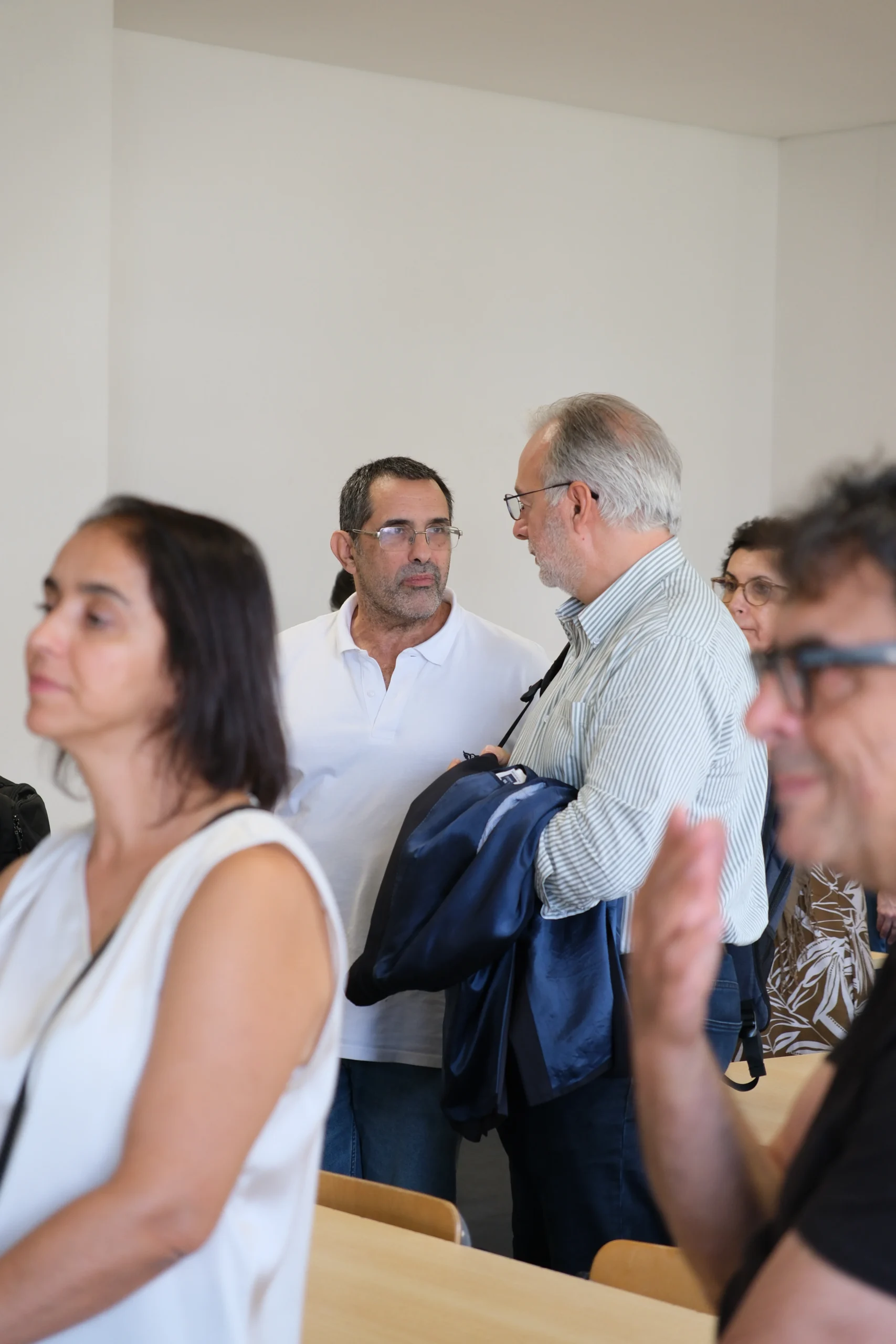
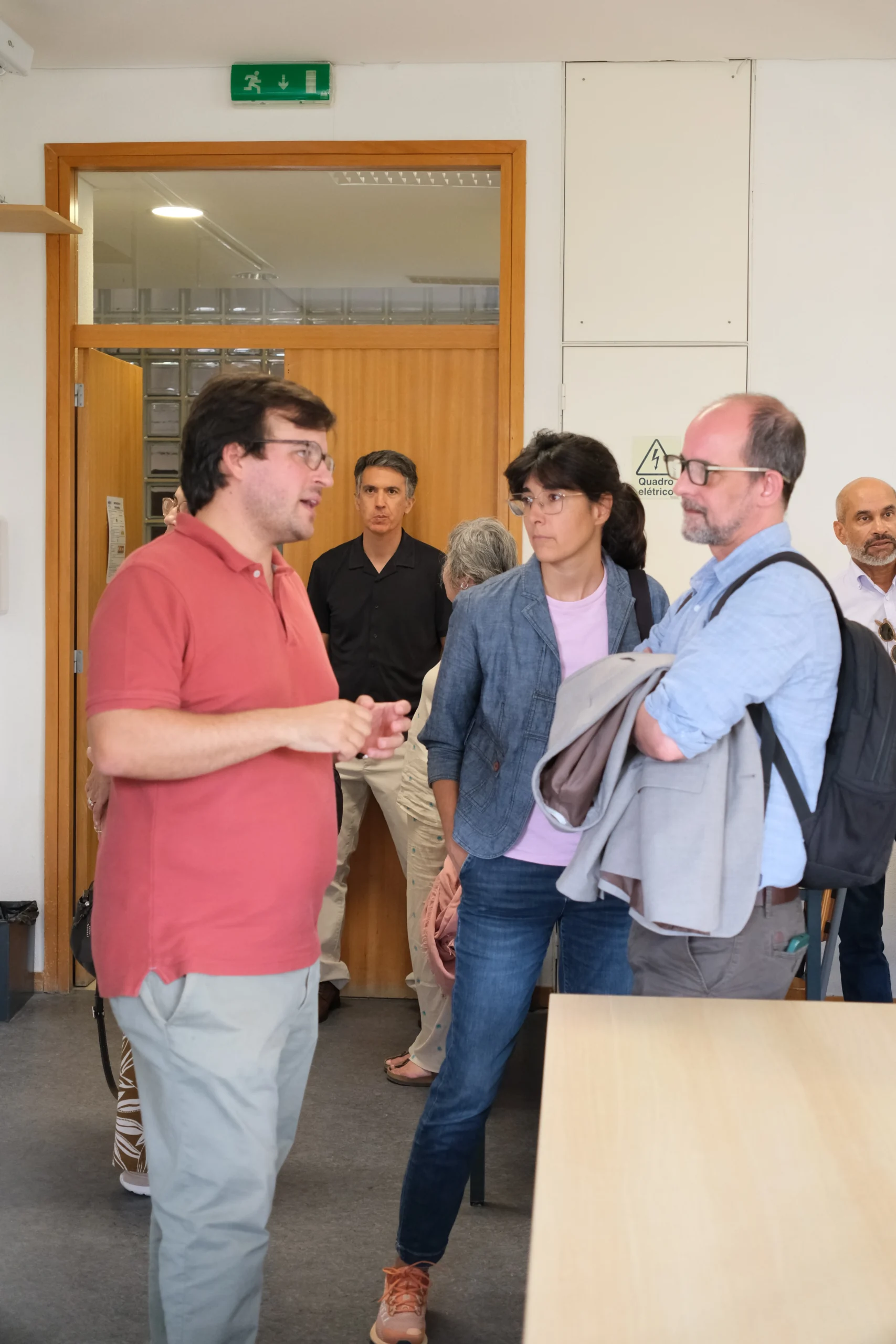
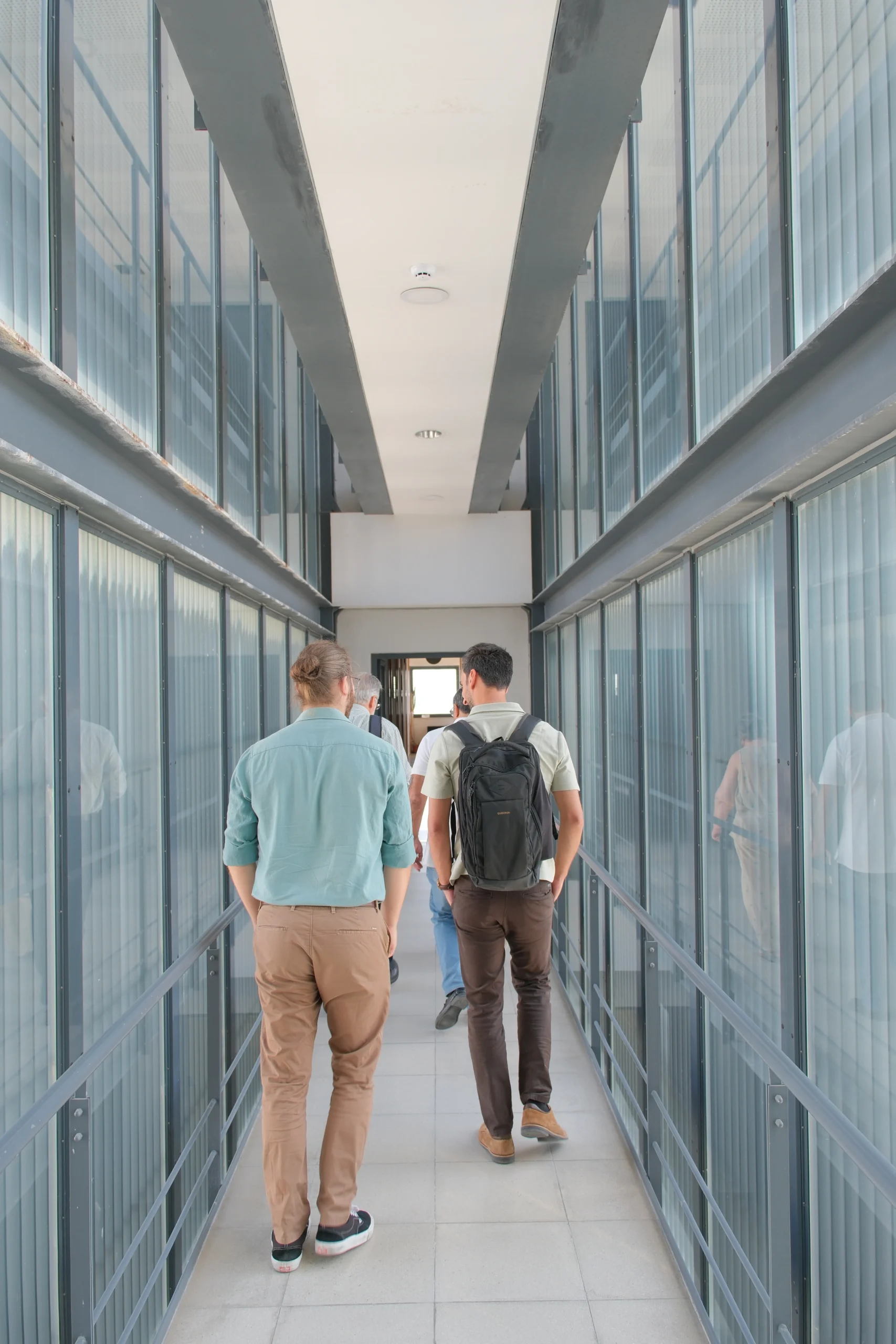
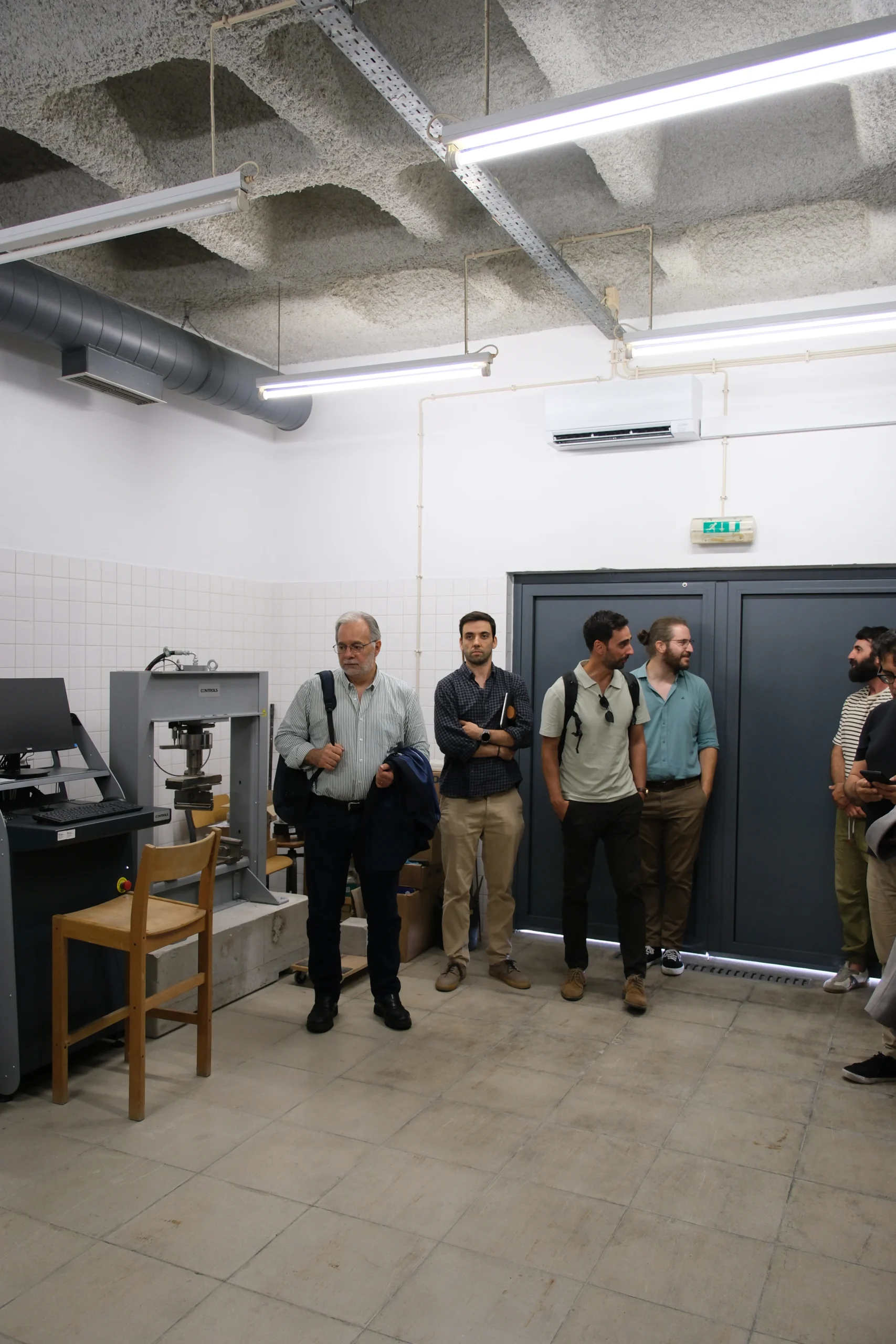
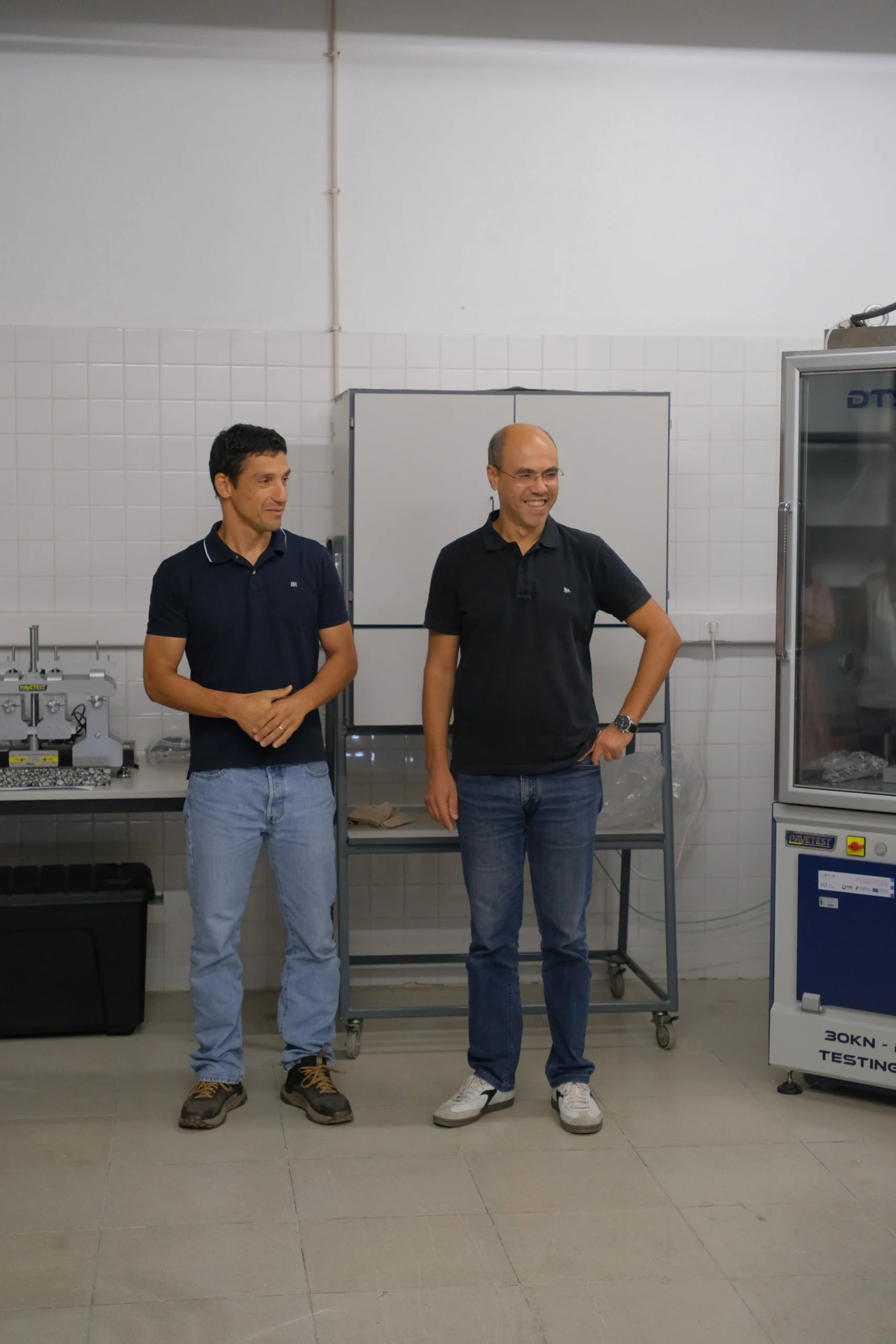
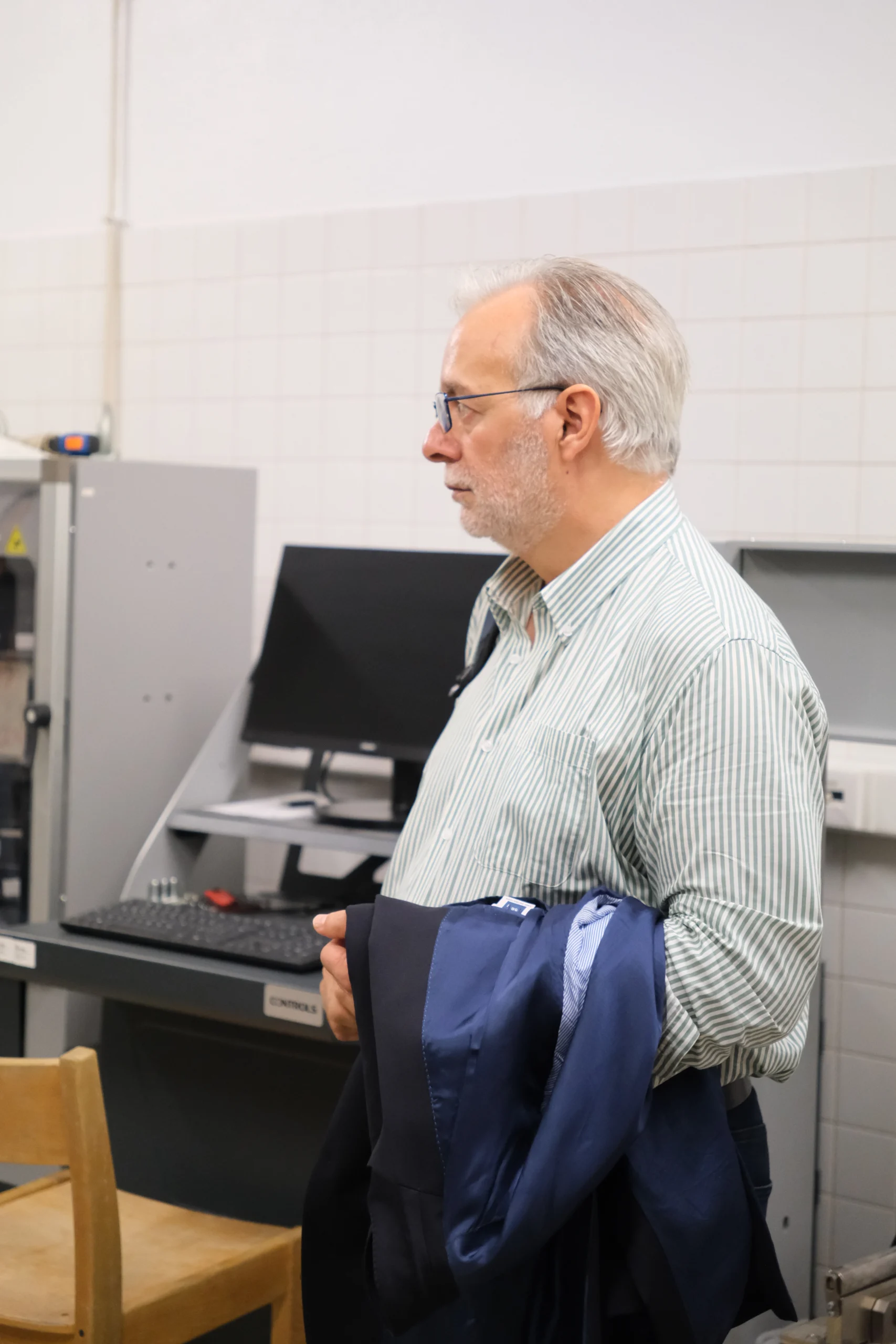
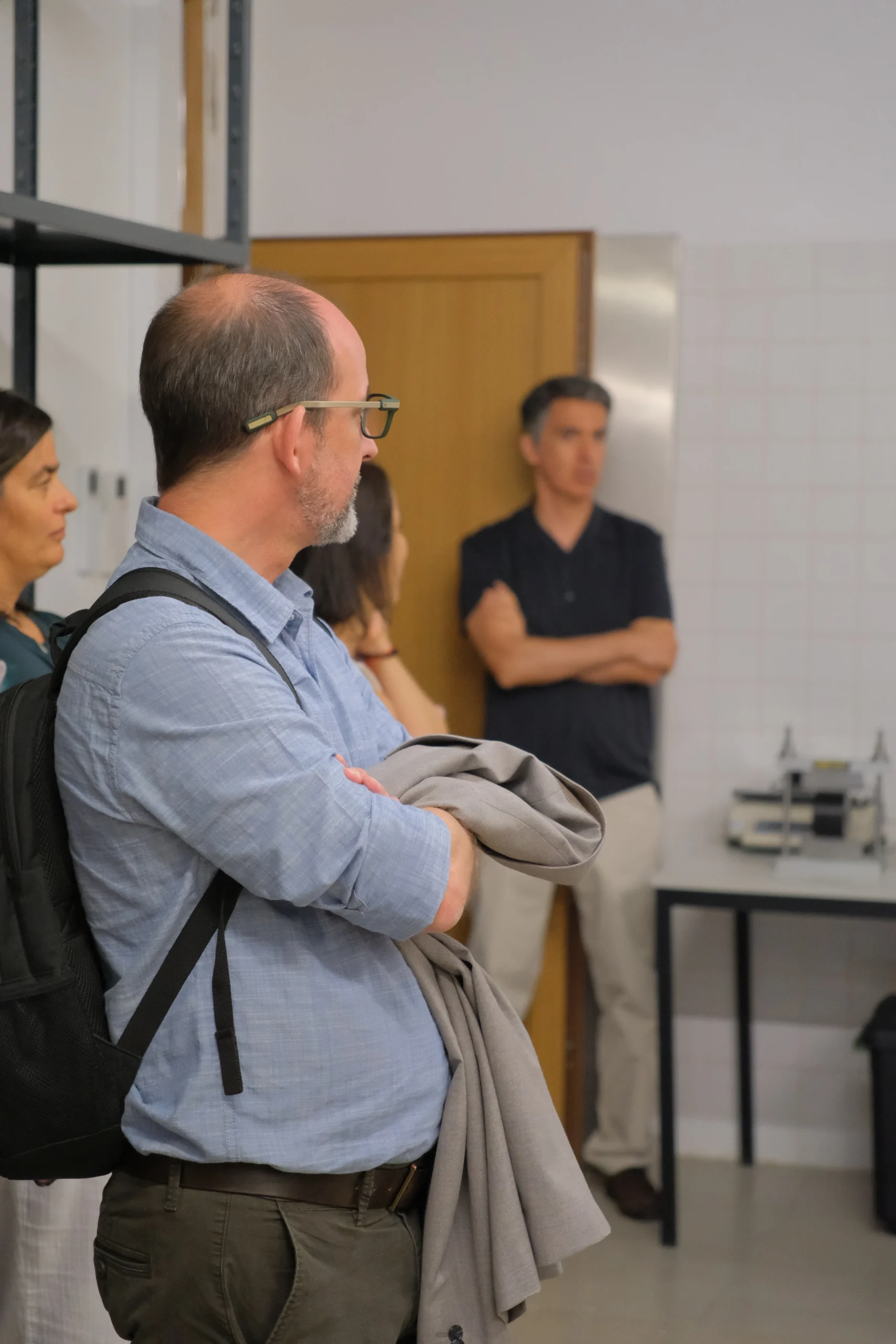
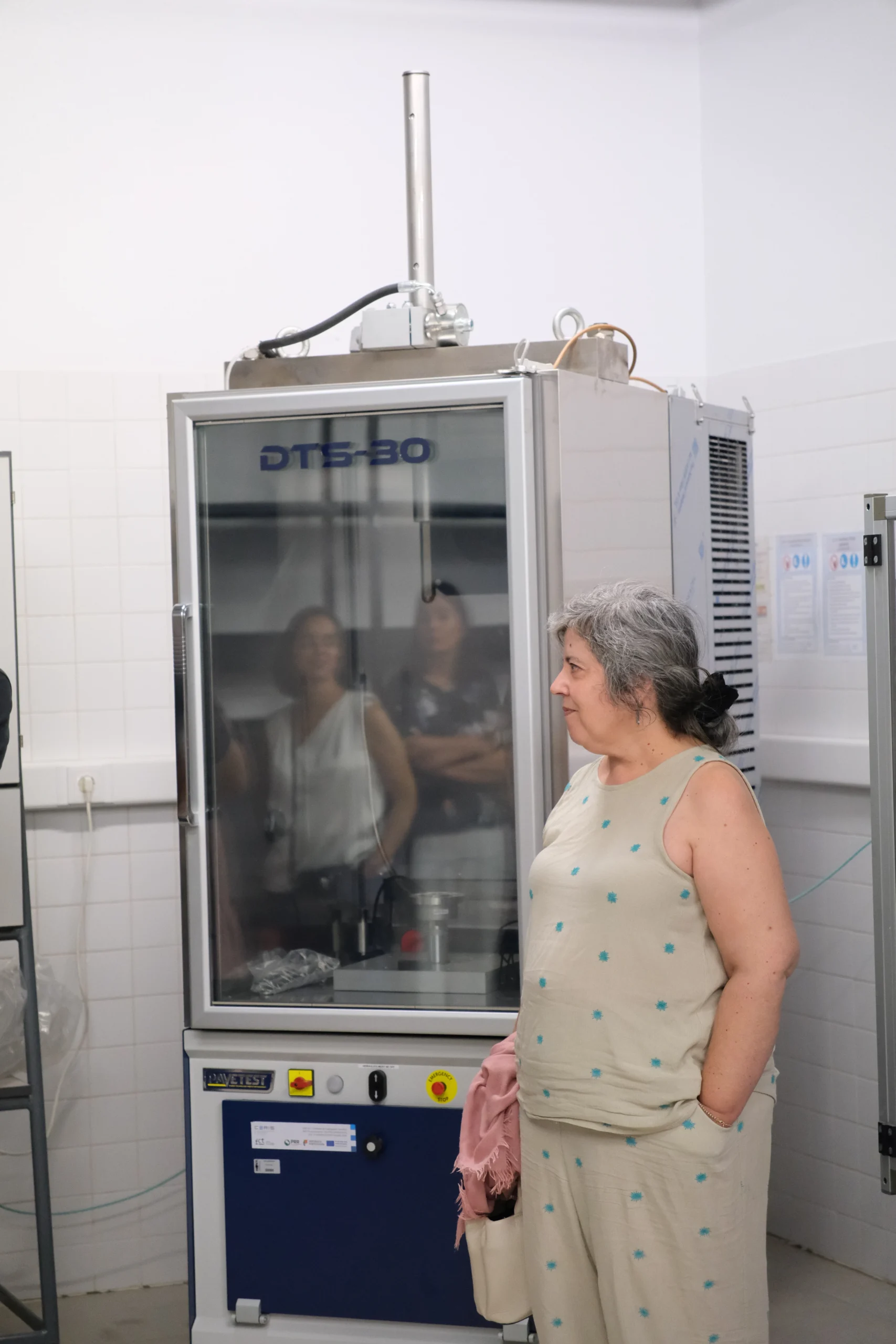
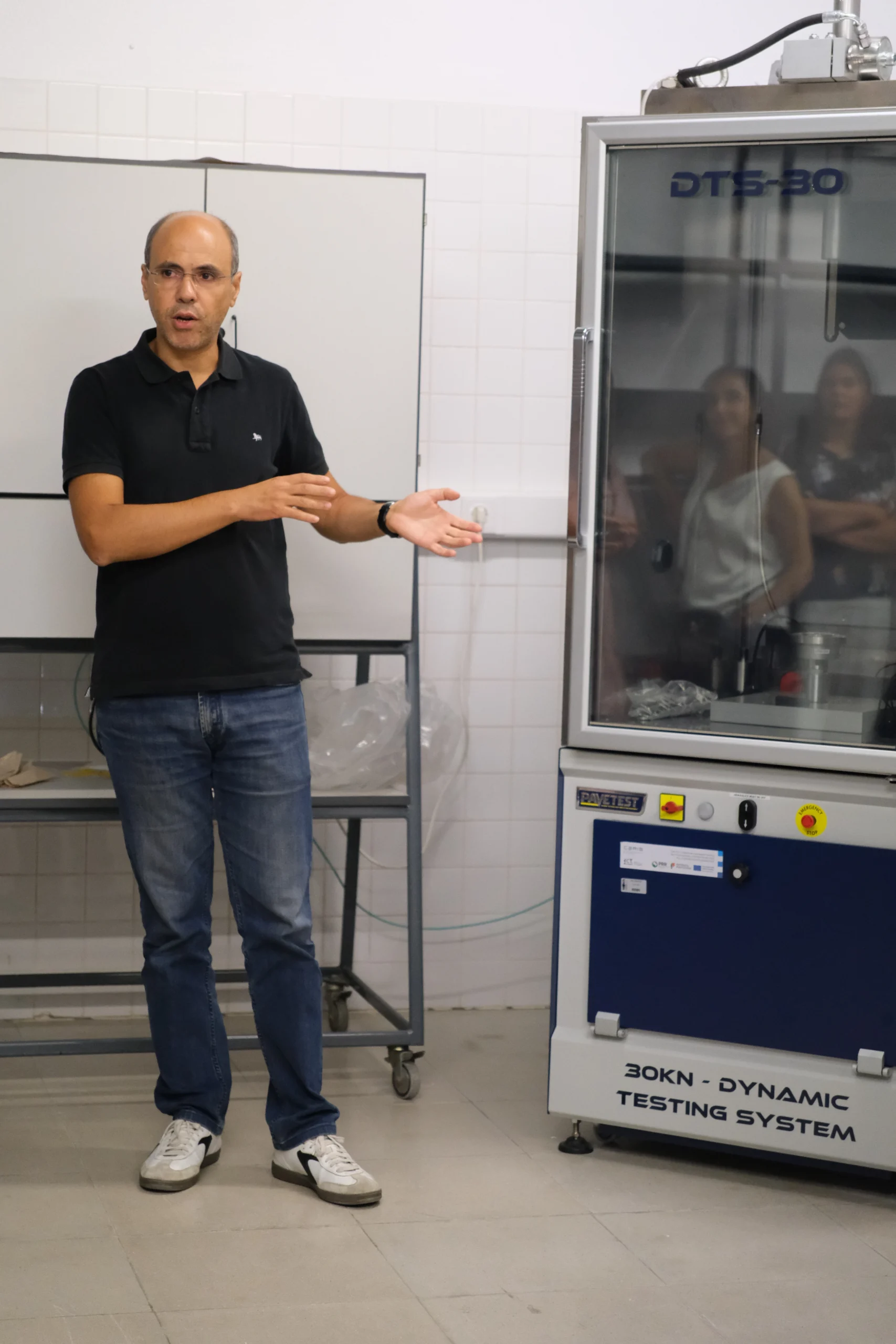
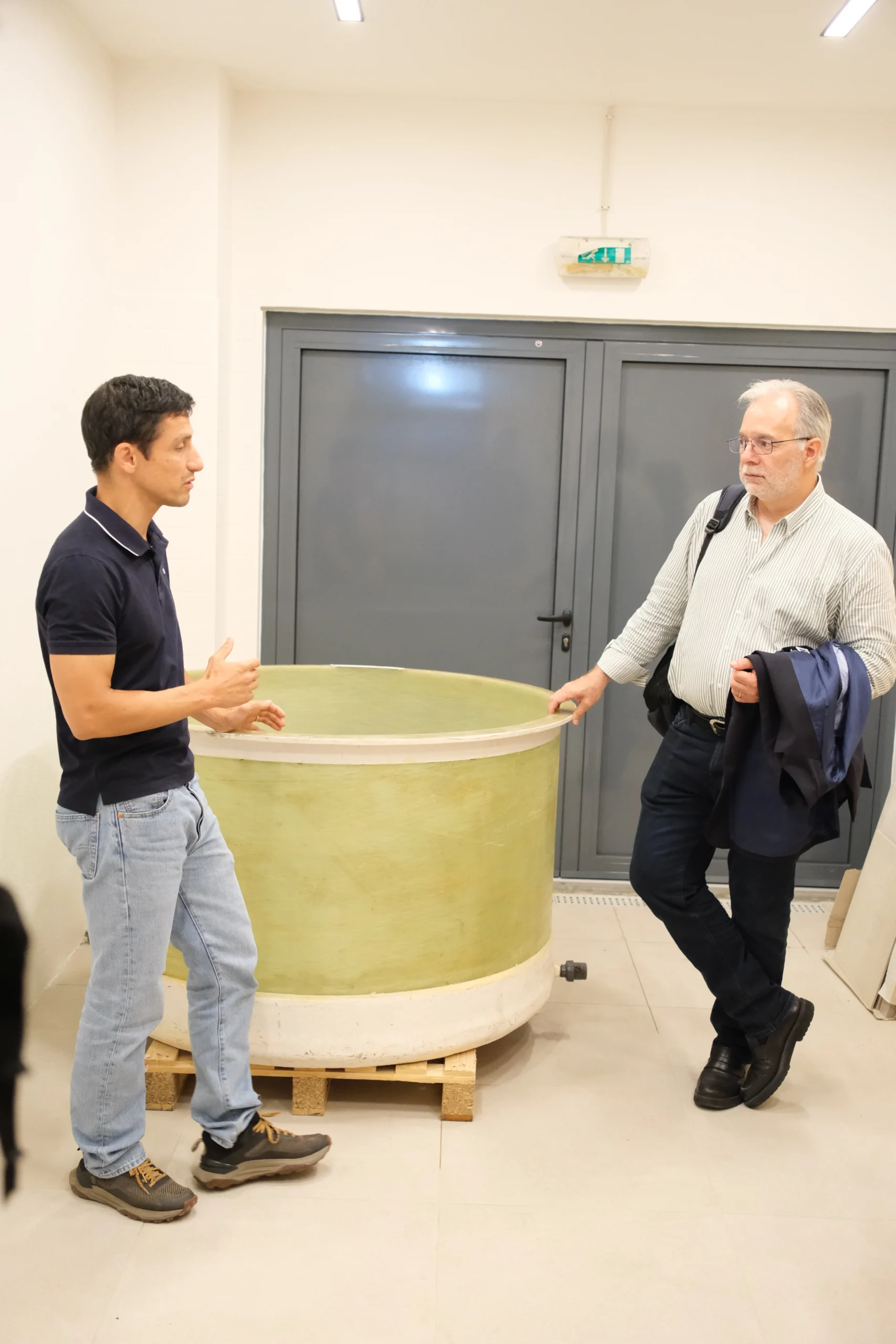
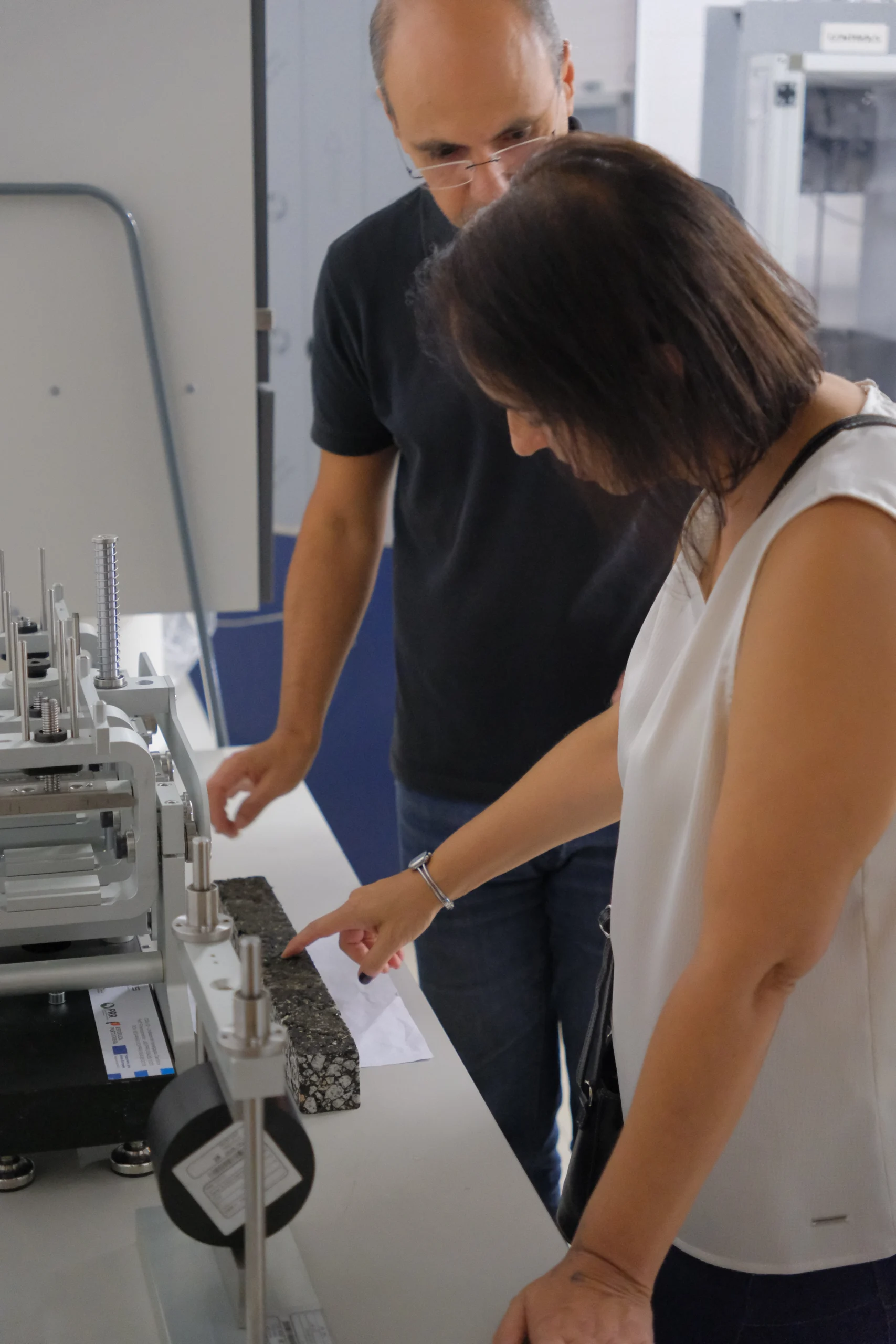
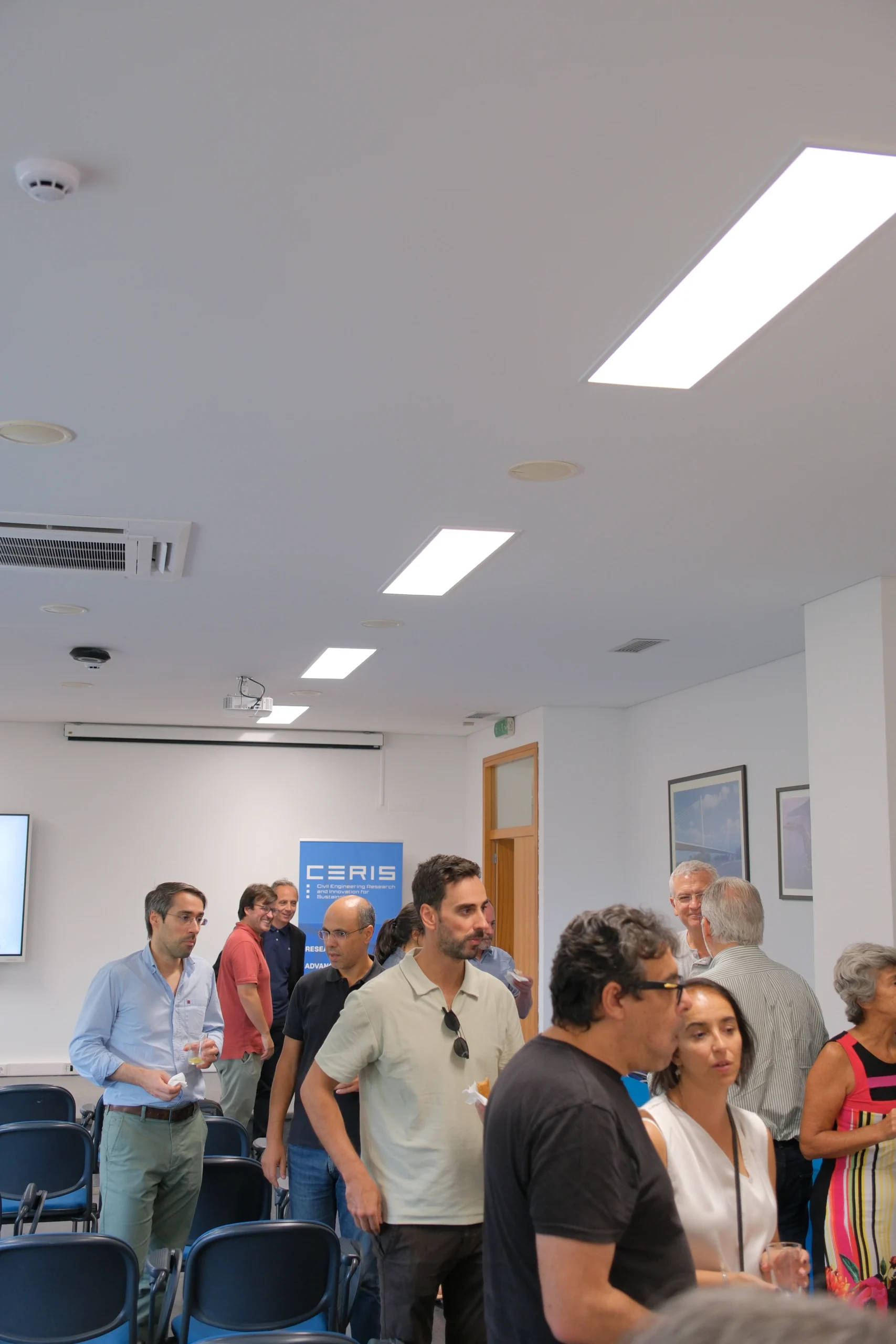
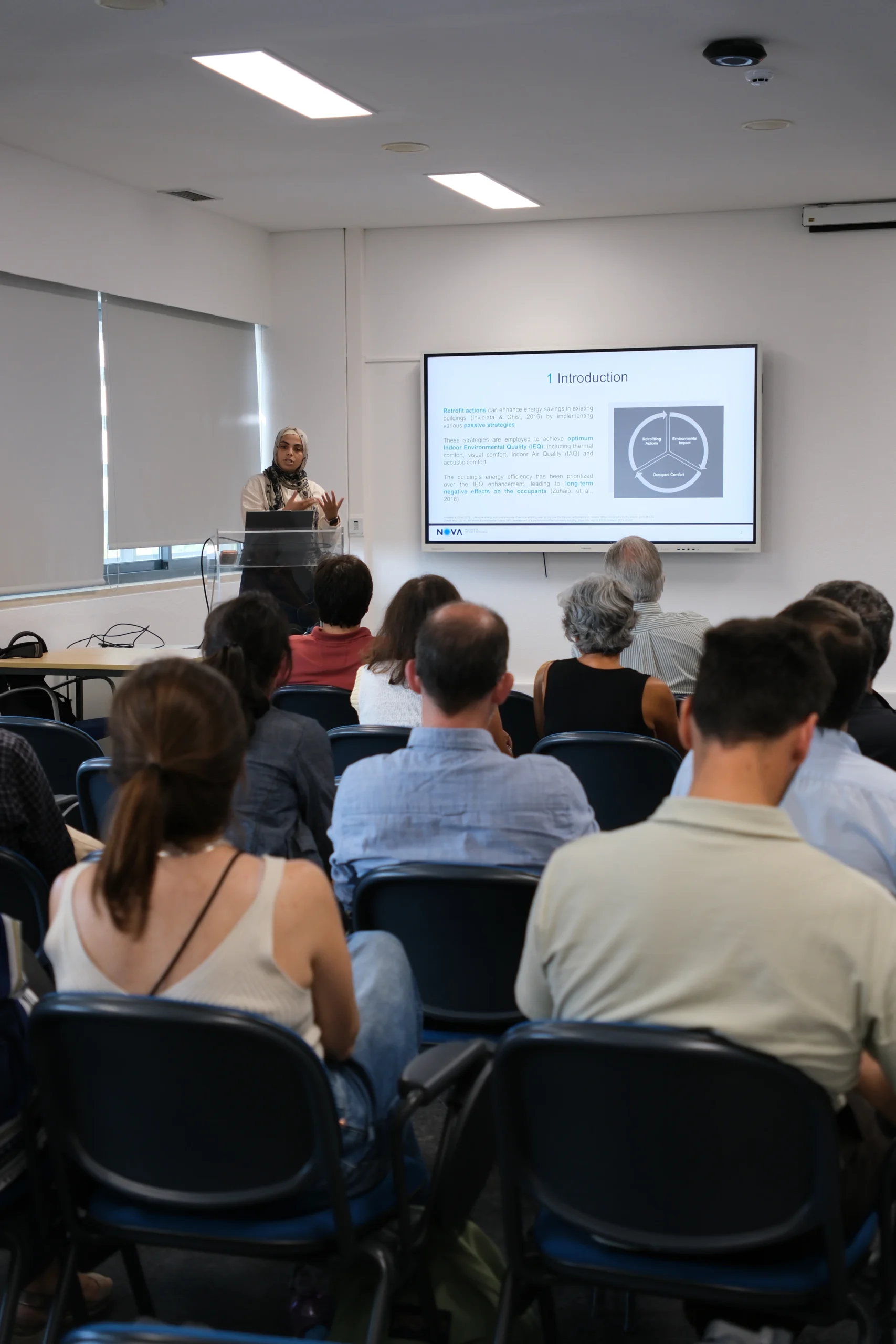
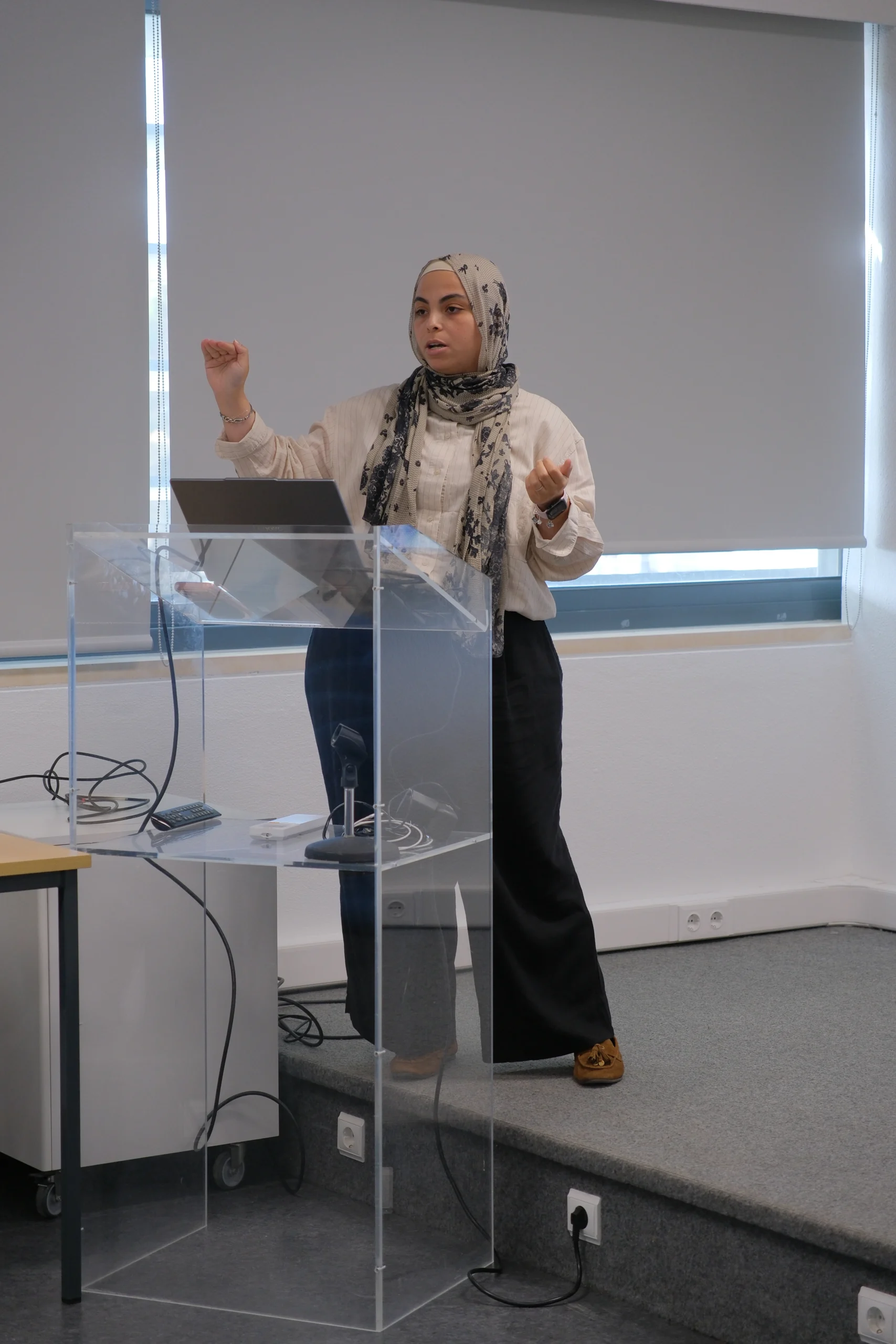
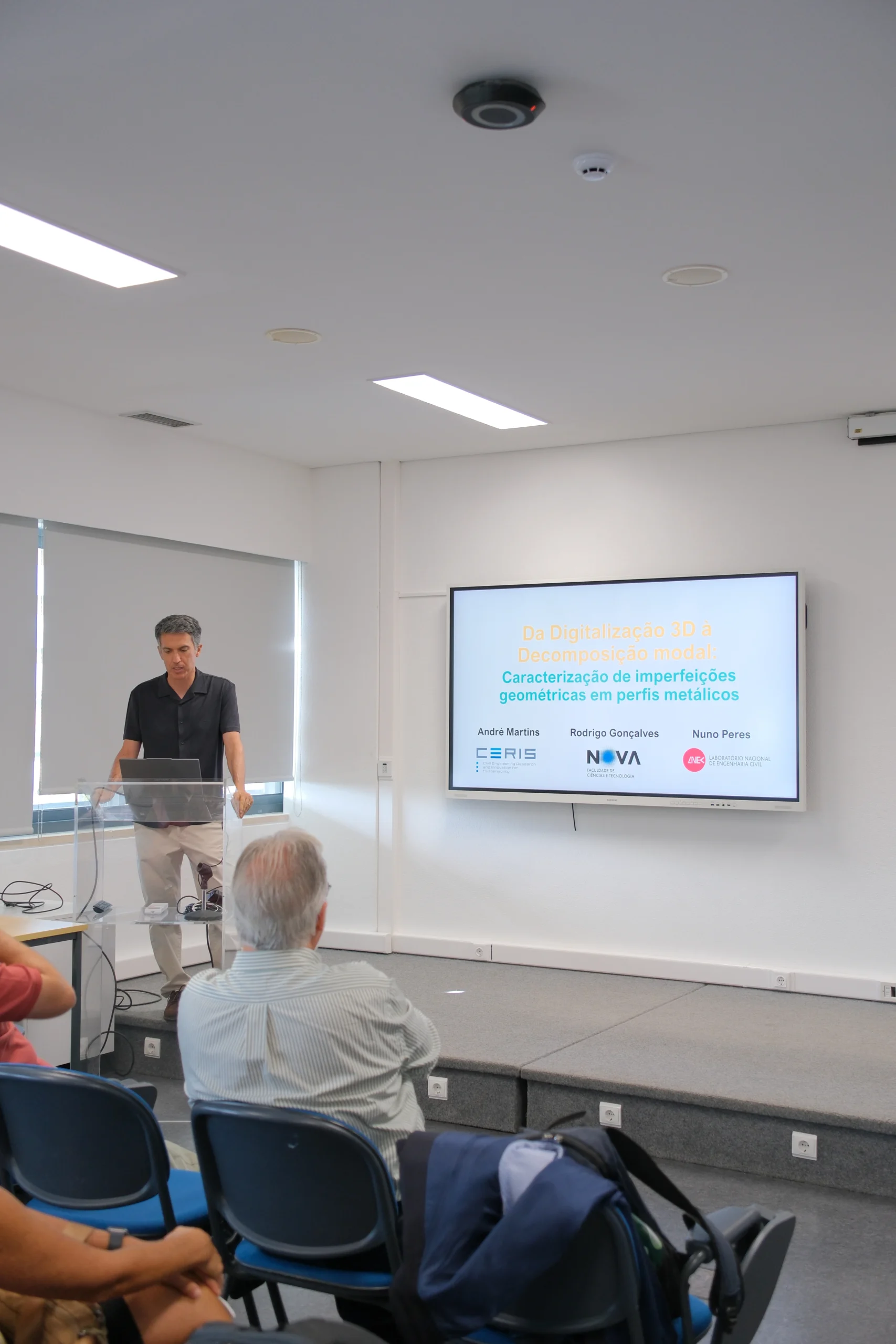
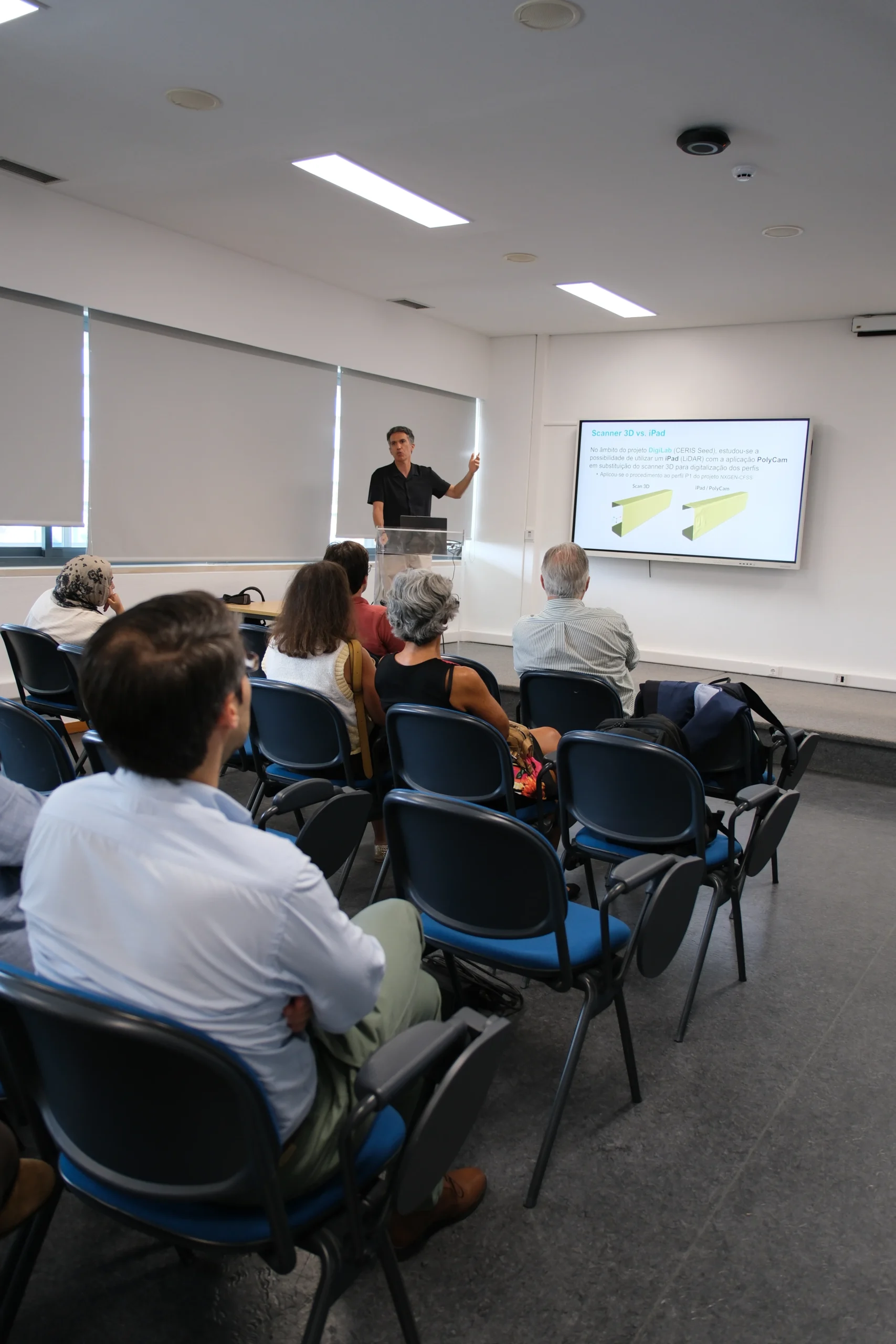
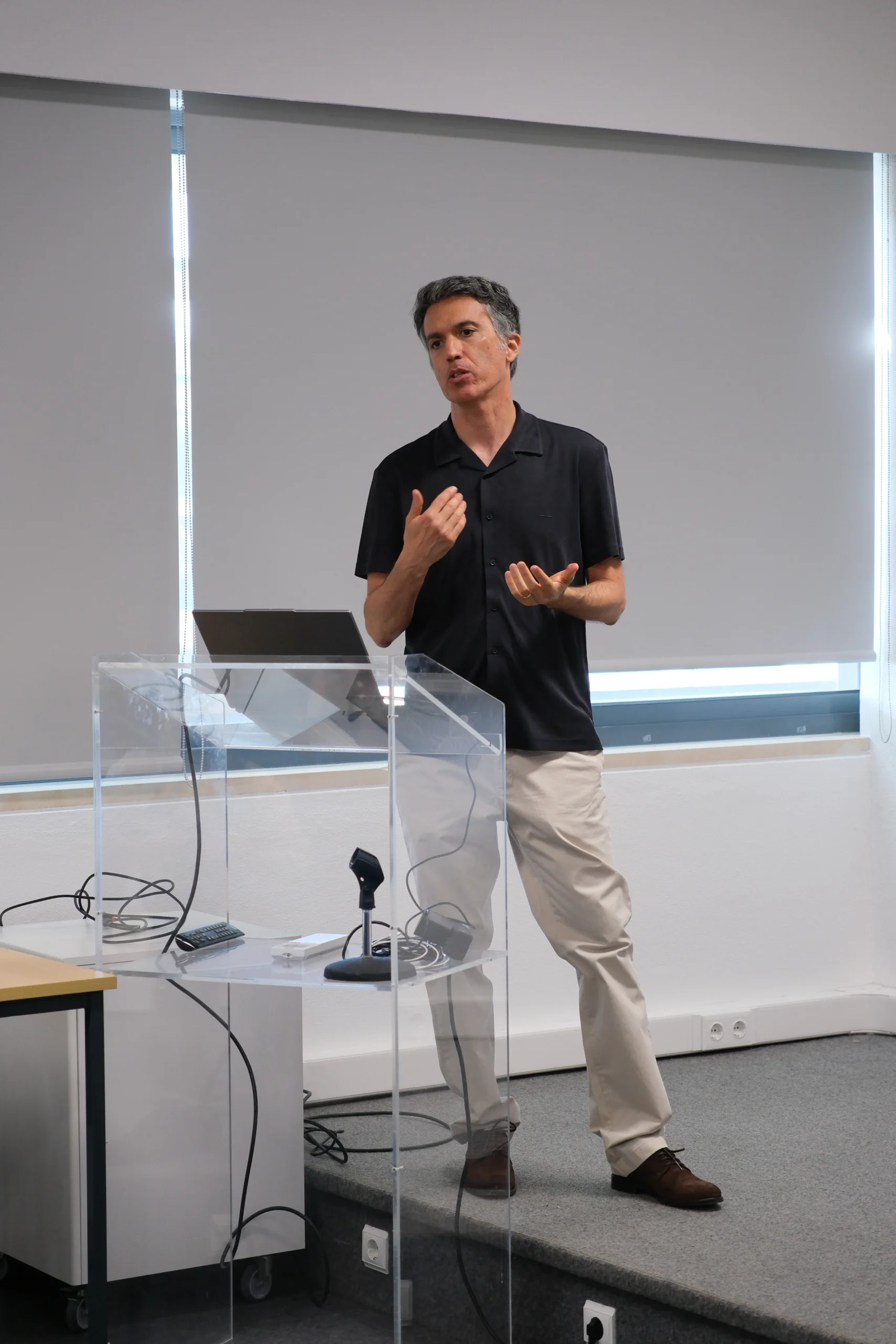
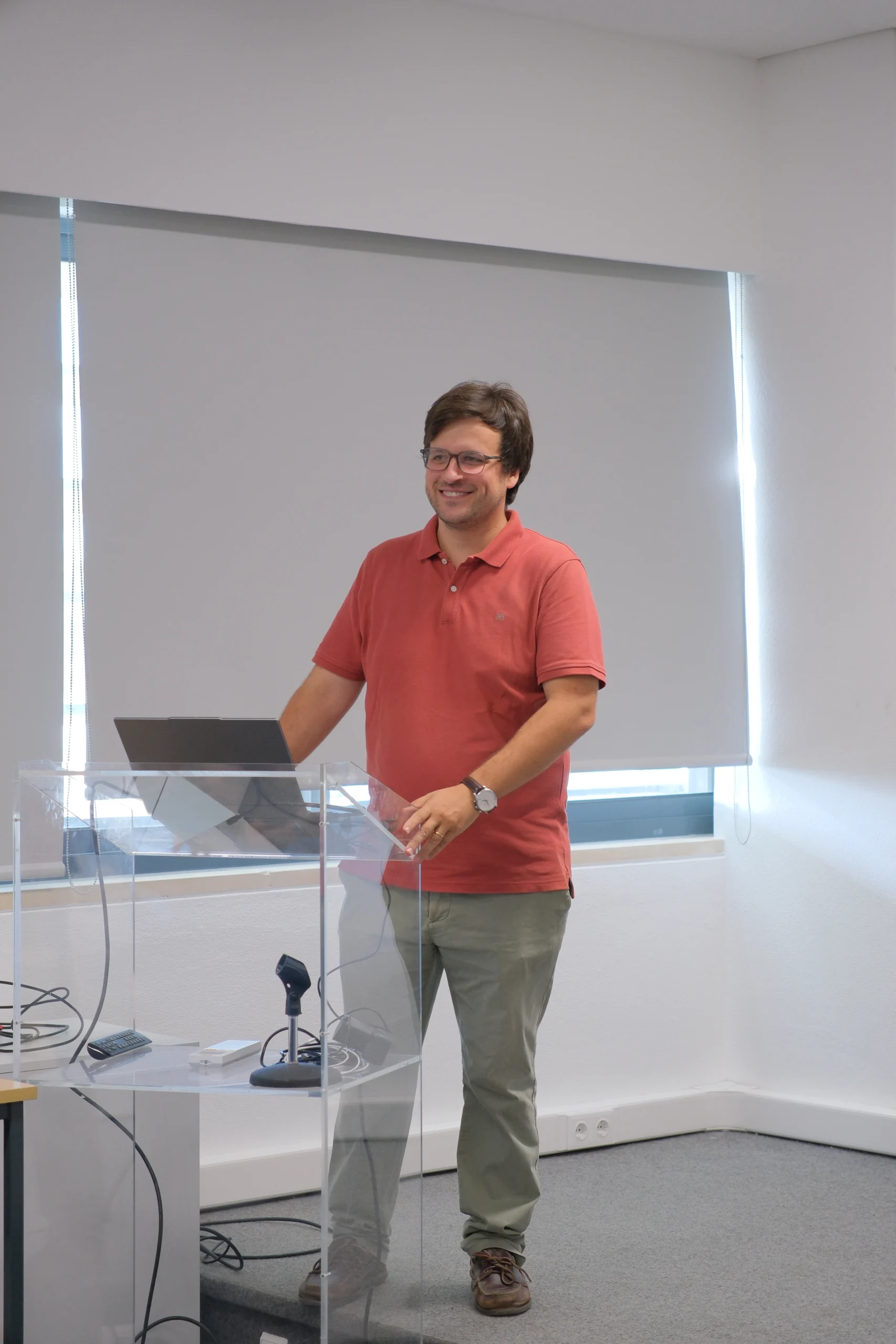
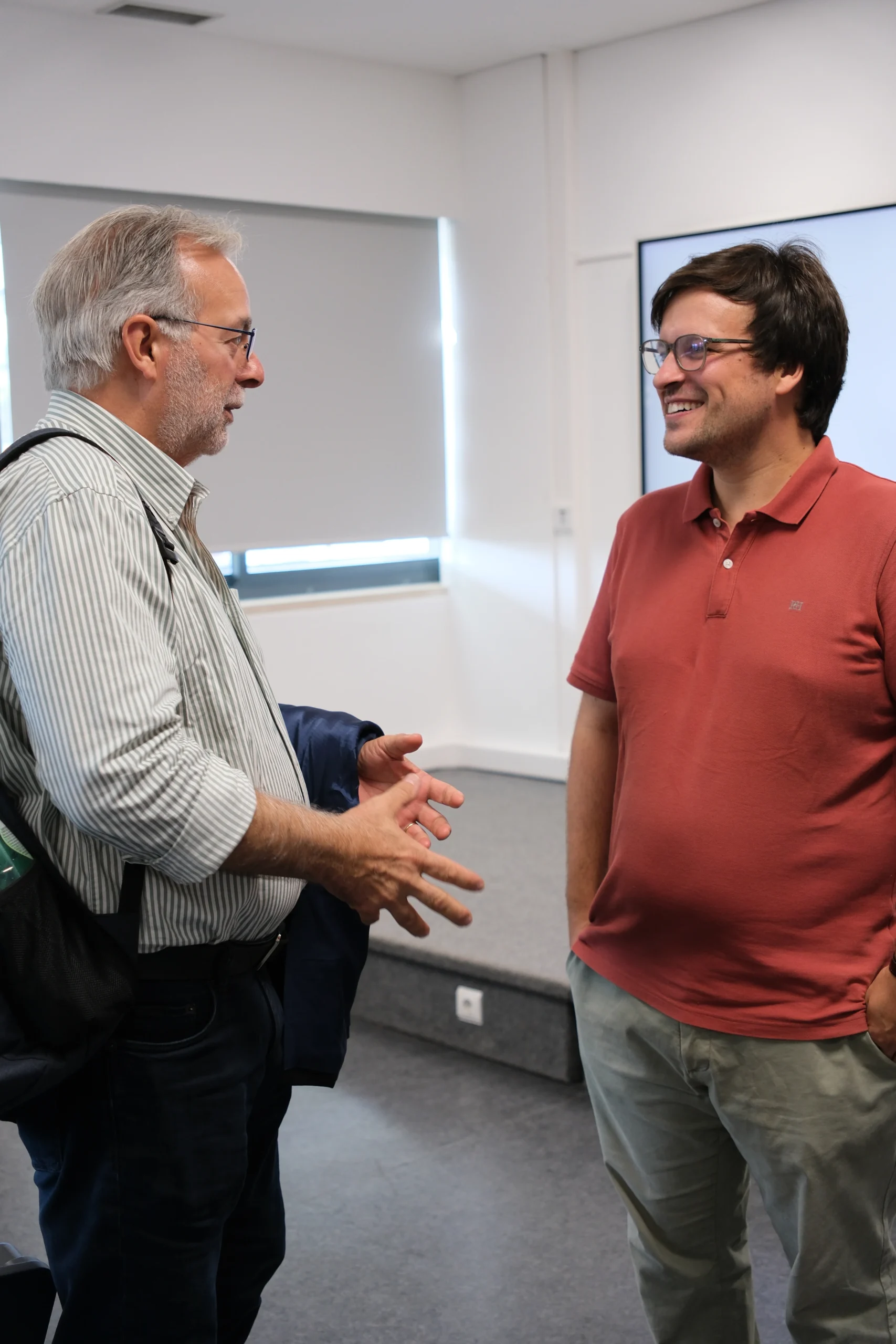
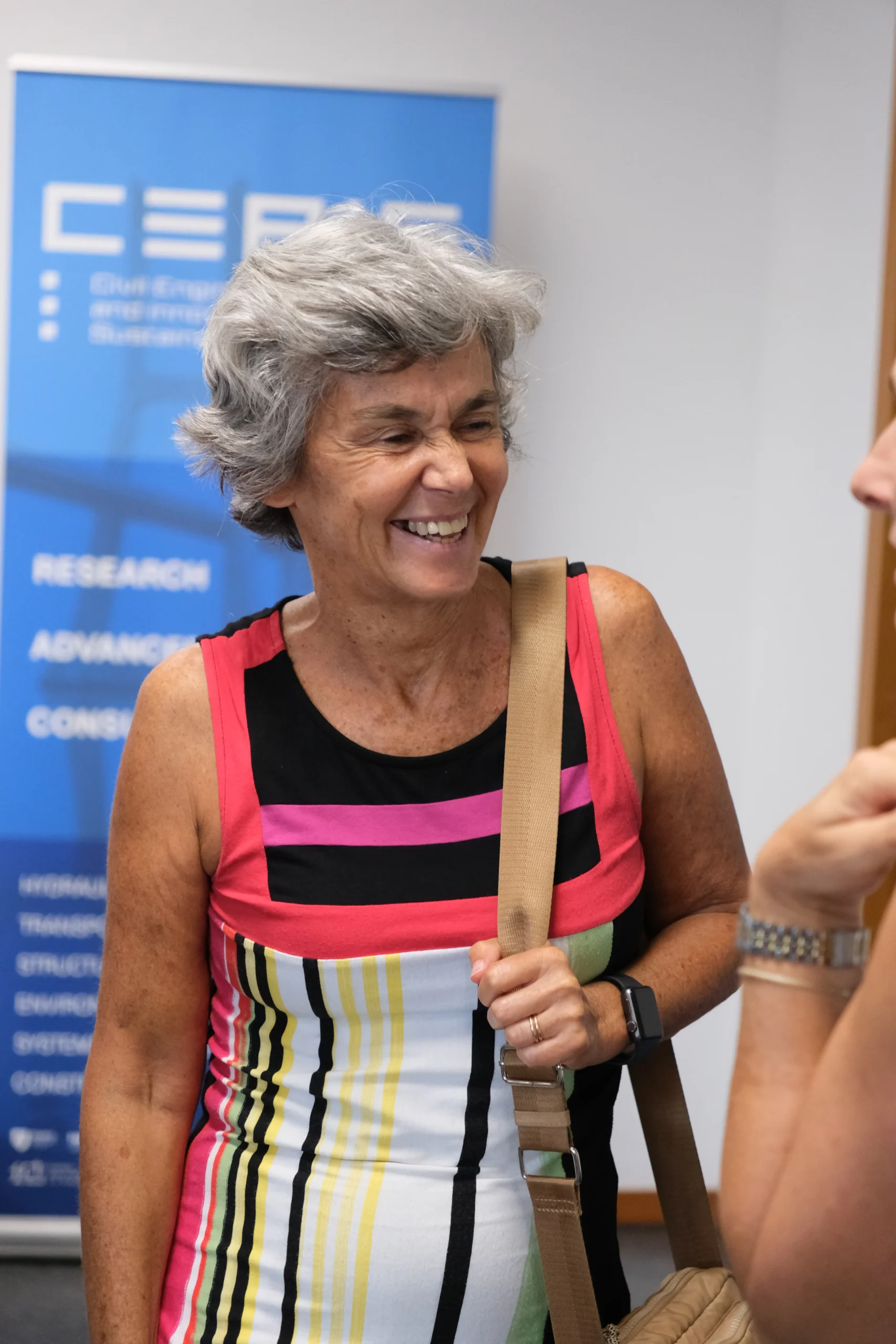
On 16 September 2026, CERIS inaugurated DigiLAB@CERIS at CERIS NOVA, bringing together researchers and members of the scientific community for an opportunity to explore the laboratory's facilities and research activities.
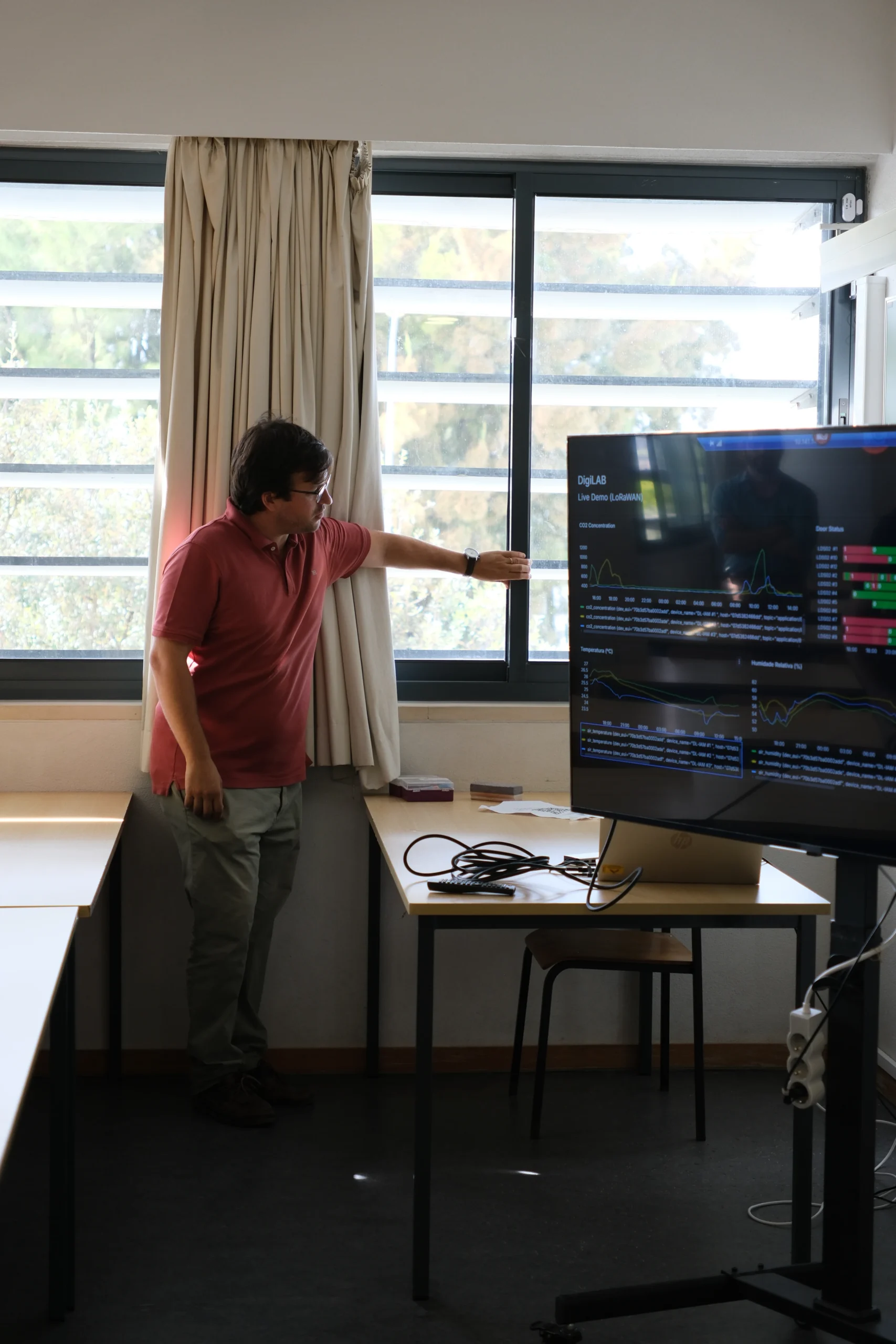
During the visit, participants had the opportunity to explore the laboratory, learn about ongoing projects and attend presentations by PhD and MSc students and researchers, showcasing their work and research developments. The programme also included a demonstration of the new laboratory of the Department of Civil Engineering at NOVA FCT, highlighting the research infrastructure and facilities available to support scientific activities.
The inauguration marked an important milestone in strengthening CERIS's research capabilities in building digitalisation, remote monitoring and functional performance optimisation.
DigiLAB@CERIS – Laboratory for Building Digitalisation, Remote Monitoring and Functional Performance Optimisation
The laboratory focuses on applying digital technologies to the characterisation, monitoring and performance improvement of contemporary and historic buildings.
Established as a result of the CERIS SEED project, carried out between October 2025 and June 2026, DigiLAB@CERIS was created to strengthen research capabilities in building digitalisation and promote the use of digital twins to support predictive maintenance and more efficient building management.
Research and Areas of Activity
DigiLAB integrates digital surveying technologies, remote monitoring systems and computational simulation to develop more accurate and efficient methodologies for assessing and optimising building performance.
Its activities are structured around three main areas:
- Building digitalisation and 3D surveying: The use of 3D scanning, LiDAR and photogrammetry to characterise the geometry of buildings and other construction elements, enabling the creation of digital models to support analysis and intervention.
- Remote and continuous monitoring: The use of sensors and data acquisition systems to monitor environmental conditions and building operation, enabling performance assessment over time and the identification of potential anomalies.
- Functional performance assessment and optimisation: The integration of monitoring data, digital modelling and computational simulation to analyse the thermal, hygrothermal and energy performance of buildings, ventilation and indoor environmental quality, while supporting the development of rehabilitation strategies.
The development and application of digital twins is a cross-cutting component of this approach. By linking information collected from buildings with digital models and analytical tools, DigiLAB aims to support informed decision-making, anomaly detection and predictive maintenance.
Research Team
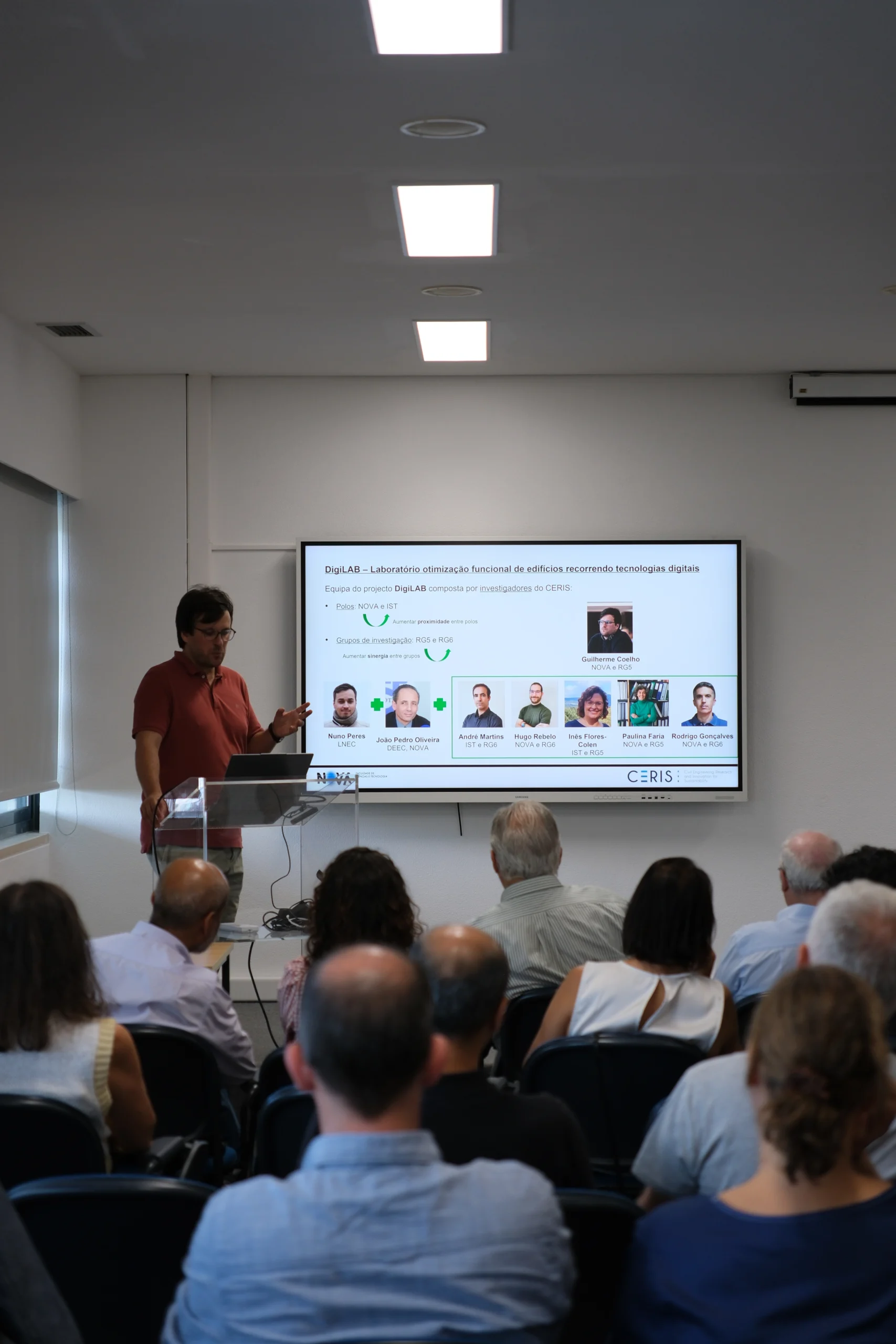
DigiLAB is coordinated by Guilherme Coelho, Assistant Professor at NOVA FCT and researcher at CERIS, who leads the development of the laboratory's research activities and technical capabilities.
The research team also includes:
The project has also involved PhD and MSc students from NOVA FCT, encouraging the participation of early-career researchers in the development and application of digital surveying, modelling and building performance assessment methodologies.
This multidisciplinary team brings together complementary scientific and technical expertise, promoting the integration of digital technologies into civil engineering research and building rehabilitation.
Equipment and Available Resources
DigiLAB provides equipment and digital tools to support the different stages of building characterisation, monitoring and performance analysis. These include:
- Digital surveying and visualisation: 3D scanner, drone and virtual reality (VR) headset;
- Monitoring systems: IoT sensors and conventional measurement equipment for parameters such as temperature, relative humidity, CO₂ concentration, opening and closing status, distance and energy consumption;
- Modelling and simulation: Software for thermal, hygrothermal and energy simulation, as well as computational fluid dynamics (CFD);
- Assessment and analysis: Tools for data analysis, weather file generation, life cycle assessment (LCA) and life cycle costing (LCC).
The integration of these resources enables workflows that combine data collection, digital model creation, computational simulation and the assessment of different intervention scenarios.
Services and Expertise
DigiLAB provides technical and scientific expertise to researchers, project teams and other stakeholders interested in developing digital solutions for the built environment. Its main services and areas of support include:
- Building surveying, 3D scanning and digital modelling;
- Building diagnostics and functional performance assessment;
- Continuous and remote monitoring of environmental conditions and building operation;
- Simulation and optimisation of thermal, hygrothermal and energy performance, including ventilation;
- Assessment of the impacts of different rehabilitation solutions and climate change scenarios;
- Development of digital twins and decision-support systems;
- Anomaly detection and support for predictive maintenance strategies.
These capabilities can support research studies, rehabilitation projects, the assessment of construction solutions and innovation initiatives that benefit from integrating real-world data with digital models.
From Digital Surveying to Building Performance Analysis: Examples of Applications
The project that led to the establishment of DigiLAB enabled the development of digitalisation methodologies applicable both to building characterisation and to the analysis of structural elements.
One example is the use of laser scanning to create digital building models, through the acquisition and processing of point clouds. The resulting geometric information can subsequently be used to develop models in a Building Information Modelling (BIM) environment, including Revit, supporting further building performance analyses.
Another area of application focuses on the characterisation of geometric imperfections in cold-formed steel profiles. Data obtained through 3D scanning can be processed and analysed using tools such as MATLAB, contributing to the characterisation of imperfections and supporting numerical modelling studies based on the finite element method.
In building construction and rehabilitation, the project also explores the use of digital models alongside simulation tools, such as WUFI Plus, to analyse the hygrothermal behaviour of buildings and assess the influence of future climate conditions on their performance.
These applications illustrate the potential of digitalisation to improve geometric characterisation, support the assessment of structural and energy performance, and inform design and rehabilitation decisions.
Fostering New Collaborations
Through the establishment of DigiLAB@CERIS, CERIS is strengthening its capacity to conduct applied research at the intersection of civil engineering, digitalisation and building performance assessment.
The laboratory aims to promote new collaborations with researchers, academic institutions, companies and other stakeholders in the construction sector, contributing to the development of innovative solutions in monitoring, rehabilitation, energy efficiency and building management.
Researchers and potential partners interested in learning more about DigiLAB's capabilities or exploring opportunities for collaboration are invited to contact the laboratory team.
Coordinator: Guilherme Coelho, Assistant Professor, NOVA FCT | CERIS
Further information: DigiLAB@CERIS – Project Website.